Independent comparisons. We may earn from shop links. More info

How to graft a fruit tree

Updated: 22 October 2026

You have a pencil-thick apple scion and a young stock, and you want the join to take. How to graft a fruit tree with a knife, in the UK, means a whip-and-tongue in March or early April, on dormant wood, with cuts that meet flush. This page is that order, and where you stop. It does not rank the listings on our [grafting knife comparison](/hub/garden-tree-and-hedge-shears/grafting-knife). Peter F. followed Royal Horticultural Society figures and a Suffolk Fruit and Trees timing we do not merge into the RHS line. There is no lab test. A qualifying purchase can earn us a commission at no extra cost to you.

You have a pencil-thick apple scion and a young stock, and you want the join to take.

Our top picks

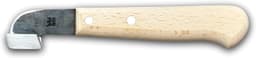
Due Buoi Due Buoi DB 207L

Best overall

Due Buoi Due Buoi DB 207L
6.6/10about £41.72
TopHomer TopHomer folder

Best value

TopHomer TopHomer folder
1.6/10about £10.49
Brrnoo Brrnoo barking cutter

Alternative

Brrnoo Brrnoo barking cutter
1.4/10about £7.35
On this page

When and which wood

The Royal Horticultural Society puts whip-and-tongue grafting in March or early April, while the wood is still dormant. Take scion wood in December or January, from healthy one-year shoots, and keep it cool and slightly moist. You want a scion about pencil thickness, about 8 mm. A stock of the same thickness is the easy match. A stock a little thicker can still work if you line the cambium on one side. Stop before the sloping cut if the edge is a 3 cm girdling cutter sold as a grafting knife. That width rings bark. A folder that never states a bevel is the same pause: the RHS step assumes a very sharp knife, wiped clean, not a title. Choosing the blade is the grafting knife buying guide. Wipe a carbon blade dry when you finish. Practise on spare prunings first. People's Trust for Endangered Species says not to touch the cut face, because oil and dirt sit between the cambia. Sheath the blade between cuts. A first-aid kit belongs on the bench, which is the Orchard Link note. Grafting in the garden is not advice about carrying a lock-knife in public. A court decides what a good reason was.

The two cuts and the bind

Make the stock cut as one sloping face about 3.5 cm long, in a single stroke if you can. The scion face is longer, about 5 cm, so you can trim it to the stock. The green cambium is the thin line just under the bark. If the pieces match, the cambia can meet all the way round. If the scion is thinner, set it to one side so one edge is flush. A gap in the middle of the face is a dry tunnel, not a join. About 5 mm up from the toe of each face, cut a short tongue towards the middle so the pieces hook. People's Trust for Endangered Species treats this as the dangerous cut, because the knife moves towards your hand. Keep your thumb out of the path. The RHS length is about 5 mm, not a long split. If the faces rock, the cambium meets at a point. Bind with grafting tape or raffia so the wood does not dry. Suffolk Fruit and Trees waxes the open ends. That is an extra on the scion tip, not a replacement for a flush face. Leave the bud you want pointing outwards. Some failures are normal. This page will not invent a take rate.
Due Buoi Due Buoi DB 207L

Testsieger

Due Buoi Due Buoi DB 207L
6.6/10about £41.72

Aftercare

The Royal Horticultural Society says to take the tape or raffia off when callus shows, about eight weeks. Suffolk Fruit and Trees describes callus in about three to four weeks and leaves the tape until August. Those are two UK accounts. Do not average them. Follow the RHS and remove the tie once the join has callused and the tie starts to constrict, or follow Suffolk and treat August as their line, not a correction of the RHS. A tie that bites the bark will ring the young stem. Water in a dry spring, and rub off shoots from below the join if the rootstock is outgrowing the scion. Support the new shoot in the wind, because a fresh union is a hinge until the wood lignifies. Keep the knife sheathed. Children near the bench are a reason to stop, not a reason to leave the blade open.

When to stop

Stop and buy a finished tree, or ask a practised grafter, if you need fruit this year and you have never made the cut. A March whip will not crop that summer. Stop if the work is off the ground, if an old union has split, or if you cannot keep the blade away from other people. Apples and pears are the usual first practice. People's Trust for Endangered Species says stone fruit often need a warmer, already growing stock, while apples and pears take more readily. That is a tendency, not a success rate.

Common questions

When do I whip-and-tongue graft in the UK?
The Royal Horticultural Society says March or early April, on dormant wood. Take the scion wood in December or January and keep it from drying out or budding in the bag. Chip budding and T-budding are summer jobs. An omega punch is a different tool. If the buds on the stock have already extended hard, you are late for this method.
How thick should the scion and the stock be?
The RHS describes a scion about pencil thickness, about 8 mm. The same thickness on the stock is the straightforward match. A stock a little thicker still works if you line the cambium on one side. A scion much thicker than the stock is the wrong way round for this cut. Measure a spare shoot before you commit the tree you budded last year.
How long are the sloping cut and the tongue?
The RHS lengths are a stock face of about 3.5 cm, a scion face of about 5 cm, and a tongue of about 5 mm on each piece. Make the face in one stroke where you can, then the short tongue towards the middle, with your thumb out of the path. Those are guide lengths from the RHS, not a promise that every apple cultivar calluses at the same speed.
When do I take the tape off?
On the RHS account, take tape or raffia off when callus shows, about eight weeks, and sooner if the tie is cutting in. Suffolk Fruit and Trees talks about callus in three to four weeks and tape left until August. Do not average those into a single date. Follow one timetable and watch the bark. A tie left on too long can constrict the stem you meant to save.
What knife will not make this cut?
A barking cutter with a stated 3 cm width will not. That edge rings the bark instead of leaving a 3.5 cm sloping face. A folder that does not state a bevel is also the wrong assumption, because the method wants a very sharp knife and flush cuts. Which of the listings those are is on the main comparison. This page does not score them.
Should I touch the cut surface?
No. People's Trust for Endangered Species says not to touch the cut face, because skin leaves the join less clean. Wipe the blade, make the stroke, and bind. Practise on spare wood until the face is one plane. If you have already handled the cut, slice a fresh face rather than hoping the smudge will callus over.
When do I stop and buy a tree?
Stop if you need fruit this year and you have never made the cut, if you would be working off the ground, if an old union has split, or if children are near the blade. A finished tree, or a practised grafter, is the shorter path. Some failures are normal, so a first attempt on your only tree is a large bet. Apples are the kinder rehearsal. Stone fruit are fussier about warmth, as a tendency, not a percentage.

Related pages

Sources

Public UK sources used for this comparison. Listing prices, stars, and review counts are from amazon.co.uk on 19 October 2026.

  1. RHS — grafting ornamental fruit trees (retrieved 19.10.2026)
  2. RHS — chip budding (retrieved 19.10.2026)
  3. RHS — T-budding (retrieved 19.10.2026)
  4. RHS — sharpening tools (retrieved 19.10.2026)
  5. GOV.UK — buying and carrying knives (retrieved 19.10.2026)
  6. Criminal Justice Act 1988, section 139 (retrieved 19.10.2026)
  7. Consumer Rights Act 2015, section 9 (retrieved 19.10.2026)
  8. Orchard Link — grafting new trees (retrieved 19.10.2026)