Independent comparisons. We may earn from shop links. More info

Flower scissors vs secateurs

Updated: 22 October 2026

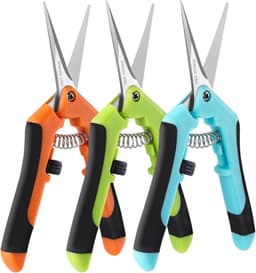
You are at the back door, and amazon.co.uk has put both tools in the same browse node. Flower scissors vs secateurs is one fork: use the snip on a thin green stem inside its printed millimetres, and use secateurs when the wood is hard, the rose stalk is woody, or the listing will not give a believable millimetre line. An anvil field is the wrong cut for arranging. Peter F. set this on 21 October 2026 from listing fields and public UK sources, not a lab test. A qualifying purchase can earn us a commission at no extra cost to you. The nine rows stay unranked on the [flower scissors comparison](/hub/garden-tree-and-hedge-shears/flower-scissors).

You are at the back door, and amazon.co.uk has put both tools in the same browse node.

Our top picks

On this page

A thin green stem wants two blades

A flower scissor is two blades that meet. Burgon & Ball describe a flower and fruit snip that way for flower stems and thin produce, and a florist's shear as the same action. Stay inside the printed figure, and only while the growth is thin and green. Both blades cut, the set is mostly ambidextrous, and HOTUT and Wieerda are n/a. Two edges do not double a secateur's cut. Bend one bedding stem and close the snip once. BBC Gardeners' World keeps florist snips with summer bedding. If the blades chew, or the stalk is harder than the printed line, stop and move to a bypass secateur for the live wood.

Hard wood wants one blade and a hook

A bypass secateur is one blade passing a curved hook. Burgon & Ball keep bypass for live green growth. Anvil secateurs chop onto a block, which they reserve for old, hard or dead wood. Gardeners' World uses secateurs on roses and snips on bedding. A dead brown spur is the anvil case, and a poor stem for a jug. A fruit tree, a hedge or a large rose prune sits outside both tools, so change to a lopper, a saw or a hedge tool, or call someone who does that work.

An anvil field is the wrong cut for arranging

Housolution prints Anvil in the blade-type field, while the bullets say flower scissors and name SK5 steel. An anvil blade lands on a block, and a flower scissor is two blades passing, so the row describes two cuts. Neither magazine tested Housolution. If you use the row, take the 8 mm bullet as a thin-stem line and leave Anvil off the vase. A woody stalk stays with secateurs even when the flower looks soft.

A centimetre field is not a stem

ISSANG prints a cutting width of 9.5 cm, Laicky prints 16.5 cm, and Colibri prints a unitless 50.0. A centimetre width is a different number from a millimetre stem line, and a unitless 50.0 is not a stem. Read a centimetre field, or a field with no unit, as a conflict on the flower scissors buying guide. Use the snip on a thin green stem inside its printed millimetres. Use secateurs when the wood is hard, the rose stalk is woody, or the listing gives no believable millimetre line. A pruning title does not make the snip a secateur.

Common questions

When do I pick flower scissors instead of secateurs?
Pick flower scissors for a thin green stem inside the millimetres the listing prints. Where this amazon.co.uk set states a line, the figures are 5 mm, 6 mm, 7 mm and 8 mm. The English Garden's about 5–8 mm band is a magazine guide for fine snips. Burgon & Ball's two blades suit flower stems and thin produce. A woody stalk, or a listing that only prints centimetres, is past the snip.
When is the stem a secateur job?
Use secateurs for hard wood, for a woody rose stalk, and when the listing gives no believable millimetre line. BBC Gardeners' World puts secateurs on roses and snips on bedding. Burgon & Ball keep bypass for live green growth and anvil for old, hard or dead wood, because anvil can crush softer stems. Their 2.5 cm and 1.5 cm limits are their own tools. A fruit tree, a hedge or a large rose prune needs a different tool or a professional.
Why is an anvil a poor cut for a vase stem?
An anvil blade chops onto a block and can crush soft green growth, which is a poor end on a stem you mean to arrange. Burgon & Ball keep that chop for old, hard or dead wood. Country Living UK, on 30 April 2024, says anvil secateurs are not suitable for flower arranging. Housolution's field says Anvil while the bullets say flower scissors and SK5, and that pair was not lab-tested here.
Does a bypass label on a snip make it a secateur?
Two passing blades are still a snip on a short flower scissor in the English Garden's about 5–8 mm band. Burgon & Ball separate that scissor action, for flower stems and thin produce, from bypass secateurs for live green growth. Two cutting edges describe the blades, and they are not twice a secateur's capacity. Stay inside the millimetres the listing prints. On hard wood, or past that line, use secateurs and keep an anvil cut off the vase.
What if the cutting width is in centimetres?
A centimetre cutting width records something other than stem thickness. ISSANG prints 9.5 cm and Laicky prints 16.5 cm, and neither figure replaces secateurs. Colibri's unitless 50.0 is not a stem. Those fields differ from a 7 mm or 8 mm line elsewhere in this set, so with no believable millimetre sentence you leave the wood to secateurs. The flower scissors buying guide is where that conflict is checked before a row is chosen.
Can one tool do roses and bedding?
BBC Gardeners' World splits the jobs, with florist snips for summer bedding and secateurs for roses once the stalk is woody. A thin green bedding stem inside the printed millimetres can stay on the snip. A hard rose stalk goes to secateurs. Forcing the blades past the line is how they chew. Where on the plant to cut, including rose deadheading, sits on the deadheading page.

Related pages

Sources

Public UK sources used for this comparison. Listing prices, stars and review counts are from the stored amazon.co.uk pages dated 21 October 2026.

  1. RHS — deadheading plants (retrieved 21.10.2026)
  2. BBC Gardeners' World — how to deadhead flowers (retrieved 21.10.2026)
  3. Gardens Illustrated — deadheading (retrieved 21.10.2026)
  4. The English Garden — the best plant snips (retrieved 21.10.2026)
  5. Country Living UK — secateurs and scissors, 30 April 2024 (retrieved 21.10.2026)
  6. General Product Safety Regulations 2005 (retrieved 21.10.2026)
  7. Consumer Rights Act 2015, section 9 (retrieved 21.10.2026)
  8. RHS — how to garden safely (retrieved 21.10.2026)