Independent comparisons. We may earn from shop links. More info

Deadheading flowers with snips

Updated: 22 October 2026

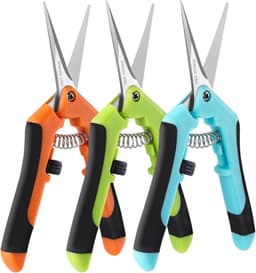
You are on a summer evening pass through the border, and the petunias have browned while the leaves under them are still working. Deadheading flowers with snips is how you clear that soft growth: the spent bloom comes off just above the next bud or leaf, and anything woody waits for secateurs. The Royal Horticultural Society times the job to flowers that look scruffy, and it keeps finger and thumb for many bedding plants. BBC Gardeners' World puts scissors or florist snips with that pinch for summer bedding, and it moves repeat-flowering roses onto secateurs. Pair-by-pair ranking sits in the [flower scissors comparison](/hub/garden-tree-and-hedge-shears/flower-scissors). What follows is where you cut, and which stalks you leave.

You are on a summer evening pass through the border, and the petunias have browned while the leaves under them are still working.

Our top picks

On this page

Soft bedding and thin stalks

On summer bedding, and on any thin stalk that is still soft, you pinch or you snip, and you stop just above the next bud or leaf. The RHS puts the cut there, keeps finger and thumb for many bedding plants, and moves to scissors, a knife, or secateurs when the stem is thick or stringy. Gardeners' World places scissors or florist snips in the same group as a pinch. One faded bloom comes off so the shoot below can flower next. Florist snips give a cleaner face on a delicate stem, which is the case Gardens Illustrated describes. Compost the heads so they do not sit wet on the crown. Closing the lock, wiping sap, and storing the scissors are covered in how to use flower scissors.

Roses are a secateur job

Repeat-flowering roses move from snips to secateurs and gloves. For a single flower, Gardeners' World removes the head and about 15 cm of stem, finishing just above a strong leaf. That 15 cm is the length of stem you take away. The English Garden figure of about 5–8 mm is a different limit, a thickness guide for fine snips. Woody canes are the tougher growth Gardens Illustrated gives to secateurs, with florist snips kept for delicate flowers. Wear gloves against thorns, and stop if you cannot do the job, following the RHS safety advice. A large prune, work at height, or a shrub you cannot name goes to someone who prunes professionally. A ripened rose cane stays with the secateurs.

What you leave on purpose

Hydrangea heads stay on the shrub through winter. Gardeners' World leaves them so the old flowers cover the buds, and an autumn snip on the shrub takes that cover off. On roses, stop when you want hips for birds more than another flush. Take a bloom off when it looks scruffy and you want another, the RHS cue. Keep it when the seed head is the point, rosehips or a winter hydrangea. The snips only remove flowers you have chosen, on stalks soft enough to cut.

What these snip reviews already show

UK reviews of the Laicky and Colibri pairs already describe deadheading, the soft cut back to the next bud or leaf. Rose work here still follows Gardeners' World, which specifies secateurs, so those amazon.co.uk lines are a limit on the snips. A qualified florist, writing about the Wanmu pair, still wanted secateurs for woody foliage. Peter F. took the method from the RHS and BBC Gardeners' World in October 2026, and used the listing comments only as limits. No laboratory trial sits behind the cuts.

Common questions

Where do I cut a faded bedding flower?
Cut or pinch just above the next bud or leaf, which is where the RHS places a spent flower. On a petunia, remove the old head and a short piece of green stalk, and leave the leaf under the cut. Gardeners' World groups this with scissors, florist snips, or finger and thumb. About 15 cm of stem is the single-rose cut, made with secateurs. Compost the bedding head once it is off the crown.
Can I deadhead roses with flower scissors?
Deadhead repeat-flowering roses with secateurs and gloves. Gardeners' World takes about 15 cm of stem with a single flower, down to a strong leaf, and on a cluster it clears flower by flower before the stem. The RHS notes that some hybrid teas can be snapped, because types differ. Snips around the English Garden guide of 5–8 mm suit fine stems. A florist writing about the Wanmu pair still wanted secateurs for woody foliage.
When should I stop deadheading so the plant sets hips?
Stop on roses when you want hips for birds more than further flowers. Gardeners' World treats the pause as a real choice, and until you make it the secateur routine continues. A petunia left uncut flowers for less time, and hips are a rose crop. Keep snipping soft bedding when blooms look scruffy. The pause belongs on the roses you mean to fruit.
Do hydrangea heads come off in autumn?
Leave hydrangea heads on over winter. Gardeners' World keeps them because the old flowers protect the buds, so an autumn cut on the shrub removes that shelter. Snip soft bedding nearby if those flowers look scruffy. The hydrangea itself waits until the heads have finished the winter.
Is pinching with finger and thumb enough?
For many bedding plants, finger and thumb are enough. The RHS describes that pinch, and Gardeners' World sets it beside scissors or florist snips. Use it where a soft stalk parts without tearing the leaf below. Florist snips clean up a delicate flower, the case Gardens Illustrated gives them. Thick or stringy stems move to secateurs, scissors, or a knife.
What stem is too thick for a snip?
Use secateurs on woody stalks and on the tougher growth Gardens Illustrated keeps for them. About 5–8 mm is The English Garden's guide for fine snips, and one Colibri review needed a sharpen before green stems over about 4 mm. Change tool if the blades chew or the stalk will not yield in your fingers. Stop for a large prune, work at height, or a shrub you cannot name.

Related pages

Sources

Public UK sources used for this comparison. Listing prices, stars and review counts are from the stored amazon.co.uk pages dated 21 October 2026.

  1. RHS — deadheading plants (retrieved 21.10.2026)
  2. BBC Gardeners' World — how to deadhead flowers (retrieved 21.10.2026)
  3. Gardens Illustrated — deadheading (retrieved 21.10.2026)
  4. The English Garden — the best plant snips (retrieved 21.10.2026)
  5. Country Living UK — secateurs and scissors, 30 April 2024 (retrieved 21.10.2026)
  6. General Product Safety Regulations 2005 (retrieved 21.10.2026)
  7. Consumer Rights Act 2015, section 9 (retrieved 21.10.2026)
  8. RHS — how to garden safely (retrieved 21.10.2026)