Independent comparisons. We may earn from shop links. More info

Wildlife pond de-icer

Updated: 22 October 2026

The lawn pond froze overnight and you are asking whether a heater has to go in this weekend. For a wildlife pond with few or no fish, you usually do not need a wildlife pond de-icer. Peter F. used the RHS January notes, Froglife, the Amphibian and Reptile Conservation Trust and the RSPCA wildlife advice. There was no test among amphibians, and one American review is not a death rate. A qualifying purchase can earn a commission at no extra cost to you. Stocked ponds use the [pond de-icer comparison](/hub/garden-ponds/pond-de-icer). Below is what ice does to frogs and newts, what to do about snow, and when a heater still belongs.

The lawn pond froze overnight and you are asking whether a heater has to go in this weekend. For a wildlife pond with few or no fish, you usually do not need a wildlife pond de-icer. Peter F.

Our top picks

On this page

What ice does to frogs and newts

Winterkill in a garden wildlife pond is uncommon. The Amphibian and Reptile Conservation Trust puts plants and algae ahead of a hole. Frogs under the ice are mostly still and take oxygen through the skin. Froglife says a hole may not change the oxygen. A heater bought because a sealed surface must be suffocating them answers a problem these sources do not describe. Newts differ. Froglife’s 2025 note says a hole helps newts that breathe air, and the Trust says an opening can help smooth newts and animals that drink. Neither charity starts with a mains heater. Froglife’s figure for amphibians is at least 60 cm, a building depth, not a heater size. A shallow dish frozen to the liner is missing water.

What to do instead of a heater

Brush the snow off the ice. The RHS says wildlife ponds with few or no fish usually do not need a hole unless waste is rotting, and that snow should come off so light reaches plants and algae. A soft broom in daylight deals with a white sheet. Leave the ice intact. Froglife, the RSPCA wildlife page and the RHS reject a hammer, because the shock travels through the water. If you need a patch, the RSPCA allows a saucepan of hot water set on the ice. Never add salt or antifreeze, and do not tip a kettle in. A floating ball lifted out can leave a gap. Froglife still treats the hole as optional for oxygen, and says a pump can stay on. That is wildlife guidance, not the fish warning about super-chilling. Fish follow the pond de-icer versus air pump page.

When a de-icer still belongs

Fish change the answer. The RSPCA fish page wants a de-icer so a hole for goldfish or koi is held without smashing. The RHS draws the same line: few or no fish is the wildlife default. The cable, the RCD and an already frozen night sit on the how to use a pond de-icer page. Heavy rotting waste is the other change. The RHS allows a hole when material is breaking down under the ice, so gas can leave. A heater can hold that small patch when the outdoor supply is already safe. One US review of a K&H de-icer reported frogs killed by the unit. That single review is not a rate and not a UK count. Place any unit where the instructions say it must sit in the water.

Hardware that does not match this pond

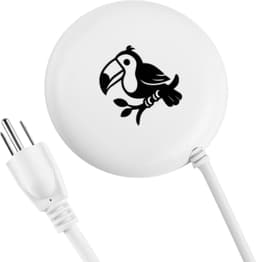
A birdbath de-icer belongs on a shallow bath you top up, not in a planted pond with a 60 cm deep area. A 70 W disc does not become a wildlife tool because the wattage looks modest. When you have few or no fish and nothing is rotting, leave the heater in the shed and brush the snow. A 120 V stock-tank heater is the wrong mains. Garden supplies here are 230 V with a BS 1363 plug, and a travel adapter does not turn a livestock heater into a wildlife pond de-icer. When fish or rot call for a UK vent, use the main comparison.

Common questions

Do frogs need open water?
Usually this is not a heater job. The Amphibian and Reptile Conservation Trust says winterkill is uncommon, and that plants and algae matter more than a hole. Froglife says a hole may not change the oxygen, because frogs take it through the skin in cold water. Clear the snow and leave the ice. Open water matters more for air-breathing newts and for animals that drink, which is a smaller claim than a de-icer on every frog pond.
Should I smash a hole?
No. Froglife, the RSPCA wildlife advice and the RHS reject hitting the ice, because the shock carries through the water. Never use salt or antifreeze, and do not pour hot water in. Set a saucepan of hot water on the ice, as the RSPCA wildlife page describes, or lift out a ball that has been floating there. Both leave a patch without a spade.
Is snow on the ice a problem?
Yes. Snow blocks light for the plants and algae that the Trust and the RHS put ahead of any gadget. Brush it off with a soft broom, and stay off the ice. A wildlife pond with few or no fish usually still needs no hole unless waste is rotting underneath. Clear ice can stay. A pond buried under snow for a week is the case to brush.
Do newts differ from frogs?
They can. Froglife’s 2025 note says a hole helps newts that breathe air, and the Trust includes smooth newts among animals that can use an opening. Frogs more often cope with a seal when the water is deep and plants still get light. Leave the ice unbroken either way. A newt hole can be the saucepan method. Froglife’s 60 cm is a depth for amphibians, not a heater size.
What if I also have goldfish?
The pond is then more than a wildlife pond. RSPCA fish guidance wants a de-icer for pet fish, while the wildlife advice is snow cleared and a saucepan. Take the unit and the supply from the main comparison and the how-to page. Keep the same cautions for the amphibians: no salt, no antifreeze, and no hammer. Help for the goldfish does not show that frogs should crowd the element.
Can a de-icer harm frogs?
It is not automatically safe. One US review of a K&H de-icer reported frogs killed by the heater. That is a single review, not a rate, and not a UK figure to scale. Skip a heater in an unstocked pond when you only want reassurance. Fit one for fish or heavy rot, place it as the instructions require, and keep the default as cleared snow and whole ice.

Related pages

Sources

Public UK and maker sources from the research digest, used for this page in October 2026. Prices, stars and review counts are from the nine amazon.co.uk listings captured on 19 October 2026. A missing voltage is not 230 V. No score is a laboratory freeze test or a claim that the whole pond stays ice-free.

  1. Blagdon Affinity Ice Vent (retrieved 20 October 2026)
  2. Blagdon Affinity Ice Vent FAQ (retrieved 20 October 2026)
  3. RHS, ponds in January (retrieved 20 October 2026)
  4. Practical Fishkeeping, fish and the pond in winter (retrieved 20 October 2026)
  5. ARC Trust, frogs and ice (retrieved 20 October 2026)
  6. IET Wiring Matters, Regulation 411.3.3 (retrieved 20 October 2026)
  7. Voltimum, electrical installations in the garden (retrieved 20 October 2026)
  8. GOV.UK, Approved Document P (retrieved 20 October 2026)