Independent comparisons. We may earn from shop links. More info

Clear green pond water

Updated: 22 October 2026

You come out after a warm week and the goldfish have vanished under a green cloud. Clear green pond water is algae suspended through the pond, and a clearer afternoon leaves the light and the nutrients in place. A bottle from the [pond clear comparison](/hub/garden-ponds/pond-clear) can move that cloud for a while. The Royal Horticultural Society treats emptying the pond as a step that can make the long-term problem worse, so name what you are seeing before you pour. Pea soup, blanket weed, and clay are different problems, and a wildlife pond may be better left alone. Peter F. used the saved listings from 19 October 2026. This is not a laboratory test.

You come out after a warm week and the goldfish have vanished under a green cloud. Clear green pond water is algae suspended through the pond, and a clearer afternoon leaves the light and the nutrients in place.

Our top picks

On this page

Pea soup is algae, not dirt you can net strand by strand

Green water is algae fine enough that a net comes up empty. Blanket weed is the stringy mass you lift on a stick. Clay after planting looks brown or milky, while pea soup is a bright, even green. Freshwater Habitats Trust groups those growths with duckweed because they share nitrate and phosphate, and they still look different in the hand. A liner green in its first May differs from a pond that was clear last summer. New or dredged ponds often bloom for a season while plants settle. An older pond that turns in a fortnight usually still has sun, tap water, food, soil, or ducks. Froglife says new ponds often settle, and established ponds point toward sun or nutrients. Strands on a net are blanket weed. An evenly green jug is this bloom.

Why it stays green

The bloom stays while light and nutrients stay. Shade and plants cut the light. Rainwater, in place of repeated tap-water top-ups, cuts one route the Royal Horticultural Society names. Soil with the marginals, uneaten food, and ducks are the continuing inputs. Fish that stir the bottom can put that green back soon after particles drop. Barley straw is the slower option both the Royal Horticultural Society and Froglife mention, and it is less effective than shade and rainwater. A wildlife pond about 2 m by 1.5 m, open to the south and topped from the hose each dry week, can turn to pea soup with no bottle opened. Fewer top-ups and marginals over part of the surface change those inputs. A dose on the same hose habit can buy a clearer few days, then the same green.

What a pond-clear bottle changes

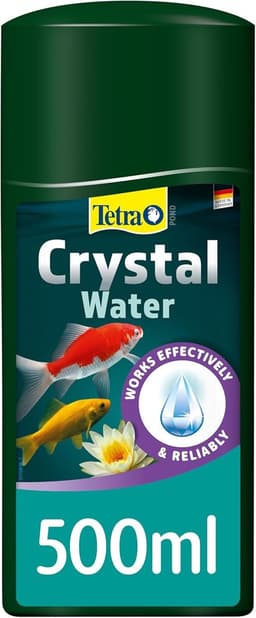
A pond-clear bottle moves the cloud you can see and leaves nitrate and phosphate in water that is still being fed. Envii's bacterial timing runs in weeks. Blagdon and Tetra-style clumping bottles are sold on a change measured in hours. Reviews on both include ponds that stayed green, so the pack is a clock to test, not a date you can book. Clumping pulls fine algae into particles, and the water can look worse before they sink, which makes a second bottle the same day an easy mistake. Those clocks are on the pond bacteria or flocculant page. Litres and the rate on your bottle belong on the how to dose pond clear page. If the water is still green after the wait that bottle named, shade, plants, and fewer tap-water top-ups are the work the liquid cannot finish. That order sits on the pond clear buying guide. For a lake, the Royal Horticultural Society points toward professional help.

When to leave the bottle on the shelf

A wildlife pond with frogspawn or newt larvae is a poor place to try a clarifier. Froglife says a bloom can strip oxygen and kill tadpoles, and that treatments sold as natural can still upset the balance. Daphnia and barley straw are the low-harm options Froglife names, and both are slower than a clumping bottle. If fish gasp in thick green water, aerate and ease the food before you dose. Clearing the colour does not put oxygen back. Emptying can worsen the long-term problem, which is the Royal Horticultural Society view, because you remove organisms that compete with the algae and often refill from the tap into full sun. Leave the water, scoop strands of blanket weed, and add shade, plants, and rainwater.

Common questions

Why did the pond turn green?
Green water is algae suspended in the pond. Froglife treats a new bloom as something that often settles, and an established pond that turns green as a sign of sun or nutrients. Freshwater Habitats Trust names nitrate and phosphate, with tap water, food, soil, and ducks as inputs that keep arriving. A warm spell on open water is enough when those inputs are already there. A later dose does not cancel them.
Will it clear on its own?
A new or recently dredged pond often blooms for a season and can settle as plants take hold. That is the Freshwater Habitats Trust's picture, not a promise of clear water by autumn. An established pond that stays green points at sun or nutrients, in Froglife's split, so waiting alone repeats the same conditions. Shade, marginal plants, and rainwater in place of hose top-ups change those conditions. The Royal Horticultural Society says barley straw is slower than shade and rainwater.
Is blanket weed the same problem?
Blanket weed is the stringy algae you can lift on a net. Green water is a suspended bloom that leaves the net empty and colours a jug evenly. Freshwater Habitats Trust links both to nitrate and phosphate, while the Royal Horticultural Society treats blanket weed as something you scoop. A clumping bottle aimed at pea soup does not rake a mat off the surface. Strands in the hand mean this page is the wrong job.
Is green water dangerous for fish or tadpoles?
A heavy bloom can take oxygen out of the water, and Froglife warns that this can kill tadpoles. That warning is about the algae, not a test result for a named bottle. Fish gasping in thick green water need air and less food before a dose that may cloud the water further. A listing sold as natural is not a reason to treat spawn or newt larvae as safe. Daphnia and barley straw are the low-harm options Froglife names.
Should I empty the pond?
The Royal Horticultural Society says emptying is not the first fix, and that it can make the long-term problem worse. You tip away life that competes with the algae, then often refill from the tap into a bare, sunny pond. Leave the water, scoop blanket weed if you have strands, and cut nutrients with plants, shade, and rainwater. A garden bottle is the wrong scale for a lake, which the Royal Horticultural Society points toward professional help.

Related pages

Sources

Public UK and maker sources from the research digest, used for this page in October 2026. Prices, stars and review counts are from the six amazon.co.uk listings in this set, shelf date 19 October 2026. A fish-safety line is a listing claim, not an HSE approval. A 4.2-star row is not evidence that fish were unharmed.

  1. RHS, pond algae and blanket weed (retrieved 19 October 2026)
  2. Froglife, pond problems (retrieved 19 October 2026)
  3. HSE, COPR product types (retrieved 19 October 2026)
  4. Tetra UK, CrystalWater (retrieved 19 October 2026)
  5. Blagdon treatments FAQ (retrieved 19 October 2026)
  6. Envii Pond Klear Xtra (retrieved 19 October 2026)
  7. GOV.UK, great crested newts (retrieved 19 October 2026)
  8. That Pond Guy, calculating pond volume (retrieved 19 October 2026)