Obelisk or artificial plant pyramid
You searched for an obelisk and amazon.co.uk also showed a plastic cone, or you lost box to blight and someone suggested an artificial pyramid. Those are different purchases that share a tapered outline. This page settles one decision: a living climbing frame versus a static faux cone. It does not rank the metal listings against each other. The nine listings sit on the [plant pyramid comparison](/hub/garden-decor/plant-pyramid). Criteria after the fork sit on the [plant pyramid buying guide](/hub/garden-decor/plant-pyramid/sub/plant-pyramid-buying-guide). Peter F. read those listings on 21 October 2026. A qualifying purchase can earn a commission at no extra cost to you.
You searched for an obelisk and amazon.co.uk also showed a plastic cone, or you lost box to blight and someone suggested an artificial pyramid. Those are different purchases that share a tapered outline.
You searched for an obelisk and amazon.co.uk also showed a plastic cone, or you lost box to blight and someone suggested an artificial pyramid. Those are different purchases that share a tapered outline. This page settles one decision: a living climbing frame versus a static faux cone. It does not rank the metal listings against each other. The nine listings sit on the plant pyramid comparison. Criteria after the fork sit on the plant pyramid buying guide. Peter F. read those listings on 21 October 2026. A qualifying purchase can earn a commission at no extra cost to you.
Our top picks
| Badge | Product | Role | Height | Day-one job | Note | Price | Offer |
|---|---|---|---|---|---|---|---|
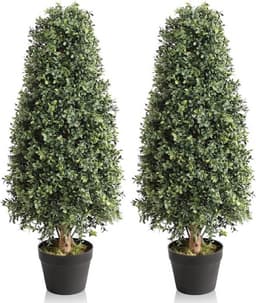
| Best overall |  momoplant Momoplant boxwood pyramids 90 cm, pair | Artificial cone, pair | 90 cm | Reshape, add weight | 9.8 | about £106.99 | View offer |
 Leaf Leaf bay pyramid 120 cm | Artificial cone | 120 cm | Fluff, then ballast | 8.6 | about £54.99 | View offer | |
 DIVCHI DIVCHI steel obelisk 1.9 m | Climbing support | 190 cm | Screw together, then tie | 8.4 | about £10.99 | View offer |


On this page
Same silhouette, different job
Why UK gardens look at fake box
What an artificial pyramid cannot do
Living frame or living plant instead
Which decision sends you where next
Common questions
Is a plant pyramid the same as a garden obelisk?
Can I grow a rose up an artificial boxwood pyramid?
Does a plastic cone stop box blight in the rest of the garden?
Which option needs more work after day one?
Which costs more in this amazon.co.uk set?
Related pages
Sources
Public UK sources for climber training, box blight, product safety and the Consumer Rights Act. amazon.co.uk prices, stars and review counts were taken from the listings on 21 October 2026. The digest lists these URLs without a separate retrieval date for each page, so the shelf date on the score note is used.
- RHS, pruning and training climbers on planting (retrieved 21 October 2026)
- RHS, climbing roses (retrieved 21 October 2026)
- RHS, box blight (retrieved 21 October 2026)
- RHS, box alternatives (retrieved 21 October 2026)
- Consumer Rights Act 2015, section 9 (retrieved 21 October 2026)
- GOV.UK, General Product Safety Regulations 2005: Great Britain (retrieved 21 October 2026)
- GOV.UK, permitted development rights for householders: technical guidance (retrieved 21 October 2026)
- Harrod Horticultural, garden obelisks (retrieved 21 October 2026)