Independent comparisons. We may earn from shop links. More info

How to mix mortar in a bucket

Updated: October 2026

How to mix mortar in a bucket is a small sand-and-cement gauge: one bucket as the measure, water added slowly, and only as much as you can place before it stiffens. It is not a recipe for a 25 kg bag of gypsum plaster, and a 15 litre pail is not a mixer. The [mortar bucket comparison](/hub/flooring-tools-and-accessories/mortar-bucket) is where the nine tubs and their prices sit, read on 19 October 2026. Public UK guides and those listings were used, not a site trial.

How to mix mortar in a bucket is a small sand-and-cement gauge: one bucket as the measure, water added slowly, and only as much as you can place before it stiffens.

Our top picks

On this page

What you are mixing

Bricklaying mortar here means sand and cement, measured by volume and placed while it is still workable. Gypsum plaster is a different bag. It goes into water first, about 11–12 litres for 25 kg on B&Q's guide. If the bag says plaster, multi-finish or gypsum, use the plasterers mixing bucket page. Copying one method onto the other bag gives you the wrong material. Guides do not agree on one ratio. Build Journal quotes 5:1 sand to cement above the damp-proof course, and 4:1 where the duty is harder. Screwfix calls 4:1 a common general mix and says measure by the bucket. If a drawing or the cement bag states a ratio, that instruction wins. Below the damp-proof course, or on a chimney, get a bricklayer.

Gauge with one bucket

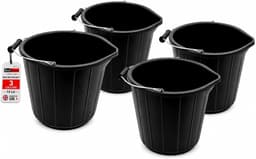
Use the same bucket for every scoop, all day. Put the sand in first, in level bucketfuls, then the cement in the same bucket, and turn them dry until the colour is even. Then add water a little at a time. A 14 or 15 litre pail is enough for that gauge, and none holds a whole 25 kg bag of cement plus the sand. Keep the mix below the rim. If the tub has no printed marks, tape one fill line and use it for sand and for cement. Faithfull and Airflow state graduations. Several black 14 litre pails do not. The wall is covered on the flexi tub or builders bucket page. On a 4:1 guide that is four level buckets of sand and one of cement. Do not mix 4:1 and 5:1 on the same pier.

Water, stiffness, and the clock

The mix is wet enough when it holds a ball and still slides off the trowel, without a puddle on the sand. Too wet and it slumps out of the joint. Too dry and it will not bond. Add water in splashes and stop while it still looks short of sloppy. A little more water is only for the first few minutes. You cannot rescue a batch that has started to set. Build Journal says use the mortar within about two hours and do not re-temper it. Screwfix gives about 30–60 minutes. Those are two sources, not a figure you can average. Do not lay mortar in frost, or below about 5°C. Wash the tub before any gypsum gauge. Wet cement can burn: gloves, eye protection and washing are the HSE controls, and the chromium-reducing agent lasts only to the sack date.

When the bucket is the wrong tool

A full bucket is a lift, not a step in the recipe. HSE's INDG143 gives filters, not a legal kilogram limit: at knuckle height and close to the body, about 25 kg for men and 16 kg for women, and lower if you reach or lift from the floor. A wire handle is an awkward grip. Fifteen litres of water is already 15 kg before the bucket. A full 45 litre tub is a two-person lift on the M1SS ropes. Repeated full-tub lifts are the case HSE points at pre-mixed mortar and mechanical handling. Stop for structural mortar, a chimney, or work below the damp-proof course. A site mixer or a pump is a different site from a garden pier. If you can place the batch in time, mix less than you think and wash the tub while the film is still soft.

Common questions

What order do I add sand, cement, and water?
Measure sand and cement in the same bucket, sand first, then cement, and blend them dry until the colour is even. Add water a little at a time and stop while the mix still holds together. Gypsum plaster goes into water first. Do not fill the bucket to the rim before you stir.
Which ratio should I use for a garden wall?
Guides differ. Build Journal quotes 5:1 sand to cement above the damp-proof course and 4:1 for harder duty. Screwfix calls 4:1 a common general mix. Use one ratio for the whole above-ground repair, measured by volume. A drawing or the bag wins if it states a mix. Below the damp-proof course, ask for a specification.
Can I mix a whole 25 kg bag of cement in a 15 litre bucket?
No. A 14 or 15 litre pail is a gauge for a few bucketfuls, not a drum for a whole bag plus sand. The finished volume will not fit, and a full tub is a heavy lift on a wire handle. Mix a small batch, place it, and mix again.
Can I add water if it starts to stiffen?
No, once the mix has started to set. Build Journal and Screwfix both reject re-tempering, even though they quote different working times. Water added to a stiff gauge looks soft and lays weak. Discard that batch and mix a smaller one.
How long can the mix sit?
Build Journal says about two hours. Screwfix describes about 30–60 minutes. Those are two published figures, not a single rule, and warm weather shortens both. Do not average them. Frost and temperatures below about 5°C are a stop, not a longer clock.
What protection do I need while I tip the bag?
Gloves and eye protection, and a dust mask when you tip a dry bag. Wet cement can burn and can cause dermatitis if slurry stays on the skin. Wash straight away, and check the sack date for the chromium-reducing agent. If cement has burned the skin, stop and get proper advice.

Related pages

Sources

Public sources used for this comparison, with the amazon.co.uk listings read on 19 October 2026.

  1. HSE: cement and health risks (retrieved 19 October 2026)
  2. HSE CIS26: cement (retrieved 19 October 2026)
  3. HSE INDG143: manual handling at work (retrieved 19 October 2026)
  4. HSE: manual handling in construction (retrieved 19 October 2026)
  5. Airflow: Invincible 15 litre builders bucket (retrieved 19 October 2026)
  6. B&Q: how to mix plaster (retrieved 19 October 2026)
  7. Hanson: plastering sand data sheet (retrieved 19 October 2026)
  8. Refina: white plastic mixing tubs (retrieved 19 October 2026)