Independent comparisons. We may earn from shop links. More info

How to use a cement mixer

Updated: 21 October 2026

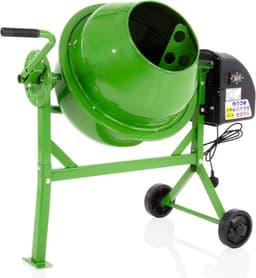
You have a small electric drum on the patio and a barrow that may not fit under the spout. How to use a cement mixer is a sequence: set it level, keep your hands out of the drum, add water in stages, tip, and wash before the mix goes off. The maker's manual wins where it disagrees with a general guide. This page does not rank the drums. The [cement mixer comparison](/hub/flooring-tools-and-accessories/cement-mixer) does that. Peter F. did not run the mixers. A qualifying purchase can earn a commission at no extra cost to you.

You have a small electric drum on the patio and a barrow that may not fit under the spout.

Our top picks

On this page

Set the mixer before you load it

Put the mixer on level, firm ground, clear of the hose and of a watercourse. Check the plug before you add cement. A stated 230 V machine with a BS 1363 plug is the house case. If the listing never stated a voltage, read 230 V or 110 V rather than guessing from 220 W. On one drum in this set, reviewers found holes that do not meet and a bolt with no thread. Do not load that assembly. Wear waterproof alkali-rated gloves and eye protection. Wet cement is about pH 12 to 13 and can burn trapped skin. Empty weights are about 24 to 27 kg. Raise a short frame before the drum is full, and do not lift a loaded drum.

What goes in first

Follow the manual when it specifies an order. Where it does not, start wet. The Concrete Society says start the mixer, add about two-thirds of the water, then coarse aggregate, then sand, then cement, then the rest of the water slowly, and mix for at least two minutes. B&Q says wet the drum and build the load in halves. Never put a hand or a tool into a turning drum. A shovel left in the mouth can be thrown. Which drum to buy is on best cement mixer.

How much water and how full

Add the remaining water until the mix tumbles and folds, not until it pours like soup. B&Q calls the target a thick porridge: mix stuck to the drum is too dry or too lean, and mix that slops is too wet. The Concrete Society says not to loosen a stiff mix with water alone. Add cement as well. That feel is not a strength grade. On these 220 W drums the batch is the stated mix. Hyundai prints 47 litres and Garden Universe prints 40. The KATSU pages do not print a mix. A 20 kg bag of post mix is a sane first batch on a 40 litre stated capacity.

Empty and wash

If the spout sits below the barrow, raise the empty mixer on sound packing or tip into a low tub. Hyundai and Garden Universe reviewers both meet this short frame. Stop the drum before you scrape. Do not lift the drum to pour it. Wash as soon as the barrow is clear. National Tool Hire and Belle describe water plus about 1 inch of gravel, not bricks and not solvents. Do not send the slurry into a drain that reaches a watercourse. Stop when the pour is structural or the site requires 110 V. The criteria are on the cement mixer buying guide.

Common questions

Do I put water or cement in first?
Start the drum and wet it first unless your manual says otherwise. The Concrete Society adds about two-thirds of the water, then coarse aggregate, sand, and cement, then the rest of the water slowly, and mixes for at least two minutes. B&Q also wets the drum and builds the load in halves. Cement onto a dry drum, then a flood of water, is the pattern these guides are trying to avoid. If the manual with your mixer prints a different order, follow the manual.
How wet should the mix be?
Wet enough to tumble and fold, not wet enough to pour like soup. B&Q calls the target a thick porridge and contrasts a mix that tumbles with a mix that sticks. Add the last of the water slowly. If the batch goes stiff in the drum, the Concrete Society says not to loosen it with water alone. Add cement as well, or you dilute the mix. This feel is not a strength specification. A house foundation needs a designed mix, not a wetter batch.
How do I tip into a barrow if the mixer is short?
Stop the drum before you move the barrow in close. If the mouth sits below the barrow, raise the empty mixer on firm packing, or tip into a low tub and transfer. Reviewers of the short frames in this set say a builder's barrow does not fit underneath. Do not lift a full drum, and do not reach into a turning drum with a spade. Empty weights are already about 24 to 27 kg. Get a second person if the empty frame has to move onto blocks.
How soon do I wash the drum?
Wash it as soon as the batch is out, before the film sets. Run water with about 1 inch of gravel, as National Tool Hire and Belle describe, then empty the slurry somewhere it will not reach a stream or a surface drain. Stop the motor before your hands or a tool go inside. A hire drum that comes back dirty can be charged. On your own drum, set cement is the next leak and the next blunt blade.
When should I stop and order ready-mix?
Stop when the pour is structural, when the area is too large for 40 to 47 litre batches to keep up before the concrete stiffens, or when the mixer itself is unsafe to run. Bolt holes that do not meet, a motor that trips as soon as you tip, or a site that requires 110 V are also stop points. Ready-mix or a hired larger drum is cheaper than a failed slab.

Related pages

Sources

Public sources used for this comparison, with the amazon.co.uk listings read on 19 October 2026.

  1. HSE: cement and health risks (retrieved 19 October 2026)
  2. HSE: electricity on construction sites (retrieved 19 October 2026)
  3. HSE: noise at work for employers (retrieved 19 October 2026)
  4. HSE: manual handling (retrieved 19 October 2026)
  5. BS EN 12151:2007 via NBS (retrieved 19 October 2026)
  6. MPA Cement: chromium VI and cement (retrieved 19 October 2026)
  7. Speedy Hire: cement mixer buying guide (retrieved 19 October 2026)
  8. Seddon Plant: Belle Minimix 150 110 V (retrieved 19 October 2026)
  9. Hire MK: 110 V tip-up cement mixer (retrieved 19 October 2026)