Fire blanket or fire extinguisher
A pan of oil is alight and both a pouch and an extinguisher are within reach. The question is fire blanket or fire extinguisher, and the honest UK answer is often neither: leave and call 999. Where a fire service still names a household tool for that pan, it names a blanket, not a jet. Hampshire says never use a fire extinguisher on cooking oil or a chip pan, because it can spread the flames. The [fire blanket comparison](/hub/fire-protection/fire-blanket) lists the pouches. This page is the tool choice. If you are unsure, or the fire has left the rim, close the door if you can and call 999.
A pan of oil is alight and both a pouch and an extinguisher are within reach. The question is fire blanket or fire extinguisher, and the honest UK answer is often neither: leave and call 999.
A pan of oil is alight and both a pouch and an extinguisher are within reach. The question is fire blanket or fire extinguisher, and the honest UK answer is often neither: leave and call 999. Where a fire service still names a household tool for that pan, it names a blanket, not a jet. Hampshire says never use a fire extinguisher on cooking oil or a chip pan, because it can spread the flames. The fire blanket comparison lists the pouches. This page is the tool choice. If you are unsure, or the fire has left the rim, close the door if you can and call 999.
Our top picks
| Badge | Product | Stated size | Standard cited | Oil line on the listing | Note | Price | Offer |
|---|---|---|---|---|---|---|---|
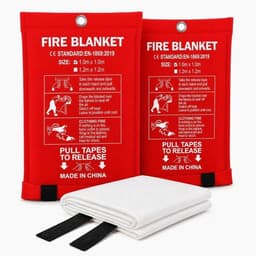
| Best overall |  Yikuneng Yikuneng, 1 m, 2 pack | 1 m × 1 m | EN 1869:2019 | Class F named | 5.9 | about £14.99 | View offer |
 ELRO ELRO FB1212H, 1.2 m hard case | 1.2 m × 1.2 m | EN 1869, no year | Cooking or electrical | 6.1 | about £15.99 | View offer | |
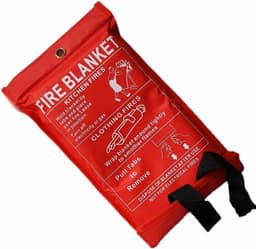
| Best value |  King Karan King Karan, 1 m soft case | 1 m × 1 m | EN 1869:1997 | Cooking-fire suppression | 5.1 | about £5.29 | View offer |

On this page
Why a jet is the wrong tool on a pan of oil
When a blanket is the tool they still name
What a class F extinguisher is for
Leave, and the electrical exception
Blanket, jet, or the exit
Common questions
Should you use a fire blanket or a fire extinguisher on a chip pan?
Is a wet-chemical extinguisher the same as a fire blanket?
What about foam, water, dry powder, or CO2 on a pan of oil?
What if the fire is in a toaster or a plug, not in oil?
Do the blankets in this set count as a class F extinguisher?
Related pages
Sources
Public UK sources from the research digest. Listing prices, stars, and review counts are the amazon.co.uk figures stored with this comparison.
- GOV.UK — fire safety in the home (retrieved 20 October 2026)
- London Fire Brigade — pan fires (retrieved 20 October 2026)
- Hampshire Fire and Rescue — fire safety equipment (retrieved 20 October 2026)
- Cornwall Fire and Rescue — kitchen fires (retrieved 20 October 2026)
- West Sussex Fire and Rescue — kitchen safety (retrieved 20 October 2026)
- Fire Industry Association — code of practice, March 2019 (retrieved 20 October 2026)
- BSI — BS EN 1869:2019 fire blankets (retrieved 20 October 2026)
- HSE — fire safety (retrieved 20 October 2026)