Independent comparisons. We may earn from shop links. More info

Growmore for Vegetables

Updated: October 2026

You have an empty allotment bed, a spring weekend to prepare it, and a tub of Growmore because that is what the site shop has always sold. Growmore for vegetables is a fast, nitrogen-led general feed for preparing a bed and keeping leafy crops moving. The familiar 7-7-7 is an oxide declaration, and the bag is higher in nitrogen than those matching numbers suggest. Fruiting crops need a different feed once flowers open. Listings are ranked on the [vegetable fertiliser comparison](/hub/fertiliser-soil-and-bark-mulch/vegetable-fertiliser). The label on the tub is the rate to follow.

You have an empty allotment bed, a spring weekend to prepare it, and a tub of Growmore because that is what the site shop has always sold.

Our top picks

On this page

What Growmore is and what 7-7-7 means

Growmore is a general mineral fertiliser that UK gardeners have used for decades. Crawley Horticultural Society traces the name to Dig for Victory and calls it a good beginner fertiliser that falls short for more specialised subjects. The RHS lists this kind of inorganic feed for March to April, when garden soils are more often short of nitrogen than of phosphorus or potassium. The 7-7-7 on a classic label is an oxide declaration. As elements the RHS puts it at about 7:3.1:5.8. The Westland and Topline listings here leave NPK as n/a, so the panel on the tub is the analysis you actually bought.

How much Growmore to use on vegetables

Use the rate on the tub in your hand, and weigh it, because a guessed handful drifts. Westland and Vitax both publish a before-planting rate, an established-plant rate and a higher potato rate, but Westland repeats every 4 to 6 weeks and Vitax every 8 to 10. Crawley Horticultural Society suggests half the usual quantity for salad crops, so 70 g becomes 35 g for lettuce on that advice. The Westland 8 kg tub covers about 59 square metres at 135 g, which is arithmetic on 8 kg. Rates for other products sit on the how to feed vegetables page.

Where Growmore falls short for fruiting crops

Growmore is enough to prepare a bed and to start potatoes, cabbage and other leafy crops. It falls short once a plant is setting fruit. At about 7:3.1:5.8 as elements, each dose supplies more nitrogen than potassium. Courgettes, tomatoes and beans need potassium once flowers appear, or you grow foliage and wait on the fruit. Switch when the first flower opens, and leave Growmore as the spring preparation. Pots of those crops belong with the listings on the best vegetable fertiliser page.

Growmore and dogs

Westland's page says pets can return straight after application and that this mineral feed should not attract animals. An Ocado listing adds that some dogs may eat it, so mix the granules in and leave no pile on the path. Animal PoisonLine treats eaten fertiliser as something that can upset a dog's stomach. We have not tested a pet-safe result. Call a vet if a dog eats a noticeable amount.

The two Growmore listings in this comparison

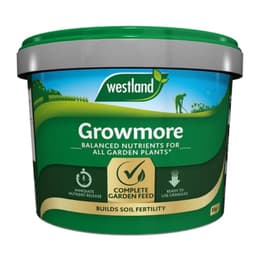
Westland Growmore 8 kg costs £16.95 on amazon.co.uk, about £2.12 per kg, with 465 ratings, captured on 15 October 2026. Topline Growmore 8 kg costs £23.99, about £3.00 per kg, with 136 ratings. NPK on both listings is n/a in this capture. The Topline page shows 20:20:20, and a reviewer says the tub reads 7-7-7. Read the panel when it arrives. Reviews of both tubs mention splits, so open the delivery before you store it. Pack size is one of the trade-offs on the vegetable fertiliser buying guide. The Products Compared editorial team did not run a trial, and a qualifying purchase can earn a commission at no extra cost to you.

Common questions

Is Growmore good for vegetables?
Growmore suits preparing a vegetable bed and feeding leafy crops. It is nitrogen-led, and the RHS places this kind of inorganic feed in March to April. It is a weak sole feed once courgettes or tomatoes flower.
How much Growmore do I use per square metre?
Follow your pack. Westland publishes 135 g per square metre before planting, 70 g on established plants and 210 g for potatoes, every 4 to 6 weeks. Vitax publishes 140 g before planting, 70 g every 8 to 10 weeks and 200 g for potatoes. At 70 g, 8 kg covers about 114 square metres by arithmetic.
What does Growmore 7-7-7 mean, and is it balanced?
On the oxide declaration the RHS describes, Growmore is labelled 7:7:7. As elements, the same label is about 7:3.1:5.8. Nitrogen stays at 7, phosphorus is about 3.1 and potassium is about 5.8, so the feed is nitrogen-led. Level element figures would be a balanced feed, and these are not. Confirm the numbers on the pack, because the listings here leave NPK as n/a.
Is Growmore safe for dogs?
Treat it as something a dog should not eat. Westland says pets can return after spreading and that the mineral feed should not attract animals. An Ocado listing says some dogs may eat it and that you should mix it into the soil. Animal PoisonLine notes that eaten fertiliser can upset a dog's stomach. Mix the granules in, keep the tub shut, and call a vet if a dog eats some.
Can I use Growmore on tomatoes and courgettes?
Use it to prepare the bed before those crops go in. Once flowers open, BBC Gardeners' World recommends a weekly high-potash feed for courgettes and the same pattern for tomatoes. Growmore at about 7:3.1:5.8 supplies more nitrogen than potassium, so it favours leaf if it stays the only feed. Stop further Growmore at flowering and switch. Extra feed on top of a full rate does harm, which is the RHS warning.
Why does one Growmore listing say 20:20:20?
The 20:20:20 figure is a ratio field on a Topline listing, and a reviewer says the tub is 7-7-7. The RHS account of Growmore is 7:7:7 as oxides, about 7:3.1:5.8 as elements, a different analysis from 20:20:20. Our capture states no NPK for Westland or Topline. Read the panel on the tub, and use these rates only when that panel is the Growmore you meant to buy.

Related pages

Sources

Public UK and manufacturer sources used for this comparison; last accessed 15 October 2026.

  1. RHS, Fertilisers: Types and Uses (retrieved 15 October 2026)
  2. RHS, How to Feed Plants (retrieved 15 October 2026)
  3. The Fertilisers Regulations 1991 (retrieved 15 October 2026)
  4. Westland Garden Health, Growmore (retrieved 15 October 2026)
  5. Love The Garden, Miracle-Gro Performance Organics (retrieved 15 October 2026)
  6. Love The Garden, Miracle-Gro All Purpose Concentrate (retrieved 15 October 2026)
  7. Garden Health, Westland Boost Multi-Action Granules (retrieved 15 October 2026)
  8. Animal PoisonLine: Are fertilisers dangerous for dogs and cats? (retrieved 15 October 2026)