Independent comparisons. We may earn from shop links. More info

Tomato blossom end rot: fertiliser is not the first fix

Updated: October 2026

A dark, sunken patch at the flower end of a tomato can make a stronger feed or calcium spray seem like the obvious answer. For tomato blossom end rot, fertiliser is rarely the first fix. The RHS describes it as too little calcium reaching the developing fruit, usually because moisture around the roots has fluctuated. Fruit that is already marked will not recover. Steadier watering comes first, then the label dose on moist compost. Our [tomato fertiliser comparison](/hub/fertiliser-soil-and-bark-mulch/tomato-fertiliser) can help when you need a feed, but none of those listings is a cure. Products Compared did not run a laboratory test. A qualifying purchase can earn us a commission at no extra cost to you.

A dark, sunken patch at the flower end of a tomato can make a stronger feed or calcium spray seem like the obvious answer. For tomato blossom end rot, fertiliser is rarely the first fix.

Our top picks

On this page

What the dark patch is

Blossom end rot starts at the end opposite the stalk. The affected area becomes brown or black, flattened or sunken, and leathery as the fruit grows. It is not an insect bite and it is not a disease spreading from one tomato to the next. The developing cells have not received enough calcium at the right time. That does not mean the compost bag contained no calcium. A plant moves calcium with water, so a root zone that swings between dry and soaked can interrupt delivery even when calcium is present. Pots, hanging containers and grow bags dry faster than border soil because the compost volume is small. Greenback is a different issue. It leaves a hard green or yellow-green area around the stalk end and can be associated with heat and potassium balance. Blossom end rot is at the flower end. Do not diagnose both marks as one shortage and double the bottle.

Why the compost is rarely empty of calcium

The RHS notes that garden soils, potting composts and grow bags rarely lack calcium outright. The trouble is inconsistent uptake. A plant in a grow bag may look watered in the morning and be dry by late afternoon under glass. One very large drink after it wilts does not replace the steady moisture the fruit needed while the cells were forming. Check moisture below the surface and water slowly at the base. On a hot day a container may need attention twice. If plants wilt despite wet compost, or roots are dark, look at drainage or root damage before you add feed. The how to use tomato fertiliser guide covers feeding only after watering is stable.

Where feed helps and where it makes matters worse

Tomato feed supports fruiting plants when compost nutrients are running down. It does not carry calcium into a fruit if roots repeatedly dry out. Feed moist compost at the rate on the bottle, once the plant has reached the stated fruiting stage. If the root ball is dry, water first. Excessive potassium-rich fertiliser can reduce magnesium uptake, and tomato feeds are deliberately higher in potassium than leafy-plant foods. Foliar calcium nitrate is not the RHS remedy: calcium sprayed on a leaf does not reliably reach the fruit. No product in this comparison is a calcium treatment. Our tomato fertiliser buying guide explains why NPK and dilution must be read together.

What to do tomorrow

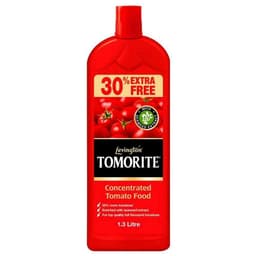
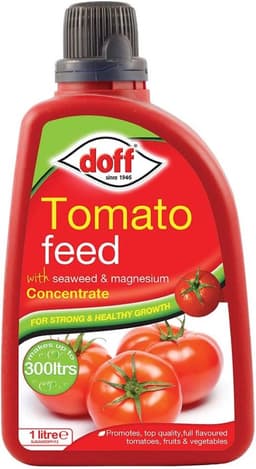
Remove severely marked fruit and check moisture at root depth. Water dry compost gradually at the base, and look again later on a hot day. One corrective soak is not the whole fix. Then use the printed tomato dose. Do not use the Tomorite measure on a Doff, PowerGrow or ready-mixed bottle. If the product is already mixed, adding it to a watering can changes the concentration. Watch the next fruit, not the old patch. If leaves and stems develop spreading brown lesions, suspect disease and seek horticultural advice. The best tomato feed UK shortlist matters only when the bottle needs replacing. Keep feeds closed, away from children and pets. If a person swallows fertiliser, contact NHS 111 with the label; for an animal, contact a vet.

Common questions

Can I save a tomato that already has a black end?
No feed will repair tissue that is already affected. Remove badly damaged fruit and stabilise moisture so later tomatoes have a better chance of developing normally. Discard fruit with mould, softness, leakage or an unusual smell.
Do I need a calcium fertiliser?
Usually not. The RHS says soil and growing media rarely lack calcium; fluctuating moisture commonly prevents enough calcium reaching the fruit. Correct watering first, and do not add a calcium product unless a reliable diagnosis or label supports it.
Will a calcium foliar spray stop blossom end rot?
The RHS does not recommend foliar calcium nitrate as an effective fix. Calcium sprayed on leaves does not reliably reach developing fruit, and nitrate can promote leafy growth. Steady root-zone moisture is the practical priority.
Can too much tomato feed cause blossom end rot?
Overfeeding can worsen nutrient balance. Excess potassium can restrict magnesium uptake, while stronger feed still cannot compensate for dry roots. Use the printed dose on moist compost and never double it in response to a black fruit.
Why are grow bags more vulnerable?
Grow bags contain a limited volume of compost and can dry quickly, especially under glass. That rapid moisture swing interrupts calcium transport. Check them more than once on hot days and water consistently at the base.
When should I seek further help?
Get horticultural help if symptoms do not match a flower-end patch, if leaves and stems develop spreading lesions, or if plants wilt in persistently wet compost. Call NHS 111 or a vet promptly if feed or spray has been swallowed.

Related pages

Sources

Public UK and manufacturer sources used for this comparison; last accessed 15 October 2026.

  1. RHS: Tomatoes, grow your own (retrieved 15 October 2026)
  2. RHS: Blossom end rot (retrieved 15 October 2026)
  3. RHS: Storing and disposing of garden chemicals safely (retrieved 15 October 2026)
  4. GOV.UK: Manufacturing and marketing fertilisers (retrieved 15 October 2026)
  5. GOV.UK: Product regulations and UKCA and CE marking (retrieved 15 October 2026)
  6. HSE: Using pesticides in the garden and home (retrieved 15 October 2026)
  7. Levington Tomorite concentrated tomato food (retrieved 15 October 2026)
  8. Doff tomato feed concentrate (retrieved 15 October 2026)