How to use rooting powder on compost, not in water
You have a tub on the potting bench and a parent plant that is worth copying. How to use rooting powder is a compost-dip sequence, not a feed and not a trick for a jam jar of water. This page stays with spring and summer softwood and semi-ripe cuttings. The products in the [rooting powder comparison](/hub/fertiliser-soil-and-bark-mulch/rooting-powder) are dips you tap onto a fresh node. The method below follows Doff's 25 mm directions, BBC Gardeners' World, and Love The Garden. We did not time roots in a lab. A qualifying purchase through our links can earn a commission at no extra cost to you.
You have a tub on the potting bench and a parent plant that is worth copying. How to use rooting powder is a compost-dip sequence, not a feed and not a trick for a jam jar of water.
You have a tub on the potting bench and a parent plant that is worth copying. How to use rooting powder is a compost-dip sequence, not a feed and not a trick for a jam jar of water. This page stays with spring and summer softwood and semi-ripe cuttings. The products in the rooting powder comparison are dips you tap onto a fresh node. The method below follows Doff's 25 mm directions, BBC Gardeners' World, and Love The Garden. We did not time roots in a lab. A qualifying purchase through our links can earn a commission at no extra cost to you.
Our top picks
| Badge | Product | Form | Wood types | Application | Note | Price | Offer |
|---|---|---|---|---|---|---|---|
| Best overall |  Westland Westland organic rooting powder 100 g | Powder | Cuttings. Reviews name roses, hydrangeas, hardwood air layers | Reviews describe a water dip, then powder | 9.2 | about £6.32 | View offer |
| Best value |  Doff Doff natural rooting powder 75 g | Powder | Soft, semi-hard and hardwood | Dip | 8.8 | about £5.16 | View offer |
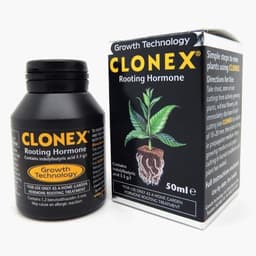
| Alternative |  Clonex Clonex rooting gel 50 ml | Gel | Reviews name softwood, semi-hardwood, succulents, shrubs | Dip | 8.8 | about £8.99 | View offer |


Prepare the cutting
Decant, wet, dip, tap
Compost, hole, cover
When it fails
Common questions
Do I wet the cutting first?
How much powder should I use?
Can I dip into the stored tub?
Does rooting powder work in a glass of water?
How long until I see roots?
Why are my cuttings rotting?
Do easy plants need powder at all?
When do I take the bag off?
Related pages
Sources
Public UK sources from the research digest, used for this page in October 2026. Prices, stars and review counts are from the eight amazon.co.uk listings captured on 21 October 2026. A seaweed or organic line is the listing's wording, not a MAPP. A hormone line on a box is not a current authorisation unless the HSE record says so. This is not a laboratory test and not a strike-rate trial.
- HSE, using pesticides in your garden, home or allotment (retrieved 21 October 2026)
- HSE, biostimulants and plant protection products (retrieved 21 October 2026)
- HSE garden database, Doff Hormone Rooting Powder MAPP 11986 (retrieved 21 October 2026)
- HSE register, Chryzopon Rose 0.1 % MAPP 17566 (retrieved 21 October 2026)
- GOV.UK, register as a seller of amateur plant protection products (retrieved 21 October 2026)
- BBC Gardeners' World, how to use hormone rooting powder (retrieved 21 October 2026)
- RHS, softwood cuttings (retrieved 21 October 2026)
- RHS, hardwood cuttings (retrieved 21 October 2026)