How to use orchid fertiliser: mix, flush and crown
You already have a bottle or a vial, and the plant is in bark on a UK windowsill. How to use orchid fertiliser is the sink procedure: dilute or insert, water, flush salts, keep liquid out of the crown, and look at a new vial the next morning. It is not a ranking. The ten listings are on the [orchid fertiliser comparison](/hub/fertiliser-soil-and-bark-mulch/orchid-fertiliser). Genus detail stays on [Phalaenopsis fertiliser](/hub/fertiliser-soil-and-bark-mulch/orchid-fertiliser/sub/orchid-fertiliser-phalaenopsis). Doses are the amazon.co.uk bullets or the named brand page from 19 October 2026. We did not time a vial. A qualifying purchase can earn a commission at no extra cost to you.
You already have a bottle or a vial, and the plant is in bark on a UK windowsill.
You already have a bottle or a vial, and the plant is in bark on a UK windowsill. How to use orchid fertiliser is the sink procedure: dilute or insert, water, flush salts, keep liquid out of the crown, and look at a new vial the next morning. It is not a ranking. The ten listings are on the orchid fertiliser comparison. Genus detail stays on Phalaenopsis fertiliser. Doses are the amazon.co.uk bullets or the named brand page from 19 October 2026. We did not time a vial. A qualifying purchase can earn a commission at no extra cost to you.
Our top picks
| Badge | Product | Form | Dose | Pack as printed | Note | Price | Offer |
|---|---|---|---|---|---|---|---|
| Best overall |  Westland Westland orchid plant feed concentrate, 200 ml | Liquid concentrate | Mixing field 1:5. Squeeze doser | 200 ml | 9.2 | about £7.58 | View offer |
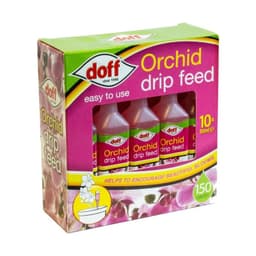
| Alternative |  Doff Doff orchid drip feed, 10 × 30 ml | Ready-to-use drip | Not a dose. Listing says 15 days | 10 × 30 ml | 9.0 | about £6.01 | View offer |
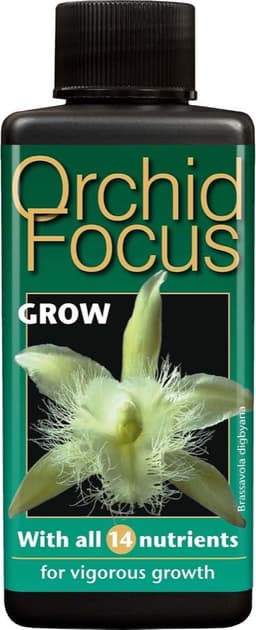
| Best value |  Growth Technology Orchid Focus Grow, 100 ml | Liquid concentrate | 5 ml in 2 litres | 100 ml | 8.6 | about £3.35 | View offer |

Mix a concentrate
Insert a drip vial
Flush and the crown
When to stop
Common questions
How do you mix a concentrate from this set?
How do you insert a drip vial?
Do you still water when a vial is in the pot?
How often should you give plain water?
What do you do if the vial is empty the next morning?
Can you spray feed into the crown?
Should you feed every watering?
Related pages
Sources
Public UK and maker sources from the research digest, used for this page in October 2026. Prices, stars and review counts are from the ten amazon.co.uk listings captured on 19 October 2026. A drip duration is a listing claim. A no-urea line is recorded only where the bullets say it. Westland's NPK is from the maker's page, not from the amazon listing. This is not a laboratory test.
- RHS, how to grow Phalaenopsis (retrieved 19 October 2026)
- RHS, fertiliser labels explained (retrieved 19 October 2026)
- RHS, fertilisers: types and uses (retrieved 19 October 2026)
- GOV.UK, manufacturing and marketing fertilisers (retrieved 19 October 2026)
- Fertilisers Regulations 1991, Schedule 2 (retrieved 19 October 2026)
- Westland orchid feed (retrieved 19 October 2026)
- Doff orchid drip feed (retrieved 19 October 2026)
- Growth Technology, Orchid Focus Grow (retrieved 19 October 2026)