How to feed geraniums in spring, summer and winter
The bottle is already on the bench, or you are about to mix one, and the question is when a UK pelargonium actually wants it. How to feed geraniums means the tender plants in pots, not a hardy cranesbill that is fine in the border. Feed moist compost, shift toward potassium once flowers form, and stop when the plant is dried off for winter. The dose is the label. Several Cultivers liquids in the [geranium fertiliser comparison](/hub/fertiliser-soil-and-bark-mulch/geranium-fertiliser) do not print a dilution in the product data, so this page will not invent a millilitre figure. A qualifying purchase can earn a commission at no extra cost to you.
The bottle is already on the bench, or you are about to mix one, and the question is when a UK pelargonium actually wants it.
The bottle is already on the bench, or you are about to mix one, and the question is when a UK pelargonium actually wants it. How to feed geraniums means the tender plants in pots, not a hardy cranesbill that is fine in the border. Feed moist compost, shift toward potassium once flowers form, and stop when the plant is dried off for winter. The dose is the label. Several Cultivers liquids in the geranium fertiliser comparison do not print a dilution in the product data, so this page will not invent a millilitre figure. A qualifying purchase can earn a commission at no extra cost to you.
Our top picks
| Badge | Product | Form | Stated NPK | Dose on the listing | Note | Price | Offer |
|---|---|---|---|---|---|---|---|
| Best overall |  Cultivers Cultivers organic geranium and flowering plant fertiliser 250 g | Granules | 8-1-5 | Not stated | 10.0 | about £11.62 | View offer |
| Alternative |  Fertiligène Fertiligène Osmocote Max geranium fertiliser 700 g | Granules | Not stated | 3 to 6 g per pot | 9.4 | about £23.00 | View offer |
| Alternative |  Cultivers Cultivers organic liquid geranium fertiliser 1 litre | Liquid | 4-1-7 | Not stated | 7.8 | about £15.86 | View offer |
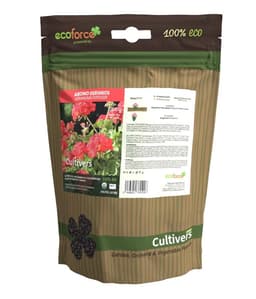
Best overall
Cultivers Cultivers organic geranium and flowering plant fertiliser 250 g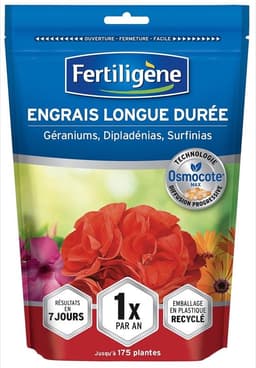

On this page
Before you mix anything
Spring, then flowering
Testsieger
Cultivers Cultivers organic geranium and flowering plant fertiliser 250 gAutumn, winter, and dried-off plants
Liquid cap or granule dose
Common questions
How often in summer?
When do I switch to a high-potassium feed?
Is tomato feed allowed?
When do I stop for winter?
What if the plant is yellow and wet?
Where do I put granules?
Does the Osmocote tub replace the fortnightly liquid?
Related pages
Sources
Public UK sources from the research digest, used for this page in October 2026. Prices, stars and review counts are from the eight amazon.co.uk listings captured on 19 October 2026. Organic, vegan and pet-safety lines are listing claims. The one-year granule line is the listing's claim, not a laboratory result. French, Spanish and Belgian reviews are not British comments.
- RHS, How to grow pelargoniums (retrieved 19 October 2026)
- RHS, How to grow geraniums (retrieved 19 October 2026)
- RHS, How to feed plants (retrieved 19 October 2026)
- RHS, Fertiliser labels explained (retrieved 19 October 2026)
- GOV.UK, Manufacturing and marketing fertilisers (retrieved 19 October 2026)
- legislation.gov.uk, Regulation (EC) No 2003/2003 Title I (retrieved 19 October 2026)
- RHS, Storing and disposing of chemicals safely (retrieved 19 October 2026)
- amazon.co.uk listings for the eight compared packs (retrieved 19 October 2026)