Geranium fertiliser buying guide: form, NPK and pack
You have a tray of bedding geraniums, a window box, or a few patio pots, and the amazon.co.uk shelf offers two Cultivers analyses plus one Osmocote tub that does not print an NPK in the product data. This geranium fertiliser buying guide is the decision, not the product table. Name the plant, then choose a form you will actually repeat, then match the pack to the number of containers. The [geranium fertiliser comparison](/hub/fertiliser-soil-and-bark-mulch/geranium-fertiliser) lines the eight ASINs up. A qualifying purchase can earn us a commission at no extra cost to you.
You have a tray of bedding geraniums, a window box, or a few patio pots, and the amazon.co.uk shelf offers two Cultivers analyses plus one Osmocote tub that does not print an NPK in the product data.
You have a tray of bedding geraniums, a window box, or a few patio pots, and the amazon.co.uk shelf offers two Cultivers analyses plus one Osmocote tub that does not print an NPK in the product data. This geranium fertiliser buying guide is the decision, not the product table. Name the plant, then choose a form you will actually repeat, then match the pack to the number of containers. The geranium fertiliser comparison lines the eight ASINs up. A qualifying purchase can earn us a commission at no extra cost to you.
Our top picks
| Badge | Product | Form | Stated NPK | Pack size | Note | Price | Offer |
|---|---|---|---|---|---|---|---|
| Best overall |  Cultivers Cultivers organic geranium and flowering plant fertiliser 250 g | Granules | 8-1-5 | 250 g | 10.0 | about £11.62 | View offer |
| Alternative |  Fertiligène Fertiligène Osmocote Max geranium fertiliser 700 g | Granules | Not stated | 700 g | 9.4 | about £23.00 | View offer |
| Best value |  Cultivers Cultivers organic geranium and flowering plant fertiliser 1 kg | Not stated | 8-1-5 | 1 kg | 8.8 | about £15.53 | View offer |
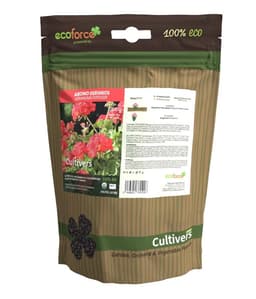
Best overall
Cultivers Cultivers organic geranium and flowering plant fertiliser 250 g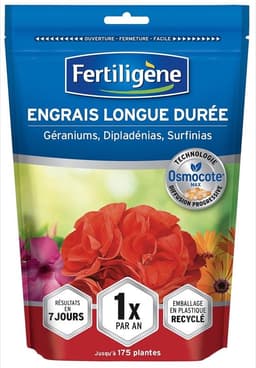

Best value
Cultivers Cultivers organic geranium and flowering plant fertiliser 1 kgOn this page
What you are feeding
Liquid 4-1-7, the 8-1-5 line, or the tub with no NPK
Testsieger
Cultivers Cultivers organic geranium and flowering plant fertiliser 250 gPack size and the price per litre
Claims to leave on the label
Common questions
Is 4-1-7 or 8-1-5 the one to buy?
Liquid or granules for a few pots?
Why is 250 ml so expensive per litre?
Does organic on the title mean a UK scheme?
Can I pick the Osmocote tub for its NPK?
Is a 20 kg bag sensible for a balcony?
What must a GB fertiliser label show that Amazon bullets skip?
Related pages
Sources
Public UK sources from the research digest, used for this page in October 2026. Prices, stars and review counts are from the eight amazon.co.uk listings captured on 19 October 2026. Organic, vegan and pet-safety lines are listing claims. The one-year granule line is the listing's claim, not a laboratory result. French, Spanish and Belgian reviews are not British comments.
- RHS, How to grow pelargoniums (retrieved 19 October 2026)
- RHS, How to grow geraniums (retrieved 19 October 2026)
- RHS, How to feed plants (retrieved 19 October 2026)
- RHS, Fertiliser labels explained (retrieved 19 October 2026)
- GOV.UK, Manufacturing and marketing fertilisers (retrieved 19 October 2026)
- legislation.gov.uk, Regulation (EC) No 2003/2003 Title I (retrieved 19 October 2026)
- RHS, Storing and disposing of chemicals safely (retrieved 19 October 2026)
- amazon.co.uk listings for the eight compared packs (retrieved 19 October 2026)