Independent comparisons. We may earn from shop links. More info

Fertiliser sticks for houseplants

Updated: October 2026

When a windowsill plant looks tired in a dark UK winter, adding fertiliser can feel like the obvious response. Yet fertiliser sticks for houseplants release feed for weeks, so a decision made in low light may outlast the conditions in which the plant can use it. Before opening a pack, check the season, available light, moisture and whether fresh compost is already supplying nutrients. Our [fertiliser sticks comparison](/hub/fertiliser-soil-and-bark-mulch/fertiliser-sticks) includes foliage, fern-and-palm and all-purpose listings, but the product title is only one part of the decision. The right month and a suitable root environment matter just as much as the brand.

When a windowsill plant looks tired in a dark UK winter, adding fertiliser can feel like the obvious response.

Our top picks

On this page

Feed this month, or wait for better growth

For most UK houseplants, the main feeding period is March to October. RHS guidance says winter feeding should be limited to at most monthly, and many plants need none while growth has slowed. A pale leaf in December does not by itself prove nutrient shortage. A stick makes this seasonal judgement more important because you cannot simply remove the next liquid dose from your watering can. Products in this set claim release periods from 30 days to 12 weeks. Inserting a 12-week Devonia stick in late autumn could commit the pot to a seller-stated feeding window that runs through the darkest part of winter. Wait if the plant is barely growing, the compost stays wet for a long time or the leaves deteriorated after a move to a colder position. A plant growing under strong supplementary light, or a winter-flowering species whose care instructions call for feeding, may still need nutrients. Do not snap a stick unless the manufacturer says you can.

Check what fresh compost is already supplying

New potting compost often contains enough feed for an initial period, and the compost bag should state how long that supply lasts. RHS guidance warns against applying fertiliser to dry compost, because concentrated nutrients around dry roots can cause damage. Water the plant normally and let the root ball moisten before you use a stick. A tightly pot-bound plant may leave no safe channel for a rigid spike. One stored UK review of the Jobe's fern-and-palm product describes a cycad dying after use in a dense root ball. For placement and diary steps, use the separate guide on how to use fertiliser sticks.

Which products here actually name indoor foliage?

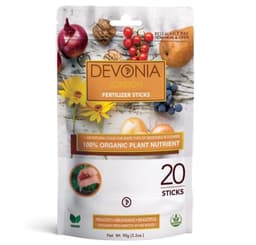
Substral fertiliser sticks for green plants are the clearest general-foliage listing in the nine-product set. The title, unit count and coverage field agree on 30 sticks, and the mixing field reads 10:7:9:2. The fourth figure is not explained, so it should not be assigned a nutrient name. Its 4.5-star average is based on 3,240 ratings, but the 50 stored review texts come from Germany, France, Belgium, Spain and Sweden rather than the UK. Jobe's 30-pack is more narrowly aimed at ferns and palms. Its mixing field is 16:2:6, its claimed duration is two months and its 4.3-star line is supported by 4,359 ratings. All 50 stored texts are marked United Kingdom. The bullets provide no pot-size dose, and the pot-bound cycad report means you should check root space carefully. Devonia all-purpose includes houseplants among a very broad list and prints a 4-1-5 mixing field, yet the title says 20 sticks while another field says nine. The fertiliser sticks buying guide explains how to handle those listing conflicts.

What not to put into a windowsill fern

Do not choose the Devonia tomato-and-vegetable sticks merely because they are available or claim 12 weeks. The stored listing prints no analysis, and a crop title is not evidence that the product suits a fern's foliage-focused feeding needs. The Devonia citrus-and-fruit pack prints 1:1:1 but is intended for potted fruiting plants. Avoid treating "no NPK" as "balanced". Go Garden, Hiemible and Substral Naturen provide no mixing-ratio figures in the stored data. Do not combine a fresh stick with routine liquid feed unless the exact label explicitly instructs you to do so. If you need the option to pause, dilute or change feed at the next watering, read fertiliser sticks versus liquid feed before committing to the longer format.

Common questions

Should I use fertiliser sticks on houseplants in winter?
Usually only when the plant is actively growing and its care guidance supports winter feeding. UK winter light often slows growth, while a stick may release feed for one to three months. Tired leaves are not enough evidence of hunger; check light, temperature, roots and watering first.
Can I add a stick just after repotting?
Check the compost bag before adding anything. Many fresh composts include feed for an initial period. Adding a stick during that window can stack nutrient sources. Wait until the stated feed period has passed unless the compost and product instructions explicitly direct otherwise.
Which stick in this set is intended for ferns and palms?
Jobe's 30-pack specifically names ferns and palms, prints a 16:2:6 mixing field and has the largest stored UK review sample. Use it only where moist compost and root space allow safe insertion; it is not a solution for a tightly pot-bound plant.
Are Substral green-plant sticks backed by UK reviews?
The listing shows 4.5 stars from 3,240 ratings, but the 50 stored review texts are from Germany, France, Belgium, Spain and Sweden. The product remains relevant to foliage plants, though the saved sample should not be described as UK customer evidence.
Can I use tomato fertiliser sticks on a fern?
That is not a sound default. The Devonia tomato listing prints no analysis, so its nutrient emphasis cannot be checked from the stored data. Choose a product labelled for foliage, ferns or palms, and follow the exact physical label rather than assuming all sticks are interchangeable.
Should compost be wet before inserting a stick?
The compost should be moist, not bone dry or waterlogged. Water a dry root ball normally first and allow it to absorb moisture. Never force a rigid spike through a dense mat of roots; resolve a pot-bound condition before adding a concentrated feeding point.

Related pages

Sources

Public UK sources from the research digest, used for this page in October 2026. Prices, stars and review counts are from the nine amazon.co.uk listings captured on 19 October 2026. A mixing field is not a tested analysis. Organic wording has no certificate number in these files. The Substral 3,240 sample and the Go Garden 585 sample are not United Kingdom reviews.

  1. RHS, houseplants growing guide (retrieved 19 October 2026)
  2. RHS, nutrition and feeding plants (retrieved 19 October 2026)
  3. RHS, fertilisers (retrieved 19 October 2026)
  4. RHS, fertiliser labels explained (retrieved 19 October 2026)
  5. RHS, container gardening maintenance (retrieved 19 October 2026)
  6. RHS, citrus (retrieved 19 October 2026)
  7. GOV.UK, manufacturing and marketing fertilisers (retrieved 19 October 2026)
  8. Fertilisers Regulations 1991 (retrieved 19 October 2026)