Multi purpose compost vs seed compost
You have a packet of seed, a bullet that says the bag is fine for seeds, and a doubt about whether that bag is seed compost. This page compares multi purpose compost vs seed compost, then applies the difference to the five bags on the [compost soil comparison](/hub/fertiliser-soil-and-bark-mulch/compost-soil). The recommendation has a condition: stay with these multi-purpose bags for containers and for potting on, and buy a seed compost when the seed is fine or the bag in front of you is coarse. None of the five listings prints an NPK, so this page does not claim that any of them is high in feed.
You have a packet of seed, a bullet that says the bag is fine for seeds, and a doubt about whether that bag is seed compost.
You have a packet of seed, a bullet that says the bag is fine for seeds, and a doubt about whether that bag is seed compost. This page compares multi purpose compost vs seed compost, then applies the difference to the five bags on the compost soil comparison. The recommendation has a condition: stay with these multi-purpose bags for containers and for potting on, and buy a seed compost when the seed is fine or the bag in front of you is coarse. None of the five listings prints an NPK, so this page does not claim that any of them is high in feed.
Our top picks
| Badge | Product | Stated uses | Volume | Peat wording | Note | Price | Offer |
|---|---|---|---|---|---|---|---|
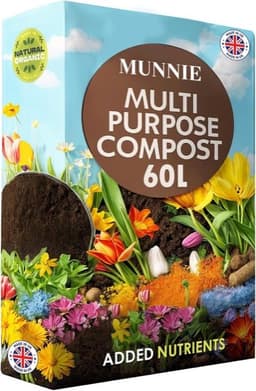
| Best overall |  Munnie Munnie multi-purpose compost 60 L | Indoor and outdoor plants, seeds, vegetables, pots, and baskets | 60 L | Reduction in the use of peat; not peat-free | 8.0 | about £9.34 | View offer |
 Growmoor Growmoor multi-purpose compost 50 L | Seeds, cuttings, containers, beds, borders, pots, and hanging baskets | 50 L | Not stated | 8.5 | about £9.25 | View offer | |
| Alternative |  Growmoor Growmoor multi-purpose compost 180 L | Gardens, flower beds, potted plants, and flowering | 180 L (3 x 60 L on the title) | Not stated | 6.8 | about £30.00 | View offer |


On this page
Two jobs, two mixes
What these bags claim about seeds
When multi-purpose is enough
When to buy seed compost instead
Common questions
Can I sow seeds in multi-purpose compost?
When is seed compost the better buy?
Does a bullet that says seed compost make the bag seed compost?
What about larger seeds such as beans and peas?
When do I move seedlings into multi-purpose compost?
Will a fine Growmoor bag replace a seed compost?
Related pages
Sources
Public UK sources from the research digest, used for this page in October 2026. Prices, stars and review counts are from the five stored amazon.co.uk listings. A later view of the 50 litre Growmoor listing on 19 October 2026 differed; the table keeps the stored figures. Peat-free, organic and volume lines are seller claims unless a review contradicts them. This is not a laboratory test.
- RHS, peat-free compost choices (retrieved 19 October 2026)
- RHS, peat-free compost for seeds and cuttings (retrieved 19 October 2026)
- RHS, John Innes compost (retrieved 19 October 2026)
- Defra, horticultural peat announcement, 27 August 2022 (retrieved 19 October 2026)
- Defra written answer on the peat ban, 12 September 2024 (retrieved 19 October 2026)
- Horticultural peat bill, Parliament (retrieved 19 October 2026)
- Public Health Scotland, gardening safely (retrieved 19 October 2026)
- RHS, minimising health risks in the garden (retrieved 19 October 2026)