Independent comparisons. We may earn from shop links. More info

How to use multi purpose compost

Updated: October 2026

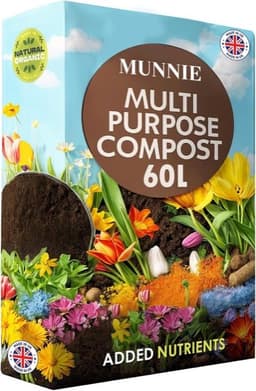
The bag is on the step, the pot is empty, and the first watering sits on the surface instead of soaking in. This is how to use multi purpose compost from the five listings in the [compost soil comparison](/hub/fertiliser-soil-and-bark-mulch/compost-soil): open it away from your face, wet a dry mix before you plant, fill the pot with a gap at the rim, then store what is left somewhere cool. The listings do not print a method, a feed window, or a safety line. Do not read a peat-free watering tip as proof that these bags are peat-free. None of them prints that line.

The bag is on the step, the pot is empty, and the first watering sits on the surface instead of soaking in.

Our top picks

On this page

Open the bag before you tip it

Stand the sack upright and open the top rather than leaning your face over a slit in the plastic. Public Health Scotland’s winter gardening note says not to stand over the bag, to wear gloves, to wash your hands, and to keep the work ventilated if you are in a shed. Compost dust is the practical reason. These five listings do not add their own safety sentence, so the public note is the handling rule, not a claim printed by Growmoor, Munnie, or Laeto. On the Laeto listing, several people describe a farmyard, mildew, or chemical smell and say they would not use it indoors. One Laeto review alleged glass and mildew. That is a single report, not a recall.

If the compost sheds water

The hydrophobic complaint in this set sits on the Growmoor 180 litre listing. Several reviewers say that once the compost is dry, water sits on the surface and does not soak in. In the Amazon reviews, the themes for Munnie and Laeto are a fine mix, split packaging, smell, or smaller bags. Do not treat every sack in the comparison as water-repellent because one listing drew that comment. If your bag beads water, stop planting and wet the mix first. Tip what you need into a trug or a bucket. Add a little water, stir, and wait. Repeat until the crumbs darken and a squeezed handful holds together without running. A dry powder that you pack straight into a pot will keep shedding the watering can, and the rootball will sit in a dry core.

Fill and water the pot

Cover large drainage holes so the compost does not wash straight out, then fill. The RHS container method puts the rootball about 5 cm below the rim, which leaves room for water to sit for a moment instead of running off the crown. Set the plant, firm gently, and water slowly until you see a little drain from the base. After that, do not trust a pale top. The RHS advice on watering peat-free seed and potting mixes is to check about a third of the way down, because the surface can look dry while the mix below is still moist. A finger or a short stick is enough. Water little and often once the pot is established, rather than drowning it on a weekly timer. That check is a habit, not evidence that these five bags are the peat-free products the RHS page assumes.

Store what is left

Roll the top of the bag, tape it, and put it somewhere cool and dry. Public Health Scotland says not to store compost in a greenhouse. A shed is better if you can ventilate it. Use the bag in the season you bought it, which is the RHS line for potting compost that has been opened. If the sack is mouldy or not the product you ordered, do not tip it in to use it up.

Common questions

What do I do if water sits on top of the compost?
Stop and wet the mix in a bucket before you plant. Add water in small amounts and stir until the crumbs take it up. That pattern is described on the Growmoor 180 litre reviews, not as a fact about every bag in the set. Packing dry powder into the pot and pouring the can on top leaves a dry core.
How full should the pot be?
Leave the rootball about 5 cm below the rim, which is the RHS container method, so water has somewhere to sit. Cover large drainage holes first. Water slowly until a little runs from the base. A pot filled to the lip wastes compost and sends the water down the outside of the rootball.
Should I trust a dry-looking surface?
No. Check about a third of the way down. The surface can look dry while the mix below is still moist, which is the point the RHS makes for peat-free watering and which is a useful check even though these listings do not say peat-free. Water little and often once you know the middle of the pot.
Where should I store the rest of the bag?
Seal it and keep it cool and dry, out of a greenhouse, and out of a shut hot shed if you can ventilate instead. Public Health Scotland’s October 2024 note is the storage guide used here. Aim to use an opened bag in the season you bought it. A sack baked on the patio is harder to rewet later.
When do I start feeding if the bag does not say?
The bag does not give you a date. None of these five listings prints a feed duration, so do not assume four weeks or six weeks. Feed when the plant’s label says to, with a product sold for that plant. Added nutrients on the Growmoor 180 litre bullets are not an analysis and not a calendar.
When should I stop and call NHS 111 or a GP?
If you have a cough, breathlessness, chest pain, or a high temperature after handling compost, stop gardening and get clinical advice. In Scotland, Public Health Scotland points to NHS 24 on 111. In the rest of the UK, use NHS 111 or your GP. This page cannot tell you whether the bag caused the symptoms.

Related pages

Sources

Public UK sources from the research digest, used for this page in October 2026. Prices, stars and review counts are from the five stored amazon.co.uk listings. A later view of the 50 litre Growmoor listing on 19 October 2026 differed; the table keeps the stored figures. Peat-free, organic and volume lines are seller claims unless a review contradicts them. This is not a laboratory test.

  1. RHS, peat-free compost choices (retrieved 19 October 2026)
  2. RHS, peat-free compost for seeds and cuttings (retrieved 19 October 2026)
  3. RHS, John Innes compost (retrieved 19 October 2026)
  4. Defra, horticultural peat announcement, 27 August 2022 (retrieved 19 October 2026)
  5. Defra written answer on the peat ban, 12 September 2024 (retrieved 19 October 2026)
  6. Horticultural peat bill, Parliament (retrieved 19 October 2026)
  7. Public Health Scotland, gardening safely (retrieved 19 October 2026)
  8. RHS, minimising health risks in the garden (retrieved 19 October 2026)