Independent comparisons. We may earn from shop links. More info

Liquid vs pellet bonsai fertiliser

Updated: October 2026

You have a bottle in one hand and a bag of cakes in the other, and both claim to be a bonsai feed. The liquid needs a measuring cap and a Sunday you will remember. The pellets sit on the soil and can smell, mould, or simply look huge on a 12 cm pot. This liquid vs pellet bonsai fertiliser page is that one fork. The table of all seven products is the [bonsai fertiliser comparison](/hub/fertiliser-soil-and-bark-mulch/bonsai-fertiliser). A purchase through our links may earn a commission at no extra cost to you.

You have a bottle in one hand and a bag of cakes in the other, and both claim to be a bonsai feed. The liquid needs a measuring cap and a Sunday you will remember.

Our top picks

On this page

What changes when the feed is a liquid

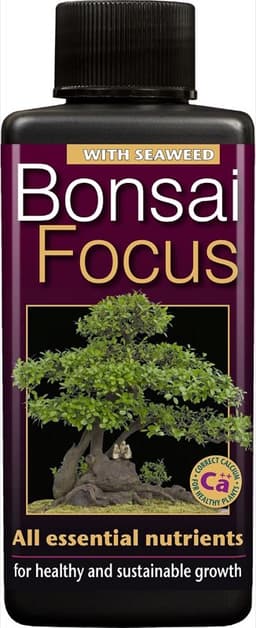
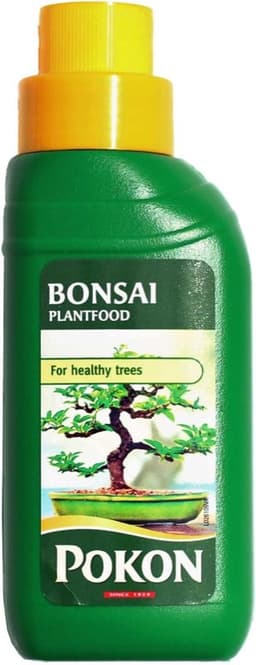
A liquid is fast to stop and easy to weaken. You mix this week’s can, you pour what the pot will hold, and next week you can pause. That is the advantage in a shallow pot. The dilution has to be a real one. Bonsai Focus is the liquid with a printed ratio: 5 ml in 1 litre. The 250 ml liquid prints 4-6-6 and points you to a measuring cap. A scraped field on that listing says 1:1. A note in the Amazon reviews of 5 ml in a litre is not the same instruction. Do not follow 1:1. Double the next dose to catch up and you are in the excess-feed problem the Federation of British Bonsai Societies warns about.

What changes when the feed is a cake

Pellets and cakes remove the weekly mix. You put them on the soil, you water, and the rain or the watering can does the rest. FOBBS allows a liquid or a granular slow-release. In the Amazon reviews, BioGold buyers praise exactly that: no mixing, and a bag that lasts, including through rain. The 900 g listing is £34.99 and 4.6 from 96 reviews. Naruko is 250 g at £6.99 and 3.9 from 72. None of these listings prints a gram dose or a count per pot. If you travel for a fortnight, the cakes keep feeding while you are away. Naruko’s bullets say organic, with no certifier named.
Biogold BioGold 900 g

Testsieger

Biogold BioGold 900 g
7.6/10about £34.99

Mould and smell in this set

Naruko is where the review sample clusters. Several UK reviews say the pellets go mouldy or mushy within a day or two, with smell and little visible effect beside that. It is the complaint that repeats at 3.9 from 72 reviews. If a clean soil surface matters, Naruko is the listing to leave. BioGold 900 g bullets say the pieces resist mould. The reviews read for this comparison do not describe mould on that bag. What does show up is smell when the bag is opened, and pieces that look large on a small tree. The listing tells you to leave them on the soil and water.

When to use which

Use a liquid if you have one tree and you will measure. Focus if you want 5 ml per litre and a low shelf price. The 250 ml 4-6-6 bottle if you want the nutrient line printed and you will follow the cap rather than the scraped 1:1. Use BioGold if you have several outdoor trees and you will not mix, and leave the unresolved NPK fields as unresolved. Use Naruko only in the same sentence as the mould reviews. Adding cakes and a full-strength liquid in the same week is how a small pot gets more feed than the tree can use. For a windowsill ficus, start with the liquid. Mixing steps are on how to fertilise a bonsai.

Common questions

Are pellets better because I will forget?
They are better only if forgetting the mix is your real constraint and you can live without a gram dose. BioGold exists for that habit: pieces on the soil, no Sunday measuring. They are worse if you needed to stop next week, or if the pot is one small indoor tree and £34.99 buys a sack you will not finish. A forgotten liquid week is usually safer than a mouldy surface you then overload.
Are liquids better because I can change the strength?
Yes, that is the real advantage, and it depends on a ratio you can halve. Focus gives you 5 ml per litre, so half strength is 2.5 ml per litre. The 250 ml liquid gives you 4-6-6 and a cap, if you ignore the scraped 1:1. A liquid with a few drops and one review does not give you that control. The strength stays on the label. The volume is whatever the pot holds.
Does mould mean the pellets are fake?
Not on the evidence here. Naruko buyers describe mould within a day or two. One of them says that is what organic material does when it is wet. Another thinks the contents are fish food. Those are competing stories in the same star row, 3.9 from 72. Mould does not prove a counterfeit, and a clean week does not prove a miracle feed. If you need a soil surface you can look at every day, choose a liquid or read the BioGold pattern.
Does BioGold’s resists mould claim match its reviews?
The 900 g bullets claim resistance to mould and insects. The UK reviews stored for that ASIN do not describe mould. They do describe a smell when the bag is opened, and pieces that look large on a small tree. So the claim is not contradicted by a mould cluster in those reviews, and it is not confirmed by a lab. Do not copy the 900 g sentence onto every BioGold weight you see.
Can I crush BioGold and use it as a liquid?
The listing says leave the pieces on the soil and water. One reviewer tried to break them up and found them hard. Crushing is not a labelled dilution, and you still have no gram figure to dissolve. If you want a liquid you can measure, use Focus at 5 ml per litre or the 250 ml feed at the cap’s marks. Brewing cakes because you already own the bag is how you lose both the slow-release behaviour and the dose.

Related pages

Sources

Public UK and maker sources from the research digest, used for this page in October 2026. Prices, stars and review counts are from the seven amazon.co.uk listings captured on 19 October 2026. Scores are editorial, not a laboratory test. A missing NPK is a gap, not a zero. The scraped 1:1 field is not the dose for the 250 ml liquid.

  1. RHS, bonsai (retrieved 19 October 2026)
  2. RHS, feeding plants (retrieved 19 October 2026)
  3. Federation of British Bonsai Societies, cultivation (retrieved 19 October 2026)
  4. Federation of British Bonsai Societies, the bonsai year (retrieved 19 October 2026)
  5. Kew, top ten bonsai tips (retrieved 19 October 2026)
  6. Growth Technology, safety data sheets (retrieved 19 October 2026)
  7. Growth Technology, indoor bonsai leaflet (retrieved 19 October 2026)
  8. legislation.gov.uk, retained Regulation (EC) No 2003/2003 Article 9 (retrieved 19 October 2026)
  9. legislation.gov.uk, Fertiliser Regulations 2006 (retrieved 19 October 2026)
  10. ASA ruling, The SEER Centre Trust (retrieved 19 October 2026)