Independent comparisons. We may earn from shop links. More info

Screw-in or hammer-in ground spike

Updated: October 2026

You know the pole diameter and you are choosing a screw-in auger or a hammer-in spear. UK reviews in this set do not send the hammer into stony clay, or call the screw-in generally better. Drive in on firm soil you can soften. Screw in if the spike must come out or the spear has bent. Stop both on rubble. Peter F. set that fork on 20 October 2026 from the [ground spike comparison](/hub/fencing-and-wire/ground-spike). The sequence is on [how to install a ground spike](/hub/fencing-and-wire/ground-spike/sub/ground-spike-how-to-install). A qualifying purchase can earn a commission at no extra cost to you.

You know the pole diameter and you are choosing a screw-in auger or a hammer-in spear. UK reviews in this set do not send the hammer into stony clay, or call the screw-in generally better.

Our top picks

On this page

What you are choosing between

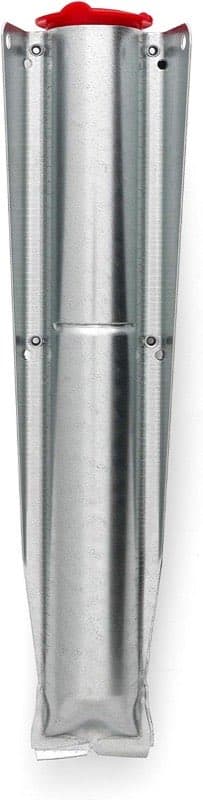
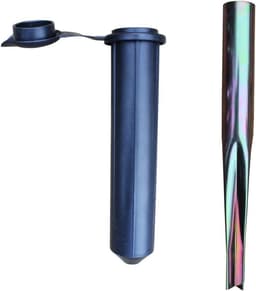
The hammer-in tools here are two sockets. The JVL 19-180, at about £6.74, is a galvanised spear for 32–40 mm. The Brabantia 311444, at about £13.00, is a matched 45 mm socket with a plastic cap, and the bullets say no concrete is needed. Both are struck in through wood, because a bare hammer bends the rim. A rubber mallet is often not enough on the Brabantia. The screw-in is the DIVCHI, at about £10.99, with a turn rod and clamp screws the bullets rate from 2.5 cm to 5.5 cm. The title says 56 cm and another field says 420 mm. The EGLO Cuba is not in this fork. You must not hammer it.

Firm soil you can soften

Choose hammer-in when the ground is firm enough to soak, the pole matches the socket, and you accept a hard drive. For a measured 45 mm Topspinner or Lift-O-Matic, that is the Brabantia. For a pole inside 32–40 mm, that is the JVL, with wood on the rim. B&Q’s page for 311444 repeats the no-concrete line. You can still fail to pull that socket out if someone concretes it. No concrete needed is the maker’s fitting claim, not a promise that it lifts out of clay years later. If the pole diameter is still wrong, the method will not save it.

When the spear has bent, or you must leave

Choose screw-in when the fixing has to come out, or a hammer-in has already bent, and the soil will take a helix. A rented lawn is the clearest case. The DIVCHI bullets say you can unscrew it and move it. Soft soil can still let a pole lean. A Tooltime screw-in at about £9.61, not in this set, also says soft soil. That is not proof every auger holds a full line. If the soil softens and you will leave a matched drive-in socket in place, hammer-in is the laundry default. If you must leave the lawn as you found it, open the screw-in, unless the ground is rubble. Neither choice is generally better.

Stones, concrete, and a rented lawn

Both tools fail in rubble. The JVL sits proud or bends. The Brabantia may still stop after a dug start. The DIVCHI stops in stones, and one helix thread came apart. LoveHG’s line that hammer-in spikes are for stony ground disagrees with these reviews. Move the spot if the hole fills with broken brick. Do not drive a laundry spike through paving. Concrete is the fixing a renter cannot take back. If you concrete the 45 mm socket, reviews say you will not pull it when you move. If the turn rod is missing, do not hammer the DIVCHI collar. That is a Consumer Rights Act 2015 point. If the JVL rim is already bent, more blows fold it further. There is no wind rating on either listing.

Common questions

Should I screw it in or hammer it in?
Hammer it in when the soil will soak, the pole matches the socket, and the spike can stay. That is the Brabantia at 45 mm or the JVL at 32–40 mm, struck through wood. Screw it in when you must remove it, or a hammer-in has already bent, and the ground will take a helix. That is the DIVCHI. Do not follow a chart that sends hammer-in spikes into stony ground.
What if the ground is full of stones?
Stop with both tools. Reviews describe JVL rims that bend, Brabantia sockets that need a dug start, and a DIVCHI helix that stops or comes apart in stones. Rubble under a thin lawn is not a reason to choose the spear, and it is not a reason to twist harder on the auger. Move the hole. If the garden is fill, neither listing here is a masonry fixing.
Which one can I remove when I move house?
The DIVCHI bullets say you can unscrew it and move it, if the soil releases the helix. A driven Brabantia socket, with no concrete, is what the maker’s line describes. Reviews do not promise it lifts out of clay years later. A concreted socket is the one reviewers could not pull. If you rent, do not concrete it.
Does no concrete on the Brabantia mean I must not concrete it?
The bullets, and the B&Q page for 311444, say concrete is not needed. Argos notes that a supplier also says the 45 mm spike can be concreted. Those are fitting options, not a statement that concrete is forbidden or that it is required. If you do concrete it, expect it to stay. Brabantia’s separate concrete tube is the product sold for a concreted fixing, and it is not this ASIN. For a rented garden, leave the concrete out.
Will the DIVCHI hold a full rotary line?
The listing includes rotary dryers and claims a clamp from 2.5 cm to 5.5 cm. It does not print a wind load. Reviews say it holds where a hammer-in leaned, and also that it stops in stones. One buyer measured about 36 mm inside. Treat it as a removable clamp in soil that accepts a helix, not as a tested match for every airer.

Related pages

Sources

Public UK sources and manufacturer pages listed in the research digest. Listing prices, stars and review counts are from the amazon.co.uk captures for these ASINs. The Brabantia shelf of £17.25 is the figure on the manufacturer page in that digest.

  1. Brabantia UK 45 mm ground spike (retrieved 19 October 2026)
  2. Brabantia rotary airer spikes, 35, 45 and 50 mm (retrieved 19 October 2026)
  3. Brabantia ground-anchor cap colours (retrieved 19 October 2026)
  4. HSE — underground cables (retrieved 19 October 2026)
  5. LSBUD safe digging (retrieved 19 October 2026)
  6. NICEIC — gardens and electrics (retrieved 19 October 2026)
  7. Approved Document P (retrieved 19 October 2026)
  8. EGLO 88744 technical sheet (retrieved 19 October 2026)
  9. Consumer Rights Act 2015 (retrieved 19 October 2026)