Independent comparisons. We may earn from shop links. More info

How to install a ground spike

Updated: October 2026

You already own a drive-in spear, a screw-in auger, or the EGLO plate. How to install a ground spike depends on which of those three you are holding. Soften and probe first, strike a drive-in rim only through wood, screw the auger, and do not hammer the light plate. The listings are on the [ground spike comparison](/hub/fencing-and-wire/ground-spike). Peter F. used those amazon.co.uk files, Brabantia’s placement sheet, and HSE guidance on underground cables on 19 October 2026. We did not install these spikes in a test garden. A qualifying purchase can earn a commission at no extra cost to you.

You already own a drive-in spear, a screw-in auger, or the EGLO plate. How to install a ground spike depends on which of those three you are holding.

Our top picks

On this page

Pick the spot and check what is under it

A rotary spike wants a sunny piece of lawn with room for the arms to turn, not the ground under a tree and not a path. That placement is in Brabantia’s metal-spike sheet, and on the B&Q page for model 311444. Put the socket where a mower will later meet a closed cap rather than an open pipe. The Health and Safety Executive says plans come before you excavate and only indicate where a cable is. LSBUD warns that private pipes are often missing. Avoid the run to a shed or an outdoor socket, probe first, and stop if the tool meets something that is not stone. A private lawn socket is not a planning application.

Drive a spear or a Brabantia socket

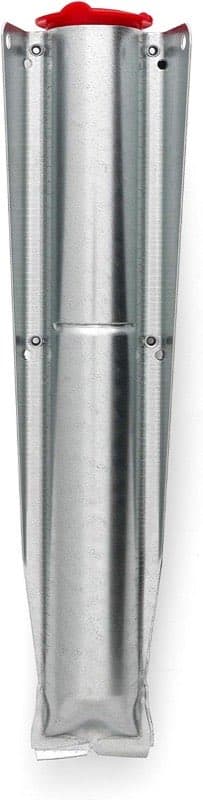
Soften the spot before you swing. UK reviews of the Brabantia socket describe a starter hole, a soaked lawn, or a sledgehammer, and a rubber mallet often gets nowhere. A 2006 MoneySavingExpert thread is a warning, not a blow count. Set a block of wood on the rim and strike the wood. JVL reviews still report a bent rim. Check the spike is vertical while it is shallow. If it stops on a stone, stop. The Brabantia bullets say no concrete is needed, which is not a promise a concreted socket will pull out. Which method you should have chosen is screw-in or hammer-in.

Screw the auger in

The DIVCHI auger goes in with the turn rod, not with a hammer. Stand the point where you probed, turn the rod, and stop when the helix meets stones. One review had a screw thread come apart while turning. Another delivery arrived without the turn rod, and another without the rubber stopper. If the rod is missing, that is a goods problem under the Consumer Rights Act 2015, not a prompt to hit the collar. Once the auger is in, tighten the three clamp screws. A collar left above the lawn is a trip and a mower snag. The listing says you can unscrew it and move it.

Set the light plate without a hammer

The EGLO Cuba is a plate you push in or set in concrete. The UK page and the amazon bullets say it is not a drive-in sleeve. The cable feed is in the centre. Reviews that are not labelled United Kingdom describe the weld breaking when the plate is forced. Do not read 240 V, E27, or 800 lumens as this product. EGLO’s sheet for 88744 has no lamp socket. Close a Brabantia cap when the airer is off so the mower can pass. The JVL amazon file does not state a cap. Call an electrician for a new fixed garden light or outdoor socket. That work sits under Approved Document P, and NICEIC says outdoor sockets should be RCD-protected. The EGLO spike does not certify the circuit.

Common questions

Do I hit the metal rim?
Not with a bare hammer if you can avoid it. UK reviews put a block of wood on the Brabantia rim and on the JVL rim, then strike the wood. The rim can still bend. A rubber mallet is often not enough in firm ground. There is no official blow count. If the spike will not move after a soaked start, dig rather than swinging harder on bare steel.
What if the spear stops on a stone?
Stop. A stone under a thin lawn is where drive-in rims bend and where a screw-in helix stalls. Dig the stone out if the hole is still shallow, or move to a spot you have probed. Do not keep hitting. Concrete is what some reviewers used next, and a concreted socket can stay when you move. That is a poor outcome if you rent.
How do I screw the DIVCHI in, and what if the turn rod is missing?
Use the turn rod to wind the auger in, then tighten the three clamp screws. The listing says you can unscrew it and move it. If the turn rod or the rubber stopper is missing, contact the seller under the Consumer Rights Act 2015. Do not hammer the collar. Stop if the helix meets stones. A collar left above the grass is a trip.
When do I stop and look for a cable?
Stop as soon as the tool meets something that is not obviously stone or root, and stop before you start on the run to a shed or an outdoor socket. Get plans first. HSE says they only indicate position. LSBUD will not show every private pipe. If you expose a cable or a pipe, leave it and get a professional.
When does a garden light need an electrician?
A new fixed garden light or a new outdoor socket is electrical work under Approved Document P. NICEIC says outdoor sockets should be RCD-protected and weatherproof. Pushing an EGLO plate into soil does not do that work, and the spike does not certify the circuit. If the light is already safely supplied, the plate is only the mechanical part.

Related pages

Sources

Public UK sources and manufacturer pages listed in the research digest. Listing prices, stars and review counts are from the amazon.co.uk captures for these ASINs. The Brabantia shelf of £17.25 is the figure on the manufacturer page in that digest.

  1. Brabantia UK 45 mm ground spike (retrieved 19 October 2026)
  2. Brabantia rotary airer spikes, 35, 45 and 50 mm (retrieved 19 October 2026)
  3. Brabantia ground-anchor cap colours (retrieved 19 October 2026)
  4. HSE — underground cables (retrieved 19 October 2026)
  5. LSBUD safe digging (retrieved 19 October 2026)
  6. NICEIC — gardens and electrics (retrieved 19 October 2026)
  7. Approved Document P (retrieved 19 October 2026)
  8. EGLO 88744 technical sheet (retrieved 19 October 2026)
  9. Consumer Rights Act 2015 (retrieved 19 October 2026)