Nesting birds garden fence UK: check before you cut
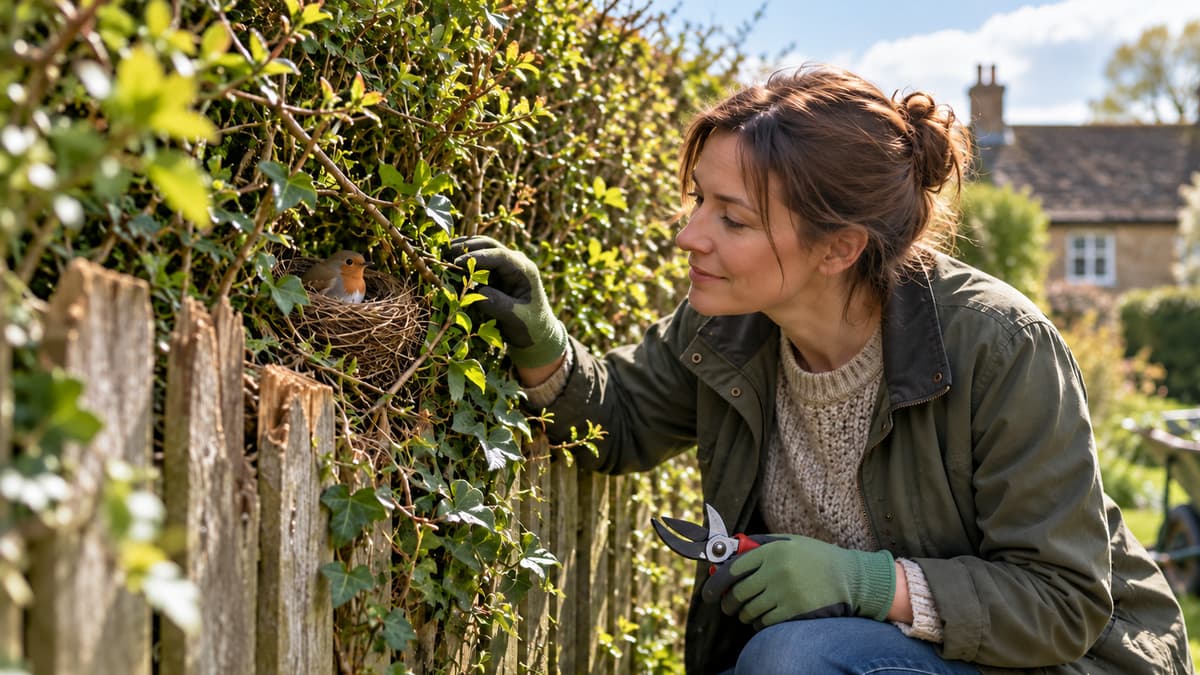
Nesting birds and garden fence work in England: do not damage a nest while it is in use or being built. A private garden hedge is not exempt from that rule.
On this page

The panel is rotten, the hedge has grown through the arris, and April is the first dry weekend. Nesting birds and garden fence work collide in that hedge more often than in the timber. In England it is an offence to intentionally take, damage or destroy a wild bird’s nest while it is in use or being built. The GOV.UK page that states the protection applies to England. A private garden hedge is not a way around it.
Products Compared used that page, section 1 of the Wildlife and Countryside Act 1981, and the GOV.UK hedgerow and garden-hedge notes. We did not survey a nest. Amazon links are affiliate links. A qualifying purchase can earn a commission at no extra cost to you.
In short
In England, do not damage a wild bird’s nest while it is being used or built, and do not take the eggs. Schedule 1 birds have a further disturbance offence. The countryside hedgerow guide says you will usually find nesting birds from 1 March to 31 August. Those dates are a prompt to look, including outside that window. A private garden hedge can sit outside hedgerow-removal rules and still hold a protected nest.
What the England rule actually prohibits
GOV.UK’s “Wild birds: protection and licences” applies to England. All wild bird species, their eggs and nests are protected. You must not intentionally kill, injure or take wild birds, take or destroy an egg, or take, damage or destroy a nest while it is being used or built. Section 1 of the Wildlife and Countryside Act 1981 states the same prohibitions. A fence repair that rips a nest out of the ivy, or a hedge cut that takes the nest with the brash, is that act if you meant to cut the thing the nest was in. Not knowing the species is not a defence.
Trimming trees, bushes, hedges and rough vegetation is on the GOV.UK list of work that can harm birds, particularly in the breeding season. So are noise, lighting, vibration, and renovating a building. A hurdle delivery is noise next to a hedge. Noise alone is not the nest-damage offence for every species. For Schedule 1 birds, disturbance is its own offence. For every other wild bird, the line is the nest and the eggs.
A willow roll is still inside the rule. Clearing a strip to fit it is the work that can take the nest. The rolls in our wattle fence comparison are covers. Abaseen, the top pick, is £49.99, with both size lines at 1.5 m by 4 m. Tying it to a bare railing is a different job from cutting a nested hedge back to the railing. No penalty figure was extracted here.
A season is a warning, not a ban
The countryside hedgerow page says you will usually find nesting birds from 1 March to 31 August. That window is not a statute that forbids all garden work, and it is not a date after which you may cut without looking. “Usually” means the risk is highest then. A bird can be on a nest in February in a mild year, or still be using a nest after August.
GOV.UK’s “Over the garden hedge” leaflet says it is against the law to disturb nesting wild birds, in that leaflet’s wording, and tells you to check there are no nests currently in use before you cut. The safer habit it gives is to trim in winter, when there is no danger that birds may be nesting. Winter is still a check. If you find a nest in use in January, you stop that cut. If you are trimming in July, you look first and leave the section that is occupied.
Hazel Hurdle World’s short run on firm ground is a winter morning as easily as an April one. Look before you order made-to-order panels, and look again before you cut. Consent to cut a hedge in a conservation area, or a tree under a tree preservation order, is separate from the bird offence. You can need both. The height tests are in garden fence height rules.
Hedges, fences and a private garden
A hedgerow in, or marking the boundary of, a private garden is not a protected countryside hedgerow. Those removal rules aim at agricultural land, forestry, commons and similar sites. Nesting birds on that garden hedge are still protected. The work must not harm them or destroy their nests.
A fence and a hedge on the same boundary are two jobs. You may own the fence, or you may not. Ownership is in who owns the boundary fence. The nest does not care which of you owns the timber. If the nest is on the neighbour’s side of a shared hedge, cutting “your” face can still damage it. Talk before you cut into growth you cannot see through.
Look in ivy on posts, a climber on a trellis, and a bramble stool at the bottom of a hurdle, not only in a neat hawthorn hedge. GOV.UK includes rough vegetation in the list of work that can harm birds. A strimmer along the bottom of a panel can be the cut that takes a nest. Clear by hand, look, and stop if you find one. Wire mesh fixed into a hedge bottom is the same problem. Lay it when you can see the ground.
Schedule 1 birds and licences
Some species have extra protection under Schedule 1. It is an offence to disturb a Schedule 1 bird while it is building a nest, or while it is in, on or near a nest with eggs or young, and to disturb its dependent young. Disturbing a bird that is not on Schedule 1 is not that offence. Damaging any wild bird’s nest while it is in use or being built still is.
If the bird is on Schedule 1, disturbance from machinery close enough to affect it is a reason that guidance gives for needing an individual licence. This article will not identify your bird. Stop and use the GOV.UK licence pages, or get advice, before you run a disc cutter along that boundary. A licence is not a way to clear a hedge for a willow screen you could fit in winter.
The wild birds page gives no general licence simply to permit development. A householder replacing a panel is not a development licence. The householder path is to avoid the nest.
What to do if you find a nest mid-job
Stop that section. Do not move the nest, and do not box it in with a new hurdle so the adult cannot reach it. Leave the vegetation that holds it until the nest is no longer in use. Fit the clear bays and leave one bay for later. A roll can wait. Musgrove does not accept a return of a bespoke frame. That is a reason to have looked before you ordered, not a reason to cut the nest out because the panel has arrived.
If someone else is destroying nests, the hedgerow page says to report it to the local police and ask for a wildlife crime officer. Hedgerow-removal concerns go to the local planning authority. Those are different desks. Do not use a report as cover for finishing your own cut.
A fencer who will strim first and look later is the wrong contractor in the breeding season. A disputed line, listed fabric, or soft ground are separate reasons to hire someone, set out in when a garden fence needs a professional. Birds are a reason to delay the job.
When the nest is clearly no longer in use, you can return to the posts and the product. A willow hurdle still needs clearance off the soil, and a roll still needs a sound fence. Winter remains the leaflet’s safer season for the trim that makes the fence line visible.
Common questions
Can I take down a fence if a bird is nesting in it?
Is a nest in a hedge beside the fence protected?
Does the 1 March to 31 August window ban all garden work?
Are garden hedges covered by the countryside hedgerow rules?
What is different about Schedule 1 birds?
Who do I report someone destroying a nest to?
Does this GOV.UK page apply in Wales, Scotland and Northern Ireland?
Can I put up a new willow screen next to an active nest?

Peter F. is the editor for DIY & tools at productscompared.co.uk. Comparisons in this category are checked against amazon.co.uk listings, review evidence and public UK sources.
Related articles

Garden fence height rules in the UK
Height and listed buildings are a separate permission from the nest offence.

When a garden fence needs a professional
Listed fabric and a disputed boundary are reasons to stop, birds or not.

Who owns the boundary fence in the UK
You can be the wrong person to touch a fence even when no bird is in it.