Independent comparisons. We may earn from shop links. More info

How to fit aviary wire

Updated: October 2026

The roll is still a spring, the cut ends are needles, and the timber frame is waiting. How to fit aviary wire is the order of that afternoon: open it safely, staple it so the sheet cannot belly, then choose which face of the timber gets the mesh and how the ground is closed. The rolls on the [Aviary wire](/hub/fencing-and-wire/aviary-wire) comparison do not include a fixing kit. Peter F. updated this on 19 October 2026. A qualifying purchase can earn us a commission at no extra cost to you. This page is the fitting, not a hole table.

The roll is still a spring, the cut ends are needles, and the timber frame is waiting.

Our top picks

On this page

Cut it without losing a finger

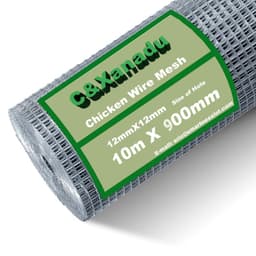
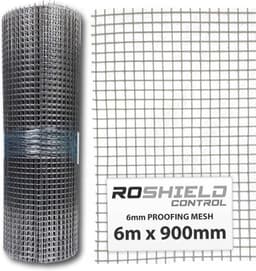
Welded mesh stores energy in the coil. Roshield reviewers say the roll springs open. Muzhira, EzKamfort, and C&Xanadu reviews call the cut ends very sharp. Gloves come first. YouMoro and YALYAYA include a pair, and YouMoro’s are described as thin. Stand the coil so it cannot walk when the tie is cut. Wire Fence says tin snips will cut wire up to about 1.2 mm, near the weld. The stated wires here are 0.6–0.9 mm where they are printed. Cut so the tag is not a spike at beak height. The offcut is bare steel. Bag it before you staple.

Staple it to timber

Mesh Direct puts hammer-in staples about 10–15 cm apart, with 15 mm staples for light mesh. Wire Fence says no more than 15 cm. On a 900 mm bay that is about six or seven staples down one stud, then the rails. None of these rolls arrives with the staples. Pull the sheet tight before the first row is finished. Overlap a join by a full square and staple both layers. Where welds open as you bend the sheet, do not staple a bay that has already let go. The National Council for Aviculture wants an inward-opening door or a porch on a budgie flight.

Inside for chewing birds, and a skirt at the ground

Fix budgie wire on the inside, so the birds chew mesh rather than timber. That is the National Council for Aviculture line. Wire Fence also has a line about attachments facing outwards, which suits a hen or rabbit frame. A flight that must stop mice can take Mesh Direct’s double skin: bird mesh inside, rodent mesh outside. The British Waterfowl Association asks for at least 300 mm buried or turned out. The Chicken House Company describes a similar trench or a 30–40 cm pegged skirt. Neither makes 0.6 mm wire fox-proof. The hole is on what size aviary mesh.

When fitting is the wrong next step

Stop when there is no frame, or when the boundary is not yours. Call a vet if a bird in a new galvanised flight is weak, regurgitating, fitting, or dead. Provet treats the coating as a zinc source. Fitting this roll does not satisfy a GOV.UK bird-flu housing order. In a zone you house the birds. If you net a range, the mesh must be no larger than 25 mm, and the order still stands. What the listing should have said is on the aviary wire mesh buying guide.

Common questions

Which tool cuts a 0.6–0.9 mm weld?
Tin snips or aviation snips. Wire Fence says snips cope up to about 1.2 mm if you cut near the weld. Muzhira and EzKamfort state 0.6 mm. YouMoro and C&Xanadu state about 0.85–0.9 mm. Gloves come first. A thin pair in the box is not a substitute for a thicker pair from the shed.
How far apart should staples sit?
About 10–15 cm on Mesh Direct’s guide, and no more than 15 cm in Wire Fence’s steps. On a 900 mm stud that is roughly six or seven staples, plus the rails. Use 15 mm staples for this light mesh. The staples are not in the box. A 0.6 mm wire bellies if you stretch the spacing to save fixings.
Should the mesh go inside or outside the frame?
Inside when the bird will chew timber. That is the National Council for Aviculture line for budgies. Wire Fence also has a line about attachments facing outwards, which suits a hen or rabbit frame where you do not want staple crowns inside. Pick the face for the animal. A double skin puts bird mesh inside and rodent mesh outside.
How do you stop a dig under the frame?
Turn the mesh out, or bury it, by about 300 mm. That is British Waterfowl Association guidance, and The Chicken House Company describes a similar trench or a 30–40 cm pegged skirt. It is not a lab result, and it does not make these light rolls fox-proof. Plan the extra mesh before you cut the wall piece to length.
What do you do with the sharp offcut?
Bag it before you leave the cut. Muzhira, Roshield, EzKamfort, and C&Xanadu reviews warn that the ends are sharp, and the cut is bare steel. Do not leave needles in the grass. Fold a tag flat and staple it so the spike is off the inside face. The zinc will not cover the cut.
Does fitting the roll satisfy a bird-flu housing order?
No. GOV.UK says house the birds in a zone. If you also net a range, the mesh must be no larger than 25 mm. A 6 mm or 13 mm roll can meet that maximum and still leave the order in force. A weak or fitting bird on new galvanised mesh is a vet call, not another staple.

Related pages

Sources

Public UK sources and amazon.co.uk listing lines; retrieved 19 October 2026.

  1. Animal Welfare Act 2006, section 9 (retrieved 19 October 2026)
  2. GOV.UK, Bird flu: housing your birds safely (retrieved 19 October 2026)
  3. British Waterfowl Association, Fencing (retrieved 19 October 2026)
  4. Mesh Direct, Aviary mesh (retrieved 19 October 2026)
  5. Mesh Direct, Chicken wire netting (retrieved 19 October 2026)
  6. The Chicken House Company, Aviary wire mesh guide (retrieved 19 October 2026)
  7. National Council for Aviculture, Fact sheet 3 (retrieved 19 October 2026)
  8. Provet, Zinc in birds (retrieved 19 October 2026)