Steam generator iron electricity cost: pence per hour

Steam generator iron electricity cost is a full-power ceiling. At the Great Britain cap of 26.32p/kWh, a cycled ironing hour costs less than the sticker.
On this page

The base is labelled 2,400 W, sometimes 3,000 W, and a search turns that sticker into an old "30 pence" hour. You want to know if a steam generator is dear to run before a large wash. The sticker is a maximum. The rate you can defend this quarter is the current Great Britain cap, and the element does not stay on for the whole hour.
Steam generator iron electricity cost at full power is the ceiling, not the session. Ofgem's Great Britain Direct Debit average for 1 October to 31 December 2026 is 26.32 pence per kWh. On that rate, 2,400 W held for one hour is about 63 pence. A real ironing hour costs less, because the thermostat cycles. Northern Ireland is outside this cap, so the same watts need your own unit rate.
Products Compared used the Ofgem cap notice for this quarter, watt figures from the steam generator notes, and published rules of thumb from WattDiet, OhMatic and Expert Reviews. We did not meter these stations. A qualifying purchase from a link to amazon.co.uk can earn us a commission at no extra cost to you. If your bill shows a different unit rate, use that rate.
In short
Use 26.32 pence per kWh for a Great Britain Direct Debit illustration from 1 October to 31 December 2026. At full power, 2,400 W for one hour is about 63 pence, 3,000 W about 79 pence, and 3,100 W about 82 pence. Those are ceilings. The element cycles off, so the session is cheaper, and a shorter pile is not a measured saving. Northern Ireland uses a different unit rate. The purchase price is the other, larger bill.
Use the current Great Britain cap
Ofgem's change notice for 1 October to 31 December 2026 puts the Great Britain Direct Debit electricity average at 26.32 pence per kWh. That is the rate behind every pence figure on this page. It is an average for that payment method in that quarter, not a quote for a fix you signed last spring, and not the standing charge. Standing charges sit on the bill whether you iron or not, so they do not belong in a per-hour sum.
Older explainers still say "around 30 pence per kWh, as of 2025", or they multiply by 34 pence from a 2024-style calculator. Those pages can be careful about watts and still be wrong about money, because the tariff moved. WattDiet has also used £0.26 per kWh as a typical all-in illustration. That is close to this quarter's cap by chance. It is not the named Ofgem figure, so this article does not borrow it. If your statement shows 24 pence or 29 pence, swap the rate and keep the kilowatt-hours.
Direct Debit is the cap average Ofgem headlined. Prepayment and standard credit can differ, and a fixed deal can sit under or over the cap. Multiply by the unit rate you actually pay, and treat 26.32 pence as the public illustration for Great Britain in this quarter only.
Full power for an hour is the ceiling
Watts divided by 1,000 are kilowatts. Held for one hour, they are kilowatt-hours. The worked example is 2,400 W for one hour at full power, which is 2.4 kWh. Times 26.32 pence, that is 63.168 pence, about 63 pence. Say "at full power" in the same breath. The moment the element rests, you are no longer buying 2.4 kWh.
The Morphy Richards 333202 is 3,000 W. Three kilowatt-hours at 26.32 pence is 78.96 pence, about 79 pence, if the element never cycled. The Hamilton Beach figure is 3,100 W, which is 3.1 kWh, 81.592 pence, about 82 pence, on the same full-power assumption. Both are ceilings, not a meter reading from a Sunday pile of shirts. A ten-minute press is a fraction of that ceiling even before cycling. Do not multiply 63 pence by seven and call it a weekly standing cost.
The element does not stay on
Once the soleplate and the boiler reach temperature, the element clicks off and on to hold heat. You still hear the station. You are not buying the nameplate for every minute of that noise. WattDiet's published rule of thumb is that an hour of ironing lands around 1 to 1.5 kWh once the plate cycles, and that a generator uses a bit more per hour while finishing faster. That is their estimate, not a clamp meter on the Tefal, Philips or Morphy Richards rows in the comparison.
On the current cap, 1 kWh is 26.32 pence and 1.5 kWh is 39.48 pence, about 26 to 39 pence for that rule-of-thumb hour. A generator "a bit more" might sit toward the top of the band or above it. This page will not invent the surplus. The contrast with the ceilings is about 63 to 82 pence if the element never rested, against a cycled hour that published estimates put much lower. Do not multiply the 1 to 1.5 kWh band by a weekly habit and call it a yearly cost.
Some models offer an eco setting. No listing here states a percentage we can repeat, so eco is not half the bill. If your manual prints a lower demand for a named programme, that sentence wins. The session itself is covered in how to use a steam generator.
A faster pile is not a measured saving
Expert Reviews makes a time argument, not a kilowatt-hour one. A large pile can mean one heat-up on a generator instead of several refills on a plain iron. Which? has described that sort of time difference in words. Without a meter, a faster finish is not a measured saving, and it is not a reason to reject a 3,000 W sticker. The comparison scored listings. It did not log a socket. If you iron a family wash in one sitting, cycling matters more than the heat-up. One shirt makes the heat-up most of the energy. That choice sits on steam station or ordinary iron. A faster board is not a line you can subtract from 79 pence.
Northern Ireland is a different price
The 26.32 pence average is a Great Britain cap figure. Northern Ireland is outside this cap. A session in Belfast uses the same watts and a unit rate set under different arrangements. Pasting 63 pence onto that session pretends Ofgem's Direct Debit average is UK-wide. It is not. Full power at 2,400 W for one hour is still 2.4 kWh. Multiply 2.4, 3.0 or 3.1 by the pence on your statement. The element still rests, so the session stays under the full-power line. This page does not quote a Northern Ireland unit rate, because the cap we are using does not set one.
The purchase price is the other bill
Electricity over an hour is pence. The station is pounds. The price article records amazon.co.uk shelves from £49 to £340 on 15 October 2026. Even the £49 row dwarfs a 63 pence ceiling. Read that spread in what a steam generator iron costs in the UK.
The top pick here is the Tefal Pro Express Protect GV9230, ASIN B08XXYC9L8, at about £199. It shares the highest rating score on the comparison, 90, with two other Pro Express Protect listings. The tie means it has not outscored them. A score of 90 is not a watt-hour test. You can open it on amazon.co.uk. The steam generator comparison holds the twelve rows.
A 3,100 W nameplate is also a plug question. Electrical Safety First treats 700 to 3,000 W as a fuse guide, not as a cost. The Hamilton Beach figure sits just above that band, so the lead and the fuse deserve a look in the UK plug and fuse on a steam generator. That check does not add a surcharge to the 82 pence ceiling. Rejecting a station because a blog priced an hour at full nameplate, then treated that hour as every week's bill, confuses a ceiling with a direct debit. We did not run a meter on the GV9230.
Common questions
How much does it cost to run a steam generator for an hour?
Is 2,400 W the amount I pay for?
Are steam stations dearer to run than a normal iron?
What is the electricity price I should use?
Does this apply in Northern Ireland?
Will eco mode halve the bill?
Is a 3,100 W station outside a normal socket?
Where do the purchase prices sit next to the running cost?

Products Compared publishes British-English buying guides based on amazon.co.uk listings and public UK sources. We do not run a lab and we do not invent test scores.
Related articles

What a steam generator iron costs in the UK
Shelf prices on the shortlist run from £49 to £340. The running cost is a separate, smaller bill.

How often to descale a steam generator
A calc light, a five-litre counter, and a monthly rinse are different triggers. Follow the manual for your model.
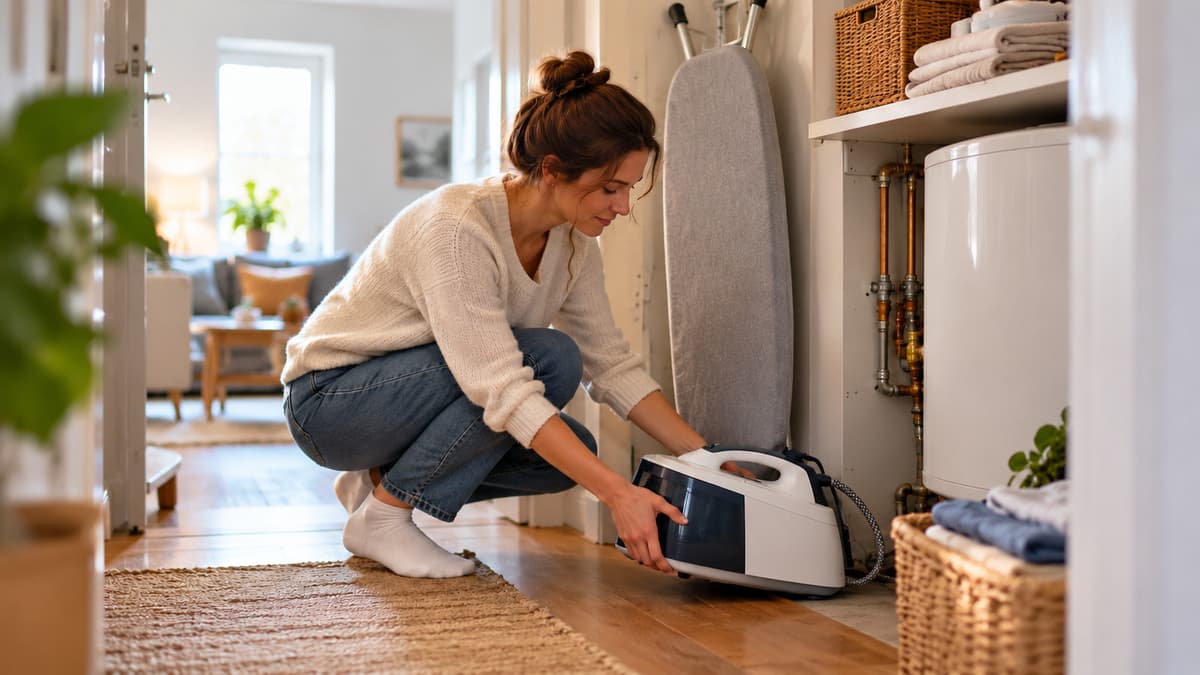
Steam generator storage in a small flat
Give the base a low home. A unit of roughly 3 to 6 kg belongs on the floor or at waist height.