Independent comparisons. We may earn from shop links. More info

How to use a diamond drill bit

Updated: 2026-10-23

You have the bit, the tile is marked, and the first risk is a rim that skates across the glaze, burns, or fills the room with dust. Learning how to use a diamond drill bit means matching the start, the speed and the coolant to the listing you bought, not to a single rpm copied from another brand. Hammer stays off. The rim grinds. It does not chip like a masonry bit. Product choice stays on the [diamond drill comparison](/hub/drilling-and-accessories/diamond-drill). This page is the cut itself. If the shank does not match the machine in your hand, stop before you pull the trigger. A qualifying purchase can earn a commission at no extra cost to you.

You have the bit, the tile is marked, and the first risk is a rim that skates across the glaze, burns, or fills the room with dust.

Our top picks

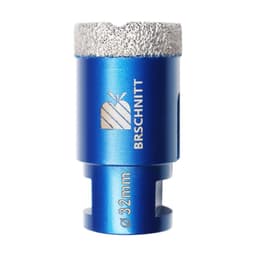
BRSCHNITT BRSCHNITT 32 mm M14

Best overall

BRSCHNITT BRSCHNITT 32 mm M14
9.0/10about £15.79
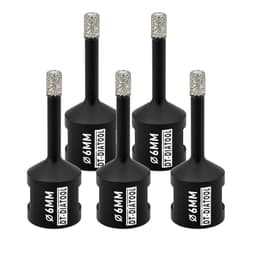
DT-DIATOOL DT-DIATOOL five 6 mm M14

Alternative

DT-DIATOOL DT-DIATOOL five 6 mm M14
9.0/10about £24.99
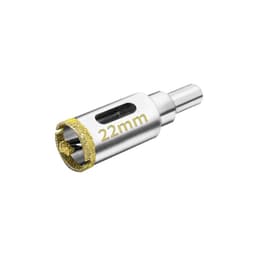
Meccion Meccion 22 mm pilot saw

Best value

Meccion Meccion 22 mm pilot saw
8.4/10about £9.69
On this page

Set the hole up before the trigger

Measure the fitting, then mark the centre on the tile. Support the tile so the exit has something under it. A fixed slab with no support on the back is how the glaze blows out as the rim breaks through. Masking tape gives the rim a surface to bite. Do not practise this on glass you cannot replace. Turn hammer action off before the bit goes near the glaze. A percussion blow cracks ceramic and porcelain even when the rim is diamond. If a mixed set includes a carbide or masonry bit, that piece is for the wall behind the tile. A hex, round or triangular shank goes in a chuck. An M14 bit screws onto the grinder spindle. Do not remove the guard to make a core bit fit. Have the coolant ready before the first scratch. Diameter and bond, if you have not locked them, are on the diamond drill buying guide.

Let the rim bite, then come upright

Present the rim at an angle, around 30 to 45 degrees, so a short arc of diamond cuts a crescent. Once that crescent stops the bit walking, bring the tool upright and let the circle close. Starting fully upright on glossy porcelain is how a bit skates off the mark. Light pressure is the whole of the feed. If you lean, you glaze the rim and crack the tile from the back. On a pilot hole saw, Meccion’s listing says you can remove the centring bit once a round slot exists. Leave the pilot in for the first bite, then take it out if it wanders. Speed follows the bit you are holding. Meccion states 500 to 800 rpm with water. SHDIATOOL states 6,000 rpm recommended and 11,000 rpm maximum. Topps Tiles puts other dry grinder bits near 11,000 rpm and up to about 14,000 rpm. Do not average them, and do not run a water-fed chuck saw at grinder speed.
BRSCHNITT BRSCHNITT 32 mm M14

Testsieger

BRSCHNITT BRSCHNITT 32 mm M14
9.0/10about £15.79

Cool it the way the listing is written

Meccion and Flintronic require water. Letting the rim run dry on those saws is what UK reviews describe as smoke and a burnt coating. BRSCHNITT, SHDIATOOL, BGTEC and the wax packs are sold for dry drilling, and several say water prolongs life. Use water when the listing allows it and the tool is safe to wet. Do not tip a bucket over a mains drill. Wax inside a small bit melts as the rim warms. It is used up. Würth’s note for its own dry M14 tile bit is a pause after about 30 seconds on thicker material. Use that as a pause habit, not as a life claim for the ASIN in your chuck. Knock the core out when the shape allows it. DT-DIATOOL reviewers mention clearing the head. BGTEC reviews include cores that jam. Smoke, a brown ring, or a rim that polishes means stop.

Dust is not solved by wax

HSE’s CIS36 sheet says pre-wetting is not water suppression. At work, dry drilling needs capture on an M or H class extractor, and longer work also needs RPE at APF 20. A vacuum at the hole, or a wet cut where the listing allows it, is the domestic version. Slurry must not be left to dry. Hearing protection is reasonable on a grinder. Quartz and other engineered stone are a separate warning. Stop when the large tile is already fixed with no offcut and no support on the exit, when you cannot control that dust, or when the guard cannot stay on.

Common questions

Do I start upright or at an angle?
Start at an angle so a short arc of the rim cuts a crescent in the glaze, then come upright once that groove stops the bit skating. An upright start on glossy porcelain is how the bit walks off the mark. Masking tape helps the first bite. On a pilot saw, keep the pilot for that first groove and remove it once the circle can guide itself, which is what Meccion’s listing describes.
Hammer on or off?
Off, for the whole cut in tile, porcelain, glass or stone. Hammer action is for masonry behind the tile, and even then only with a masonry bit after the tile is already open. A diamond rim grinds. A percussion blow cracks the glaze. If the set includes a carbide or masonry bit, that piece is not the tool you use on the porcelain face.
What speed should I set?
Use the speed written for the bit in your hand. Meccion states 500 to 800 rpm with water. SHDIATOOL states 6,000 rpm recommended and 11,000 rpm maximum. Do not run a wet chuck saw at grinder speed.
Wax, water, or both?
Follow the listing. Meccion and Flintronic require water. Wax-filled bits such as ColumPRO, Zeeorymn, SHDIATOOL and DT-DIATOOL are sold for dry use, and several vacuum-brazed rows say water extends life. Wax is a coolant inside the bit. It is used up, and it does not replace a spray when the listing says water is required. Do not soak a mains drill.
When do I stop and call someone?
Stop when the tile is a large fixed slab with no offcut and no support behind the exit, when the material is engineered stone and you cannot control dust and slurry, when you are coring concrete, or when the only way to fit the bit is to take the grinder guard off. Also stop if the second attempt is skating or cracking. The tile is worth more than another pass with a blunt rim.

Related pages

Sources

Public UK sources from the research digest, last checked on 19 October 2026. Shelf prices and star lines are the amazon.co.uk figures in the display file.

  1. Topps Tiles: best drill bits for tiles (retrieved 19 October 2026)
  2. HSE CIS36: dust controls for drilling and coring (retrieved 19 October 2026)
  3. HSE CN8: diamond coring and slurry (retrieved 19 October 2026)
  4. ATS Diamond Tools: diamond drill bit types (retrieved 19 October 2026)
  5. Sigma UK: what size drill bit do I need (retrieved 19 October 2026)
  6. Würth UK: diamond dry core bit for tile, M14 (retrieved 19 October 2026)
  7. HSE: working with engineered stone (retrieved 19 October 2026)
  8. Tiling Supplies Direct: Rubi DRYGRES M14 bits (retrieved 19 October 2026)