Independent comparisons. We may earn from shop links. More info

How to fit a padlock

Updated: October 2026

You have a hasp, a staple and a new padlock, and you want it on a shed, a gate or a locker this afternoon. How to fit a padlock is mostly the order of work. A sound lock on the old outside screws still comes off with a screwdriver, and a combination snapped shut before you have tested the code locks you out of your own staple. This page is that sequence. Which lock to buy is the [padlock buying guide](/hub/door-and-window-security/padlock/sub/padlock-buying-guide). Prices for the twelve listings are on the [padlock comparison](/hub/door-and-window-security/padlock). Peter F. used public UK fitting advice and the reset notes on these listings in October 2026. This is not a laboratory fitting. A qualifying purchase can earn a commission at no extra cost to you.

You have a hasp, a staple and a new padlock, and you want it on a shed, a gate or a locker this afternoon. How to fit a padlock is mostly the order of work.

Our top picks

On this page

Measure the staple before you drill

Measure the hole and the thickness the shackle must pass, with the door closed and the hasp held where it will live. You need shackle diameter, horizontal clearance and vertical clearance, in millimetres, from the lock in your hand rather than from the title. Listings in this set contradict themselves. SEPOX says 58 mm in the title, 40 mm in the model name, and 46.5 mm on the shackle line. Diyife’s dimensions do not agree with each other from one field to the next. GRIFEMA does not state a diameter at all. If the hoop will not pass the staple, careful drilling will not fix it. Mark the holes only after the hoop and the staple meet with the door shut. A long shackle that closes with a finger’s width of spare metal gives a bar somewhere to sit. Use the shortest hoop that still locks. Do not drill yet. The next job is the code or the key, while the lock is still in your hand.

Set the code, then test it open and shut

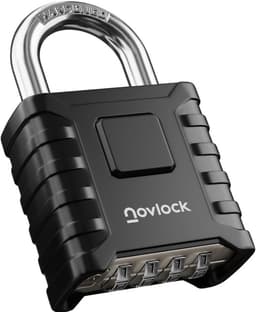
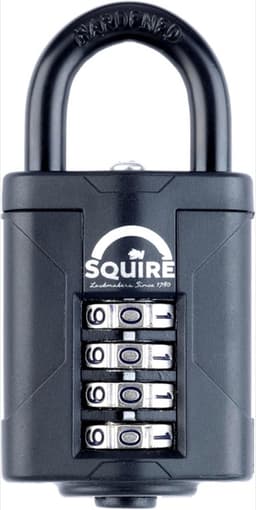
Reset methods differ by model, so one sequence will not match every 4-digit lock in this set. On the Diyife, you set the four digits and press the centre button to open. The code-change screw is on the bottom. On the Squire CP40, a small screw sets the code, and one review found that screw already stripped in the box, so test it before you rely on it. The NovLock combination is printed on the bottom. If your lock is a twist-shackle type, follow the card in that box. If the code is unknown on a lock you did not just buy, stop. Squire’s own FAQ says they hold no override code for their combination products. Set your own code if it is a combination. Lock it, scramble the dials, and open it again before the shackle ever meets the staple. Write the code down indoors. For a keyed lock, try both keys in the keyway now, with the shackle free. Two keys in one box are copies of one key unless the listing says the set is keyed alike. That distinction is on the combination versus keyed padlock page.

Fix the hasp so the screws vanish

The hasp is the hinged plate, and it belongs on the moving leaf. The staple is the loop, and it belongs on the frame or the fixed leaf. Hold them interlocked with the door closed, and mark through the holes so they still meet when the timber is screwed down. Coach-bolt through the door where you can, with washers and nuts on the inside. A dab of thread-lock, or a burred thread, stops the nut spinning off later. Where a bolt will not pass, Secured by Design allows security screws, also called non-return or clutch-head screws. Ordinary woodscrews from the packet, driven into cladding, are the failure. The screw heads have to disappear when the hasp is closed. If the flap does not cover them, the fitting comes off with a screwdriver and the padlock stays locked on a staple you have just removed. Thin doors need a backing plate so the bolts have something to tighten against. A shed door often wants a second hasp. Why that pattern exists is the padlock for a shed and gate page. This page keeps the bolts and the order.

Lubricate lightly, and know when to stop

Rain stiffens an outdoor padlock, and the UK sources do not agree on one spray. Insight Security warns that a WD-40-type penetrating oil leaves a residue that collects grit, that graphite powder is for dry indoor locks because rain turns it to sludge, and that a dry PTFE or a lock spray used sparingly is the safer outdoor habit. Kasp still recommends dry graphite outdoors. Follow the leaflet that came with your lock. Do not soak the combination wheels. Wipe grit off first, put a small amount on the shackle, and for a keyed lock a drop in the keyway, then work the mechanism. Spare keys do not live under the shed, on a nail, or under a pot. ProtectUK would rather you left a spare with a neighbour than in a hiding place. The written code stays indoors as well. Stop and call a fitter if the door or frame is rotten, if you need a BS 3621 mortice rather than a padlock, if an insurer has named a grade you cannot see on the listing, or if the hasp must be bolted through masonry. A hasp on rotten timber fails at the timber.

Common questions

What do I measure before I drill?
With the door closed, measure the staple the hoop must pass: thickness, width inside the hoop, and height inside the hoop, in millimetres. Check those figures against the lock in your hand. Titles in this set disagree with their own size lines, so a 58 mm claim on SEPOX is not a measurement you can drill from. Mark the screw holes only when the closed hasp and the hoop still meet.
How do I set a combination without locking myself out?
Use the reset on that model. Diyife uses a centre button and a screw on the bottom. The CP40 uses a small screw that can arrive stripped. NovLock prints the code on the bottom. Then lock it, scramble the wheels, and open it again before it goes on the staple. Write the new code indoors. A forgotten Squire code has no maker override, so do not click the shackle shut on a number you have not just proved.
Coach bolts or the screws in the packet?
Coach bolts through the timber, with nuts on the inside, are the better fixing when the door is thick enough. Non-return screws are the alternative Secured by Design allows. Packet woodscrews into thin cladding are how the hasp gets levered off. Hide every head under the closed hasp, and use a backing plate on a thin door so the nuts have a firm face.
What should I put on a stiff outdoor padlock?
Wipe the grit off, then use a small amount of the lubricant the leaflet names. UK advice disagrees about graphite in the rain, and penetrating oil can leave a film that holds dirt. Do not flood the wheels of a combination lock. Work the shackle after a light application. If the lock is seized solid or the screw that sets the code is already ruined, lubrication will not recover it.
Where do spare keys and the written code live?
Indoors, or with a neighbour you trust. Not under the shed, not on a nail in the porch, and not under a plant pot. Two keys supplied with one padlock are copies of that key, not a second lock on the same key, unless the listing says keyed alike. A code on a scrap of tape stuck to the hasp is a code you have published.
When should I stop and call a fitter?
Stop if the frame is soft or rotten, if the door should have a BS 3621 mortice, if an insurer has named a grade the listing does not show, or if the bolts have to go through masonry. Also stop if the combination is unknown and the shackle is already shut. Forcing that lock is not a fitting step, and Squire does not keep an override code for you to ring up.

Related pages

Sources

Public UK sources from the research digest, used for this page in October 2026. Prices, stars and review counts are from the amazon.co.uk listings in the product files. None of the twelve listings states a BS EN 12320 grade or a Sold Secure mark.

  1. BSI Knowledge, BS EN 12320:2021 padlocks and padlock fittings (retrieved October 2026)
  2. SIST EN 12320:2022 preview, durability and corrosion (retrieved October 2026)
  3. ProtectUK, locks (retrieved October 2026)
  4. Sold Secure ratings (retrieved October 2026)
  5. Secured by Design, secure sheds and outbuildings (retrieved October 2026)
  6. West Yorkshire Police, shed and garage security (retrieved October 2026)
  7. Squire, how to choose a padlock (retrieved October 2026)
  8. Insight Security, ten factors when choosing a padlock (retrieved October 2026)