Independent comparisons. We may earn from shop links. More info

Worm castings for houseplants: a thin share indoors

Updated: October 2026

The Monstera is due a top-up, the peat-free bag is open, and you are wondering whether a scoop of worm castings will sort the pot. Used as a small share, worm castings for houseplants can add a dark amendment. Used as a thick wet layer, or tipped in from a bag that contains eggs or plastic, they make an indoor pot worse. The Products Compared editorial team wrote this from RHS houseplant guidance and the review notes in our [worm humus comparison](/hub/diy-supplies/worm-humus), saved on 16 October 2026. A qualifying purchase can earn us a commission at no extra cost to you. We did not grow a trial. This page stays with pots.

The Monstera is due a top-up, the peat-free bag is open, and you are wondering whether a scoop of worm castings will sort the pot. Used as a small share, worm castings for houseplants can add a dark amendment.

Our top picks

On this page

An ingredient, not the potting mix

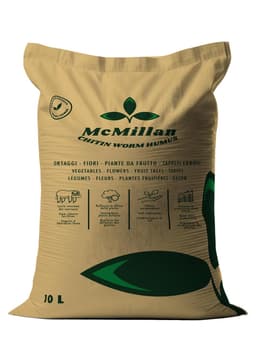
The RHS houseplant guide treats worm castings as one ingredient beside coir, bark, pumice and charcoal, for nutrition and for the way they hold water. That water holding is useful in a free-draining mix and a problem if the pot is already staying wet. You still fill most of the pot with a peat-free compost that has air in it. Gardenware's band is about 5 to 10 percent by volume when you repot. If your bag prints a rate, follow the bag. If it does not, start there. In a 2 litre pot, 10 percent is about 200 millilitres. Invigortex bullets name houseplants, and McMillan's coverage field includes indoor plants. Those are stated uses, not a trial, and they do not show a certificate. The litre-cell checks sit on the worm castings buying guide.

Top-dress without covering the stem

When you are not repotting, lay a thin layer on the compost you already have. Gardenware suggests about 0.5 to 1 cm, kept off the stem, or one to two tablespoons on a 12 cm pot. Two tablespoons disappeared into the surface is a feed. A 2 cm wet cap that touches the crown keeps the stem damp. Do this when the plant is growing. Spring and mid-summer suit a British home better than a dark January. Water so the layer settles, then let the top centimetre dry. Castings hold moisture. They do not give you permission to keep the saucer full. Indoors, ignore the 10 to 30 percent vegetable band.

Succulents, wet compost and gnats

Succulents and cacti want a gritty, fast mix. Use less than you would on a leafy tropical, or skip castings and rely on the cactus compost. A 5 percent share in a 1 litre succulent pot is about 50 millilitres. A thick top-dress on a jade plant is the wrong direction. Fungus gnats follow wet compost. A drier surface is the usual note, not a casting product. One reviewer hoped castings would stop gnats. That hope is not a result. A water-holding layer can keep the surface damp for longer. Let the top dry, empty the saucer, and do not buy castings as a gnat treatment. If the room is cold or dark, a richer surface will not start the plant.

Eggs and plastic stay out of the house

Some review texts in this set name slug or snail eggs, plastic, glass, peat and live worms. Tip a suspect bag onto newspaper before it goes near a pot. If you see glass, hard plastic or clusters of eggs, close it and speak to the seller. Fine on a bullet, with no millimetre mesh, is not a promise the bag was sieved for indoor use. Willy Worms, outside this set, states 5 mm then 3 mm. None of the ten listings here gives you that number. The 1.5 litre B2C listing is the size that matches a few pots. A 40 litre title is the wrong parcel for a flat. If the description and the bag do not match, the Consumer Rights Act 2015 is the route back.

Common questions

Can I use worm castings on indoor plants?
Yes, as a small part of a draining peat-free mix, or as a thin top-dress kept off the stem. The RHS lists them as one ingredient, not as the whole pot. About 5 to 10 percent by volume is the cautious retailer band when the bag itself is silent. A listing that mentions houseplants is stating a use, not proving a result.
How much goes in a small pot?
On a 12 cm pot, one to two tablespoons as a top-dress is the Gardenware figure. If you are mixing, about 5 to 10 percent of the volume is the starting band. In a 2 litre pot that is roughly 100 to 200 millilitres. More than that, or a deep wet layer, holds water against the roots.
Do I mix them in or lay them on top?
Mix when you are repotting, so the share is spread through the compost rather than sat in a wet band. Top-dress when the plant is staying in its pot, at about 0.5 to 1 cm, off the crown. Do not do both in the same week on a small pot. One modest dose is enough until you see how the compost dries.
Are they safe for succulents?
Only in a much smaller share, or not at all, because castings hold water and succulents want drainage. About 50 millilitres in a 1 litre gritty mix is already a light hand. A thick top-dress on a cactus compost works against the plant. If the pot stays damp for days, leave the castings in the bag.
Will they stop fungus gnats?
No. Gnats track moisture. A reviewer hoping castings would stop them is not evidence. A water-holding layer can keep the surface wetter. Dry the top of the compost, empty the saucer, and use a gritty surface if you need one. Do not buy this product as pest control.
What if I can see eggs or plastic?
Keep the bag out of the pot. Glass, hard plastic or a mass of eggs is a return, not a picking-over job in the kitchen. Close it and contact the seller. The goods should match the description. A single live worm is a lesser issue. Do not sieve a dirty bag onto a houseplant and hope.
Do I still need a peat-free potting compost?
Yes. Castings are the small share. The pot is still mostly a peat-free mix with enough air and drainage for that plant. A bag of castings will not fill a 20 cm pot on its own, and it should not. Buy the compost first, then add the spoonful.

Related pages

Sources

Public UK sources for this comparison. amazon.co.uk listings were read on 16 October 2026.

  1. RHS, worm composting (retrieved 16 October 2026)
  2. RHS, homemade fertilisers (retrieved 16 October 2026)
  3. RHS, houseplant growing media (retrieved 16 October 2026)
  4. GOV.UK, waste exemption T26 (retrieved 16 October 2026)
  5. GOV.UK, compost from waste resource framework (retrieved 16 October 2026)
  6. PAS 100:2018 via NBS (retrieved 16 October 2026)
  7. Consumer Rights Act 2015, section 11 (retrieved 16 October 2026)
  8. RHS, statement on peat (retrieved 16 October 2026)
  9. Gardenware, how to apply worm castings (retrieved 16 October 2026)