Independent comparisons. We may earn from shop links. More info

Thuja oil vs cream: which one matches the label

Updated: October 2026

You are choosing between a small bottle and a tube, and both can say thuja. In this amazon.co.uk set the oil is a neat distillate with a do-not-apply-directly line. The cream is already in a base, and one of the creams is for animals. Neither is the pharmacy wart product the NHS describes. The full rows are on the [Thuja comparison](/hub/diy-supplies/thuja), from files stored on 15 October 2026. Peter F. checked those listings. A qualifying purchase can earn a commission at no extra cost to you. Tablets and the gel stay on the [Thuja buying guide](/hub/diy-supplies/thuja/sub/thuja-buying-guide).

You are choosing between a small bottle and a tube, and both can say thuja. In this amazon.co.uk set the oil is a neat distillate with a do-not-apply-directly line.

Our top picks

On this page

What each one is

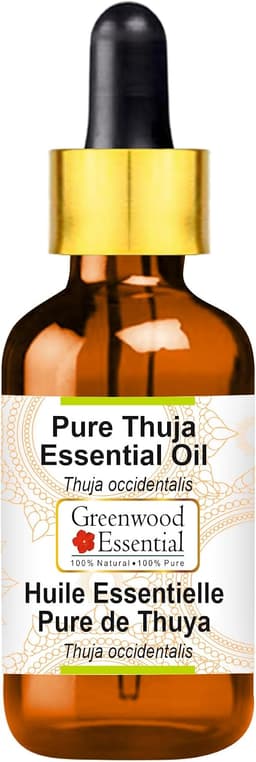
An oil here is steam-distilled Thuja occidentalis, origin India on the listings, in 5 ml or 10 ml. The skin bullet says dilute it in a carrier and do not put it on neat. The Greenwood 10 ml with a dropper is £11.99. A cream is a topical you spread. Topi is 25 g at £3.20, with bullets that name Thuja occidentalis. Stronger only means the bottle is a neat distillate and the cream is a base. The British Association of Dermatologists' 2014 wart guideline puts herbal treatment in the insufficient-evidence group.

When the oil is the wrong buy

The oil is the wrong buy if you plan to use it the way you use a cream, straight on the skin. A shared Greenwood review that describes a neat dab is a conflict with the label, not evidence you should copy. It is also the wrong buy in pregnancy and while breastfeeding. Oshadhi says cedar-leaf oil, Thuja occidentalis, is not for everyday aromatherapy and should be avoided then. The 4.6 from 6 is one sample shared by two Greenwood sizes. If you accept those limits, the oil can still be the bottle you meant, diluted. The label limits are on how to use thuja oil.

When the cream is the wrong buy

The cream is the wrong buy if the user on the label is not you. Phytopet is the pet pot, and human reviews on that page do not change the animal label. Horse and dog questions belong on thuja cream for dogs. Topi can still be the wrong buy if you need a result the reviews do not show. The 4.1 from 842 headers split between slow change and no change. £3.20 is the lowest price in the set, for 25 g, and it is a different product from a 5 ml or 10 ml distillate. The gel and the Weleda tablets are not this pair.

One recommendation, with a condition

Choose the cream if you want a ready topical and the label matches the user: Topi for a human skin tube at £3.20, Phytopet only when the animal label is the one you need. Choose the oil only if you accept a concentrated distillate, you will dilute it, and you are not pregnant or breastfeeding. The clearer oil in this set is the Greenwood 10 ml with a dropper at £11.99. The best-value oil is the Deve Herbes 10 ml at £9.99, with a cooler 3.9 from 32. That is not a claim that one form removes verrucas faster than the other. If the growth is on the face or genitals, bleeds, or changes, see a GP, and follow the printed line rather than a review that ignores it.

Common questions

Is the oil stronger than the cream?
Only in the narrow sense that the bottle is a neat distillate and the cream is a preparation in a base. The listings do not show a thujone assay for the creams, so you cannot compare a measured dose. Stronger is not a cure claim. The British Association of Dermatologists' 2014 wart guideline groups herbal treatment as insufficient evidence for cutaneous warts. Treat the oil as the more cautious buy, because the label tells you not to apply it neat.
Which is cheaper?
Topi's 25 g cream is £3.20, the lowest figure in this set. Phytopet's 150 g pet cream is £17.36. Oils cluster at £9.99 for 5 ml or 10 ml, £11.99 for the Greenwood 10 ml dropper, and £14.02 for 20 ml. Cheaper depends on the pack, not on the word thuja. A £3.20 tube is less money than a £9.99 bottle and it is also less oil, because it is not oil.
Can I use the oil the way I use the cream, straight on the skin?
No. Cream listings are sold ready to spread. Oil bullets say do not apply the oil directly and to dilute it in a carrier. A review that describes a neat dab does not cancel the bullet. If you want something you can apply as a cream, buy the cream whose user matches you, and still read that tube's own line.
Is Phytopet the cream to compare with an oil if I am not buying for an animal?
No. Phytopet is labelled for dogs, horses, and farm animals, and the maker says animal use only. Human reviews on that page do not change the label. For your own skin, the cream in this pair is Topi, 25 g at £3.20, with the limit that its reviews often report slow or no change. Pet decisions have their own page.
Do creams have a thujone assay on the listing?
No. The amazon files for Topi and Phytopet name Thuja occidentalis and describe a cream. They do not print an assay, a percentage of oil, or a dilution sum. You should not infer one from the oil bottles. If that measurement is what you need, these listings do not provide it.
Which one does the NHS recommend?
Neither. The NHS wart page describes pharmacy salicylic acid products, not a thuja oil and not a thuja cream. It says those pharmacy treatments can take up to about three months, may irritate, do not always work, and should not go on the face. See a GP for facial, genital, bleeding, changing, or returning growths. This comparison does not replace that advice.

Related pages

Sources

Public UK sources for this comparison. amazon.co.uk listings were read on 15 October 2026.

  1. NHS, warts and verrucas (retrieved 15 October 2026)
  2. NHS, molluscum contagiosum (retrieved 15 October 2026)
  3. NICE CKS, topical salicylic acid (retrieved 15 October 2026)
  4. GOV.UK, register a homeopathic medicine (retrieved 15 October 2026)
  5. Weleda UK, Thuja 30C tablets (retrieved 15 October 2026)
  6. Oshadhi, cedar leaf Thuja essential oil (retrieved 15 October 2026)
  7. HSE, GB CLP (retrieved 15 October 2026)
  8. ASA, CAP Code rule 12.2 (retrieved 15 October 2026)