Independent comparisons. We may earn from shop links. More info

How to use neodymium magnets

Updated: 23 October 2026

The pack is on the table, two discs have already snapped together, and a fingertip is in the gap. That is the usual start, and it is how coatings chip. This page is how to use neodymium magnets once you already have them: slide them apart, fix them without cooking the grade, and store the small ones where a child cannot reach. The [neodymium magnet comparison](/hub/diy-supplies/neodymium-magnet) is the table of the eleven listings. None of those packs includes a splitter. The steps below follow supplier separating notes, NHS pages, and the review faults on these amazon.co.uk listings, checked on 21 October 2026. This is not a handling lab.

The pack is on the table, two discs have already snapped together, and a fingertip is in the gap. That is the usual start, and it is how coatings chip.

Our top picks

On this page

Separate by sliding

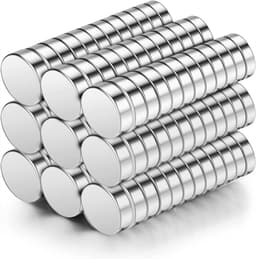
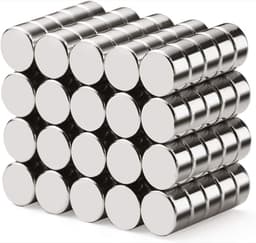
Pulling two neodymium discs straight apart is the hard way, and it is how they crack. FIRST4MAGNETS, writing as a supplier rather than as a test of these amazon.co.uk packs, says to slide them. Their rule of thumb is that sliding is about five times easier than a vertical pull. That figure is theirs. It is not a measured force for the walolo 6 mm discs or the Grtard 30 mm discs. Small magnets slide by hand, with the pair flat on a bench so your skin is not the gap. Medium ones go to the edge of the desk: you hold the stack, push the top magnet until it overhangs, and let it peel off sideways onto the bench. A slam is what chips the nickel. If the free disc flies back onto the stack, the coating cracks and the magnet can shed sharp flakes. Grtard buyers, on 30 mm by 3 mm discs with an 8 kg claim, describe pairs that take real effort to part. Give that size a clear bench and keep the second hand out of the closing gap. None of the eleven listings includes a splitter. If you cannot slide a pair apart without them jumping, stop and work at the edge of a wooden board, not over a tiled floor where a flying disc will shatter. Wear glasses if the discs are already chipped.

Fix them without heat

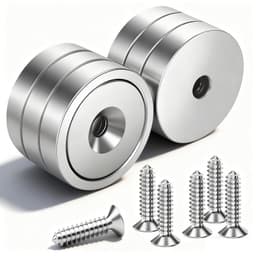
A bare disc has no screw hole. FIRST4MAGNETS' own fixing line for the F646 disc is a glue such as Araldite or Loctite, not a screw. Clean both faces, scrape off loose plating, and use a slow epoxy rather than a hot-glue gun. Standard N grades on that maker's temperature page are listed to about 80°C, with a footnote of 60°C for N50 and N52. A hot-glue gun is a poor match for that limit, because you may be putting a hot nozzle on an ungraded pack with no printed heat rating. Heat that takes the magnet past its maximum is not fully recovered on cooling. Grtard includes adhesive pads with the four 30 mm discs. Reviews say the pads held on some metal and failed on picture frames and in a hot car. Glue the magnet to the object if you must, and let the magnet meet steel, rather than trusting a pad to carry a frame. If the pad lets go once, replace the fixing. A countersunk pot is the shape that takes a screw. VACUBXBY includes six M4 screws with its 20 mm by 6 mm pots. Tighten until the pot is flat, then stop. A steel cup cracks if the screw is driven as if it were a wood screw in a joist. Do not drill a plain disc. Drilling or grinding shatters it and makes dust you should not breathe.

Store and count them

Put the stack in the box the listing gave you, or in a lidded tin, before you leave the bench. Wukong's hundred-pack includes a box. NXPUXP's eighty 10 mm discs include a plastic case. A 5 mm disc on a worktop is easy to lose and easy for a toddler to find. Slide the stack, do not throw the magnets in loose, or they will arrive cracked at the next job. Keep the tin away from bank cards, a mechanical watch, and a phone you care about. These listings do not print a safe distance. A cupboard shelf, not a fruit bowl, is the practical place. Count a hundred-pack once if the job needs a set number. MAGABALLNET's title says 100, and one verified review of two packs reported 92 and 95. That is one report, not a census. Wukong's title also says 100, with a thickness clash between 2 mm and 5 mm, so a count does not prove the thickness. WATELL's title says 40 and the unit count says 50. If you are recessing magnets into a row of holes, count and measure before you glue the first one. A short pack is a description problem under the Consumer Rights Act 2015. Leave the tin shut when children are in the kitchen. Several bullets say the magnets are not a toy. That sentence is not a certificate under the Toys (Safety) Regulations 2011. OPSS alert PSA1 treats two or more swallowed high-powered magnets as a cause of serious injury or death.

When to stop

Go to A&E if a child may have swallowed a magnet or put one in a nose or an ear, even if they look well. NHS guidance says not to wait for pain. Two magnets, or a magnet and another metal object, can pinch the bowel. Do not try to make them sick, and do not wait to see if it passes. If someone has a pacemaker or another implant, follow the clinic that fitted it. None of these eleven listings prints a clearance distance, so this page will not invent one. A not-a-toy bullet is not a medical clearance. Bank cards are a separate, smaller loss: a disc can wipe a stripe. That is a reason to store the tin, not a medical emergency. Stop and use a competent person before an overhead fixing, a hatch that could fall, or anything whose failure would injure someone. A catalogue kilogram is straight off clean thick steel. It is not a safe working load through paint, through a gap, or sideways. If the magnet has to stay on a door and a failed pad would drop something, use a screwed pot. That format choice is on the disc and pot page. A qualifying purchase can earn a commission at no extra cost to you.

Common questions

How do I get two discs apart?
Slide them. Keep the pair on a wooden bench so the gap is not your skin. For a thicker pair, push the top magnet over the edge of the desk until it peels off sideways. FIRST4MAGNETS says sliding is about five times easier than a straight pull. That is their rule of thumb, not a measured force for every pack in this set. If they slam back together, the nickel chips.
Why did they chip?
Because two brittle magnets hit face to face. The nickel-copper-nickel layer cracks, and the sintered magnet underneath can shed a sharp flake. Yanking them apart and letting go is the usual cause. Slide on a bench, and do not stack them in a pocket. A chipped disc is weaker at the flake and it can mark a fridge. Bin the flakes where a child cannot reach them.
Can I use a hot-glue gun?
Prefer a slow epoxy such as the Araldite or Loctite line FIRST4MAGNETS names for a plain disc. Their temperature page lists standard N grades to about 80°C, with a 60°C footnote for N50 and N52. A hot nozzle is a bad match, and an ungraded multi-pack has no printed limit at all. Pads on the Grtard discs have already failed in a hot car, so heat and glue are a weak pair.
How should I store a 100-pack?
In the box or a lidded tin, as a stack you slid together, not as loose discs in a drawer. Keep the tin off the kitchen table if toddlers are in the house. Wukong includes a box. A lost 5 mm disc is an ingestion risk, which is why OPSS PSA1 exists. Count them if you are about to glue a set into holes. One MAGABALLNET review found packs of 92 and 95 against a title of 100.
What if a child may have swallowed one?
Go to A&E, even if the child looks well, and tell the staff it may have been a magnet. NHS pages say not to wait for pain. More than one magnet, or a magnet and another piece of metal, can pinch tissue. Do not wait overnight to see whether it passes. A not-a-toy line on the listing does not change that trip.
Can I drill a neodymium magnet to add a hole?
No. Drilling or grinding shatters the magnet and makes dust. A plain disc is glued or recessed. A pot already has a countersink. VACUBXBY includes M4 screws for that hole. Tighten until the cup sits flat, then stop, because an overtightened countersink cracks. If you need a screw and you bought discs, the fix is a different product, not a drill bit.

Related pages

Sources

Public UK sources and the amazon.co.uk listings compared on this page. Listings captured 21 October 2026. Updated 23 October 2026.

  1. OPSS PSA1, small high-powered magnets (retrieved 21 October 2026)
  2. OPSS guidance on the risk of small high-powered magnets (retrieved 21 October 2026)
  3. Toys (Safety) Regulations 2011, Great Britain (retrieved 21 October 2026)
  4. NHS Healthier Together: magnets (retrieved 21 October 2026)
  5. FIRST4MAGNETS F646-N52, pull and temperature note (retrieved 21 October 2026)
  6. Magnet Store pull chart (retrieved 21 October 2026)
  7. Eclipse Magnetics: what is a pot magnet (retrieved 21 October 2026)