Independent comparisons. We may earn from shop links. More info

How to grit a path

Updated: 23 October 2026

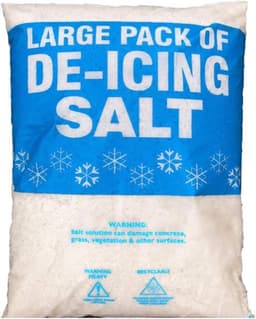
The path is white this morning, and the sack from the [grit comparison](/hub/diy-supplies/grit) is in the porch. How to grit a path is mostly about order. Loose snow comes off first. Salt goes on the cleared line, thinly. Water does not go on at all. A yellow council bin is not your private store. This page is the household sequence from GOV.UK and the Met Office. It does not rank the bags. A qualifying purchase of a sack can earn a commission at no extra cost to you. If a dog eats the salt, or the surface is new concrete, stop and use the [grit for driveways](/hub/diy-supplies/grit/sub/grit-driveways) page rather than a second handful.

The path is white this morning, and the sack from the grit comparison is in the porch. How to grit a path is mostly about order. Loose snow comes off first.

Our top picks

On this page

Clear the loose snow before you spread

Shovel or sweep the loose snow before you spread salt. GOV.UK says to clear snow and ice early, before feet pack it. Gloucestershire's snow guide says salt does not remove snow or compacted ice. Salt thrown onto a thick layer is buried, and you still have to shovel. Clear a walking line wide enough for two feet. The Health and Safety Executive points to evening or early morning, because rain can wash an earlier spread away. Salt needs time to dissolve. If the ice is a solid sheet, chip a channel or put down sand or ash for grip, which GOV.UK allows, then salt the broken surface.

A tablespoon, not a pile

The Met Office puts the household rate at about one tablespoon of salt per square metre on a cleared path. A square metre is one large paving slab. Gloucestershire says a small handful treats about one metre. Those two descriptions are in the same neighbourhood. They are not a laboratory dose for a named brand. Highway bands of roughly 10 to 40 grams per square metre are for roads. More salt is not a faster path. A heap sits as a crust and blows into the lawn. Spread the tablespoon, wait, and walk the line. None of these retail listings prints a grams-per-metre rate of its own.

When the grit seems to do nothing

Rain washes salt off before it has dissolved, which the HSE and Derbyshire County Council both describe. If nobody walks the line, the grains sit where you threw them. You cannot salt your way through a packed sheet. Derbyshire notes a fall-off around minus 5 °C to minus 8 °C at the rates they spread on roads. That is highway practice, not a measured limit for these bags. Do not print minus 8 °C on your sack. If the path is still glass after a tablespoon and a wait, add sand or ash rather than a second thick coat. Store the rest in a dry bin with a lid. Wet salt cakes, and caked salt will not spread at a tablespoon.

Bins, the public road, and when you stop

Do not take salt from a public grit bin for a private drive. GOV.UK says that salt is for the public pavement and road. York Council has told people they can use public grit bins. Parish pages such as Minchinhampton and Lanteglos by Fowey say the opposite for private drives. Follow GOV.UK for your own drive, and read your council before you treat the pavement in front of the house. The carriageway is the highway authority's. A workplace path is the employer's. Stop on new concrete, on a lawn, or when a dog has licked salt off its paws. That is a vet, not another tablespoon. If the line is still a packed sheet, use sand or ash and leave the public road to the council.

Common questions

How much salt goes on one square metre?
The Met Office suggests about one tablespoon per square metre for a home path. Gloucestershire describes a small handful for about one metre. Highway bands of roughly 10 to 40 grams per square metre are for roads, not a recipe printed on these amazon.co.uk bags. Start with the tablespoon on a cleared slab, then wait.
Can you pour water on the ice?
No. GOV.UK tells you not to use water. It can freeze into a worse sheet, especially if the water runs and then the temperature drops again. Salt works by dissolving into moisture that is already there. It does not need a bucket. If the surface is dry and dusty-cold, a very thin existing film is enough for the grains to start. Do not hose it.
Can you take salt from the yellow bin?
Not for a private drive. GOV.UK says public grit-bin salt is not for your own property. York Council has given different pavement advice, and some parishes forbid bin salt on private drives. Those pages disagree. Use your own sack on your drive, and check your council before you treat the public pavement.
Why is the path still icy after you salted it?
Rain may have washed the salt off, nobody may have walked the grains in, or the ice may already be compacted. The HSE notes that salt needs time to dissolve. A packed sheet will not vanish because the pile is larger. Shovel what is loose, use about one tablespoon per square metre, and add sand or ash if you need grip while you wait. A council temperature note is not a failure figure for your bag.
When do you stop and leave it to the council or an employer?
Leave the public road to the highway authority. Leave a workplace route to the employer. Stop on your own ground when the ice is a bonded sheet you cannot break, when the salt would sit on soil or new concrete, or when a person or a dog has swallowed it. More salt does not fix those cases. Pets and fresh concrete are a harm question, not a second handful.

Related pages

Sources

Public UK sources first, then the amazon.co.uk listings compared on this page. Updated October 2026.

  1. GOV.UK: clear snow from a road, path or cycleway (retrieved October 2026)
  2. Highways Act 1980, section 41 (retrieved October 2026)
  3. BSI: BS 3247:2011+A1:2016 salt for highways (retrieved October 2026)
  4. HSE: slips and trips FAQ (retrieved October 2026)
  5. Met Office: clearing paths and driveways (retrieved October 2026)
  6. National Highways: winter service (retrieved October 2026)
  7. RSPCA: rock salt and pets (retrieved October 2026)
  8. Concrete Society: de-icing salts (retrieved October 2026)