Independent comparisons. We may earn from shop links. More info

How to fit Blum hinges

Updated: 23 October 2026

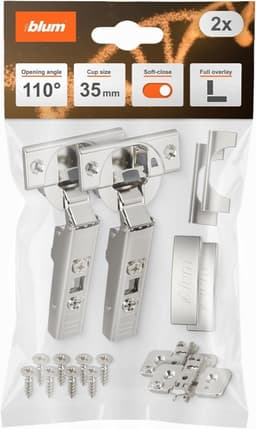
The door is off and the new CLIP top is on the bench. How to fit Blum hinges, for the 110° screw-on cup in this set, is a 35 mm hole about 13 mm deep, with the edge of that hole 3–7 mm from the door edge, then a plate, then a clip. This page assumes you already chose overlay or inset. The [Blum hinges comparison](/hub/diy-supplies/blum-hinges) is where the packs are ranked. Measurements come from the 71B3550 sheet and Blum's CLIP top kit notes. Peter F., editor for DIY & tools, did not drill a test kitchen. A qualifying purchase through our amazon.co.uk links can earn us a commission at no extra cost to you.

The door is off and the new CLIP top is on the bench.

Our top picks

On this page

Check the hinge before the drill

A straight arm is full overlay. A full crank is inset. Boring the cup does not change the arm. Confirm the crank on the overlay or inset page before the Forstner bit touches a lacquered front. One hinge-only listing states door thickness up to 26 mm, with a trial fit from 27 mm. A face-frame COMPACT hinge uses a shallower cup, about 1/2 inch, so do not apply the 13 mm rule to it. The 60° bi-fold pair uses a 45 mm boring pattern and will not land on these marks.

Cup hole

Set the 35 mm bit to about 13 mm deep. The 71B3550 sheet limits boring distance to 3–7 mm, measured to the edge of the hole. On an 18 mm UK door, fitters on a DIYnot thread use about 5 mm. A hole whose edge is 2 mm from the face can break out when the screw goes in. A 22 mm centre mark is about a 4.5 mm edge distance, because the edge of a 35 mm hole sits 17.5 mm from the centre. If you mark the edge, use 3–7 mm and do not also add 17.5 mm. A UK review describes a door plate bent because the cup was too shallow. Deepen it to about 13 mm before you blame a soft-close fault.

Plate, arrow, and clip

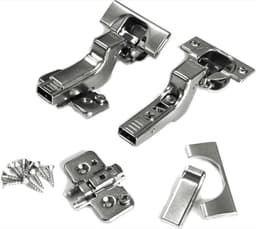
Place the mounting plate so its fixing line is 37 mm back from the opening. The arrow points toward the opening. Reviewers also describe that arrow as toward the door. Point it the wrong way and the clip will not seat. Clip the arm on. A finger on the release lever lifts the door off again. On the 71B3550 sheet, side adjustment is ±2 mm and depth is +3 / −2 mm. Height on a cam plate such as 173L8100 is about ±3 mm. If the door still stands proud after the depth screw is at its limit, the setback or the cup depth is wrong. If you moved the BLUMOTION switch, close the door once.

Screws and when to stop

Old fat system screws often will not enter the narrow slots on a new CLIP plate. Reviews of the eight-piece overlay pack describe that mismatch. Forcing a thick screw through a chipboard slot twists the plate and throws the 37 mm setback off. Keep the old plate and clip a hinge-only arm onto it when the slots already match. Stop when the door is lacquered and has never had a cup, when it still sags after Blum's count of about two hinges for 4–6 kg or three for 6–12 kg, when a bi-fold's leaves are unclear, or when the cupboard houses an appliance. Confirm the crank, bore 35 mm to about 13 mm, fix the plate at 37 mm, clip on, then close once if you touched the damper switch.

Common questions

What size Forstner bit do I need?
Use a 35 mm Forstner bit for the CLIP top cup on the 71B3550 sheet and for the inset 71B3750 sheet. The face-frame COMPACT listing also says a 35 mm bore, but its cup depth is 1/2 inch rather than about 13 mm. Match the depth to the hinge in your hand, not only the diameter.
How deep is the cup?
About 13 mm for the 110° CLIP top cup on the 71B3550 specification. A shallower old hole can bend the door plate when you screw the hinge down, which is what one UK reviewer reported and blamed on their own boring. Deepen the hole rather than forcing the cup.
How far from the door edge is the hole?
The edge of the 35 mm hole should sit between 3 mm and 7 mm from the door edge. About 5 mm is the figure UK fitters mention for an 18 mm door, and it falls inside that band. Centre marks on a US kit table are a different measurement. Convert them before you drill, or mark the edge of the hole directly.
Which way does the plate arrow point?
Toward the cabinet opening, which reviewers also describe as toward the door. The kit sheet places the plate 37 mm back from that opening. If the arrow faces the wrong way, the arm will not clip on square, and you will feel it before the first screw of the cup is worth tightening.
Can I reuse the old carcass screws?
Only if they pass through the new plate slots. Reviews of overlay packs in this set say old fat system screws are too large for the narrow slots. Chipboard screws are what several complete packs include. Keep the old plate, and buy a hinge without a plate, when the existing screws and slots already match.
When should I stop and call a fitter?
Stop if the door has no cup and a lacquered face you cannot patch, if the door sags with enough hinges already fitted, if a bi-fold's leaves are unclear, or if the cupboard houses an appliance. Those are the cases where a second attempt costs more than the hinge pack.

Related pages

Sources

Public sources from the research digest, plus the amazon.co.uk listings compared on this page. Prices were captured on 19 October 2026. Updated 23 October 2026.

  1. Blum UK, CLIP top BLUMOTION (retrieved 22.10.2026)
  2. Blum, number of hinges (retrieved 22.10.2026)
  3. 71B3550 specification sheet (retrieved 22.10.2026)
  4. Blum catalogue, mounting plates (retrieved 22.10.2026)
  5. BS EN 15570:2008 via NBS (retrieved 22.10.2026)
  6. GOV.UK, General Product Safety Regulations 2005 (retrieved 22.10.2026)
  7. DIYnot thread on 71B3550 (retrieved 22.10.2026)
  8. Hart Wholesale on the 60° bi-fold (retrieved 22.10.2026)