Independent comparisons. We may earn from shop links. More info

How to bleed a radiator when the top stays cold

Updated: 23 October 2026

The upstairs panel is hot along the bottom and cold across the top, or it gurgles when the heating starts. This is how to bleed a radiator on a UK hot-water system: heating off, a small anti-clockwise turn, close when water appears, then check the boiler gauge. Which key to buy is on the [radiator bleed key buying guide](/hub/diy-supplies/bleed-key/sub/bleed-key-buying-guide). The listings are on the [Bleed key comparison](/hub/diy-supplies/bleed-key). This follows published UK guidance, not a lab test. If you buy a key through our links, we may earn a commission at no extra cost to you.

The upstairs panel is hot along the bottom and cold across the top, or it gurgles when the heating starts.

Our top picks

On this page

Check it is air

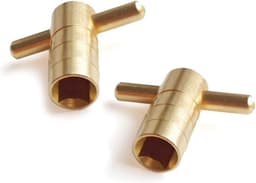
Bleed a radiator that is cold at the top and warmer underneath. Smart Energy GB draws that line: air sits at the top, and a cold bottom is sludge or poor flow. A key will not shift sludge. If the whole panel stays cold, check that the thermostatic valve is open. An electric radiator is not bled. A towel rail is covered on the bleed a heated towel rail page. You need a key or a flat screwdriver, a cloth and a small container. If the square is already round, or a new 5 mm key spins, read the imperial or metric bleed key page before you lean on it.

The turn

Turn the heating off and let the radiator cool. British Gas, the Energy Saving Trust and Gas Safe Register all start there. A hot panel spits scalding water. Put the cloth under the screw and fit the key fully onto the square so it does not rock. Turn anti-clockwise. The Energy Saving Trust describes a quarter or a half turn. Southwark Council’s fix-it page says no more than about two turns, and do not remove the screw. Close it the moment the hiss stops and water appears. Clockwise, snug, not crushed. If water keeps coming after you have closed it, the screw or its washer is not sealing. Stop and call someone rather than open it again.

Which radiator next

If only one panel is cold at the top, do that one. If several are sluggish, start on the lowest floor, at the radiator furthest from the boiler, then upstairs. Ideal Home reports that order from a Gas Safe engineer. Leave panels that are already hot at the top. Each open screw can drop the pressure.

After the hiss

Look at the gauge with the heating still off. British Gas gives about 1.0 to 1.5 bar cold, and about 2 bar when the heating is on. The Energy Saving Trust’s usual band is 1 to 1.5 bar, and a sudden drop can be a leak. Your boiler manual overrides both. Top up a combi or a sealed system with the filling loop, then close it. Open-vented systems often refill from the header tank. Do not open the boiler case. Bleeding the same radiator every few weeks needs a Gas Safe registered engineer. Suspected gas is 0800 111 999. Letting air out is the wet side. Nothing here is a measured saving on the heating bill.

Common questions

Should the heating be on while I bleed?
No. Turn it off and let the radiator cool before you open the screw. British Gas and the Energy Saving Trust both start from a cool panel. Hot water from a bleed screw is a scald, and a hiss is harder to judge when the system is circulating. Put the heating back on only after the screw is closed and you have checked the gauge.
Which way do I turn the key?
Anti-clockwise to open, clockwise to close. You are cracking a small vent, not unscrewing a jar. The Energy Saving Trust describes a quarter or a half turn. Southwark Council says no more than about two turns and tells you not to remove the screw. Close it as soon as the hiss stops and a dribble of water shows on the cloth.
Do I bleed every radiator or only the cold one?
Start with the radiator that is cold at the top. Leave panels that are hot at the top alone. If several are cold at the top, the published advice is lowest floor first, furthest from the boiler, then upstairs. Ideal Home reports that from a Gas Safe engineer. It is shared practice, not a law.
What pressure should I see afterwards?
With the heating off, British Gas guides about 1.0 to 1.5 bar, and about 2 bar when the heating is on. The Energy Saving Trust usually says 1 to 1.5 bar and treats a sudden drop as a possible leak. The card on your boiler wins if the numbers differ. Top up a sealed system or a combi from the filling loop in the manual. An open-vented system often replaces the water from the header tank.
Can I use a flat screwdriver instead of a key?
Yes, if the bleed screw has a slot and the slot is still intact. British Gas allows a screwdriver on a slotted screw. A square pin with a chewed slot needs a key that seats on the square. If the key rocks or the screwdriver cams out, stop. A loose tool rounds the head, and then you are into a new plug rather than a bleed.
When do I stop and call someone?
Stop if the same radiator needs bleeding every few weeks, if the screw will not close, if pressure will not hold after a top-up, or if the water keeps coming. Gas Safe Register points frequent air to a registered engineer. Stop if the pin is rounded. Stop if you smell gas and call 0800 111 999. Do not open the boiler or use a gas-meter test nipple as part of a bleed.

Related pages

Sources

Public UK sources from the digest, and the amazon.co.uk shelf prices stored for 19 October 2026. Page updated 23 October 2026.

  1. British Gas: How to bleed a radiator (retrieved 19.10.2026)
  2. Energy Saving Trust: Energy efficient DIY projects (retrieved 19.10.2026)
  3. Energy Saving Trust: Boiler service explained (retrieved 19.10.2026)
  4. Gas Safe Register: Boiler appliance guide (retrieved 19.10.2026)
  5. HSE: Gas domestic FAQs (retrieved 19.10.2026)
  6. HSE: Gas safety checks and who can do them (retrieved 19.10.2026)
  7. Gas Safety (Installation and Use) Regulations 1998, regulation 3 (retrieved 19.10.2026)
  8. Wonkee Donkee: How does a bleed valve work (retrieved 19.10.2026)
  9. Viessmann UK: Bleed a radiator without a key (retrieved 19.10.2026)
  10. Smart Energy GB: How to bleed a radiator (retrieved 19.10.2026)
  11. HHIC: BS EN 442 radiator standard (retrieved 19.10.2026)