Best radiator key for a stiff screw or a normal 5 mm pin
You do not need twelve keys. You need the best radiator key for the screw you have, with enough grip to turn it without rounding the square. A short brass pair is enough for an easy modern pin. A stiff screw, or older and newer radiators in one house, needs a longer lever and a second size. Best here means that match, not the highest star line on its own. Prices are the amazon.co.uk capture of 19 October 2026. The full table is the [Bleed key comparison](/hub/diy-supplies/bleed-key). This is not a lab test. If you buy through our links, we may earn a commission at no extra cost to you.
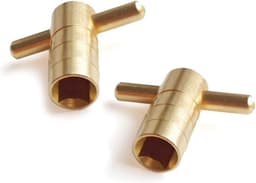
You do not need twelve keys. You need the best radiator key for the screw you have, with enough grip to turn it without rounding the square. A short brass pair is enough for an easy modern pin.
You do not need twelve keys. You need the best radiator key for the screw you have, with enough grip to turn it without rounding the square. A short brass pair is enough for an easy modern pin. A stiff screw, or older and newer radiators in one house, needs a longer lever and a second size. Best here means that match, not the highest star line on its own. Prices are the amazon.co.uk capture of 19 October 2026. The full table is the Bleed key comparison. This is not a lab test. If you buy through our links, we may earn a commission at no extra cost to you.
Our top picks
| Badge | Product | Socket | Material | Handle | Note | Price | Offer |
|---|---|---|---|---|---|---|---|
| Best overall |  Heatlab Heatlab dual-size radiator key | Imperial and metric | 17-7 stainless steel | 7.5 cm lever | 9.6 | about £6.99 | View offer |
| Best value |  Nartel Nartel brass radiator keys, pack of 2 | Square, size not stated | Brass | Clock wings | 9.0 | about £3.49 | View offer |
| Alternative |  QUERGO QUERGO brass radiator keys, pack of 2 | 5 mm square | Brass | Short T or wing | 8.8 | about £3.99 | View offer |


On this page
Best when the screw is stiff or the house is mixed
Best cheap key when the pin is a normal 5 mm square
What not to crown
A towel rail or a cold bottom is a different job
Common questions
What is the best radiator key if I only have modern radiators?
What if a small brass key has already bent?
Which listing actually states 5 mm?
Does 4.8 from 1,393 ratings mean it fits my house?
Is a key with no reviews a contender?
Related pages
Sources
Public UK sources from the digest, and the amazon.co.uk shelf prices stored for 19 October 2026. Page updated 23 October 2026.
- British Gas: How to bleed a radiator (retrieved 19.10.2026)
- Energy Saving Trust: Energy efficient DIY projects (retrieved 19.10.2026)
- Energy Saving Trust: Boiler service explained (retrieved 19.10.2026)
- Gas Safe Register: Boiler appliance guide (retrieved 19.10.2026)
- HSE: Gas domestic FAQs (retrieved 19.10.2026)
- HSE: Gas safety checks and who can do them (retrieved 19.10.2026)
- Gas Safety (Installation and Use) Regulations 1998, regulation 3 (retrieved 19.10.2026)
- Wonkee Donkee: How does a bleed valve work (retrieved 19.10.2026)
- Viessmann UK: Bleed a radiator without a key (retrieved 19.10.2026)
- Smart Energy GB: How to bleed a radiator (retrieved 19.10.2026)
- HHIC: BS EN 442 radiator standard (retrieved 19.10.2026)