Independent comparisons. We may earn from shop links. More info

Air admittance valve on a soil stack

Updated: 23 October 2026

The loft smells when someone runs a tap, or the bath gurgles when the toilet flushes, and the 110 mm soil pipe is what you can see from the hatch. An air admittance valve on a soil stack can stop that, once the smell is the vent and the drain is clear. A dead Durgo valve, an open pipe in the roof space, and a full chamber can all reach the landing. This page stays with that 110 mm stack. A basin branch is a different pipe. Listings are in the [air admittance valve comparison](/hub/diy-supplies/air-admittance-valve), from 19 October 2026, with no lab test. A qualifying purchase can earn us a commission at no extra cost to you.

The loft smells when someone runs a tap, or the bath gurgles when the toilet flushes, and the 110 mm soil pipe is what you can see from the hatch.

Our top picks

On this page

Smell and gurgle are not one fault

Sefton Council’s smelly-drains note splits causes that householders merge. A blocked drain, a failed soil vent, a loft valve clogged with fibres, a poor connection, and a dry trap can each put sewer air in the house. Lift the inspection chamber first. If it is full, or a downstairs WC is slow, the stack cap is the wrong purchase. A rarely used basin loses its water seal, and the loft gets the blame. Fill the traps. If the smell stops, the cap was never the fault. A gurgle is under-venting: a valve stuck shut, a blocked open vent, or a branch that is too long. A smell with the valve stuck open needs a replacement. Once the drain is clear, fitting is on the how to fit an air admittance valve page.

An open stack in the loft

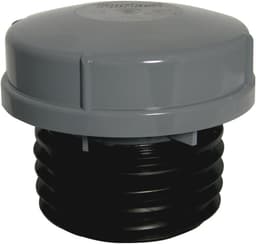
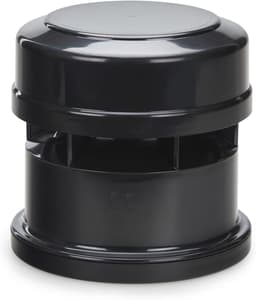
An open soil pipe in the roof space is an unfinished vent. You can finish it indoors with a 110 mm air admittance valve if the drain can still relieve positive pressure somewhere else. Fit it upright and above the insulation. FloPlast’s FAQ puts a 110 mm valve at least 200 mm above the highest wet entry. The January 2024 BPF note says to keep it above the quilt. The valve in this set that states the standard is the FloPlast AF110G, ASIN B0059WR0TI, at £23.85 with 4.6 from 251 reviews. It states A1 to BS EN 12380 and Kitemark KM512474. The LavaTap 110 mm listing says internal or external and does not state BS EN 12380. That is not permission to fit outside in England and Wales. Other sizes are on the buying guide.

A valve that has already failed

A valve already on the stack fails in two directions. Stuck open, the loft smells when a tap runs, because waste flow pushes air out through the cap. Stuck shut, the bath gurgles when the WC flushes, because the stack cannot pull air in. Grease holds the dust the BPF note names. AF110G reviews do not describe a spare-seal kit. Stiffened rubber means a new valve. Take the old cap off only after the chamber check. A clean pipe end, with 200 mm still above the highest connection, takes a new 110 mm push-fit with silicone grease, upright and clear of the quilt. A solvent-welded valve means cutting back to sound pipe and waiting for the cement tin’s cure time. Tape leaves the failed seal where it is.

When the stack is the wrong place to stop

A shared stack can still need an open vent at the head of the run. A Scottish LABSS note says groups of dwellings can still need that vent. The paper is for Scotland, not an England and Wales approval. If you cannot see another open vent, the pipe in your loft may be the one the terrace relies on. A septic tank or cesspool must not rely on an air admittance valve as its only vent. The valve admits air under suction and stays closed against a surcharge. A slow toilet with a full chamber is a blockage. If the traps are full, the chamber is empty, and a new valve you can reach still smells, look for a poor connection further along the drain.

Common questions

Why does the loft smell when a tap runs?
Running water pushes air up the stack. If the pipe is open in the loft, or the valve is stuck open, that air comes out under the roof and you smell it at the hatch. Fill the basin and bath traps first, and lift the inspection chamber. A full chamber means a blockage. A dry trap means the smell was never the cap. A stuck-open valve is the case for a replacement once those two are clear.
Why does the bath gurgle when the toilet flushes?
The flush pulls a vacuum and the bath trap is the easiest place for air to enter, so the water jumps. That is under-venting: a valve stuck shut, a blocked open vent, or a branch that is too long. It is a different fault from a smell caused by a valve stuck open. Check the chamber for a blockage before you fit a 110 mm valve on the stack.
Can I cap an open soil pipe in the loft with a valve?
You can, with a 110 mm air admittance valve, upright, at least 200 mm above the highest wet entry on FloPlast’s figures, and above the loft insulation. The drain still needs a way to relieve positive pressure, usually an open vent somewhere on the run. Capping the only vent to a septic tank is the case to leave alone. The valve has to stay where you can take it off to rod the pipe.
Should the air admittance valve sit under the loft insulation?
Keep it above the quilt. The British Plastics Federation’s January 2024 note puts roof-space valves above the insulation, with air around the cap, because fibres stick to the lubricated seal and the valve then sticks. A valve standing in the quilt can smell or gurgle even when the socket is 110 mm. Leave it reachable. These notes do not give a fixed service interval.
Is a slow toilet a valve problem or a blockage?
Treat a slow WC as a blockage until the inspection chamber says otherwise. Sefton Council asks you to lift that cover before you alter the indoor pipe. A new air admittance valve does not clear a full chamber. If the WC is slow and the chamber is empty, the restriction may still be further down the drain, and a plumber is the next step.

Related pages

Sources

Public UK sources and the amazon.co.uk listings compared on this page. Listings captured 19 October 2026. Updated 22.10.2026.

  1. Approved Document H (2015), clauses 1.31–1.33 (retrieved 22.10.2026)
  2. BPF Pipes Group, Air admittance valves for domestic properties, January 2024 (retrieved 22.10.2026)
  3. BSI, BS EN 12380:2002 (retrieved 22.10.2026)
  4. FloPlast soil and waste FAQ (retrieved 22.10.2026)
  5. FloPlast Kitemark schedule KM 512474 (retrieved 22.10.2026)
  6. Sefton Council, smelly drains note (retrieved 22.10.2026)
  7. P&H Engineering, Air admittance valves: getting it right (retrieved 22.10.2026)