Independent comparisons. We may earn from shop links. More info

How to use a trowel for planting and weeding

Updated: October 2026

You are kneeling by a border after a wet week, with a scooped hand trowel and a tray of young plants. How to use a trowel here is a short push of the tip, a small lift of soil or a weed root, then a brush and a dry before the tool goes away. A thick root or a skim of plaster calls for a different tool. This page from the Products Compared editorial team follows Royal Horticultural Society and Thrive guidance, and the limits of the listings in our [trowel comparison](/hub/digging-tools/trowel). We did not run a lab test. A qualifying purchase on amazon.co.uk can earn us a commission at no extra cost to you. Updated 16 October 2026.

You are kneeling by a border after a wet week, with a scooped hand trowel and a tray of young plants.

Our top picks

On this page

Dig and plant with a scooped blade

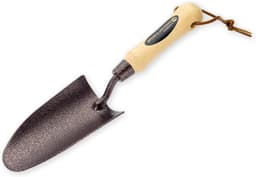
How to plant with a trowel starts with a hole the size of the root ball. Push the tip into loosened soil, lift one scoop, and set that soil beside the hole. The Royal Horticultural Society method is to sit the plant level with the pot, backfill, firm with your fingers, and water if the ground is dry. Spacing comes from the seed packet. Trowel length is only a rough spacing stick, and a weak depth gauge. The Elements and Select models here are about 32 cm, so you use them from a kneel, and a Select review that reports a bend is a reason to ease off. Bulb depth is on the trowel for planting bulbs page.

Lift a weed instead of cutting it

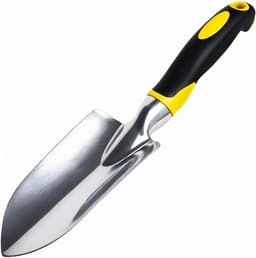
A trowel for weeding works when you slide the blade beside the crown and lift the root in one piece. Thrive describes the job from a kneel or a raised bed, little and often. A narrow blade fits between perennials, compared with a wide scoop that takes the plant you meant to keep. Ease the tip under the root while the soil is moist, because a snapped root often means the weed returns within a few weeks. Deep perennial roots can still beat a hand trowel. Aluminium Showvigor blades and the unbranded stainless listing are poor levers on thick roots, so a Select bend report is a cue to stop rather than rock the handle.

Brush, dry, and oil the blade

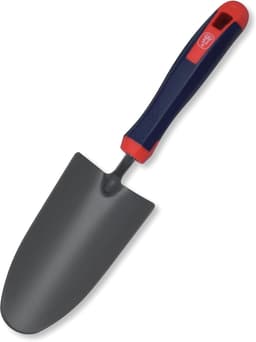
Clean a garden trowel before you store it, or the next session starts with rust. The Royal Horticultural Society method is a stiff brush, a hose only when the blade is very muddy, a towel on the metal, and a thin film of oil on steel that can rust. Drying also keeps a wooden handle from swelling. Stainless is less likely to rust than carbon, though that still depends on the steel, so dry stainless and aluminium as well. Powder-coated carbon, such as the Select, and lacquered carbon on a Draper finishing blade still mark if you leave them damp overnight. That bloom is usually skipped care, compared with a tang that fails on first use.

Where this motion stops

Keep the blade out of ground where cables or pipes may lie, including a border by a house wall. A hand trowel gives no warning if you strike a cable. If the tip will not enter unless you stand on the handle, fetch a border spade or a fork. A Showvigor rubber-grip listing may be about 17.8 cm even where a product bullet says 30.5 cm, so that figure is a weak reason to dig from your feet. A scooped blade is the wrong shape for pointing a patio or skimming a wall. Faithfull is for joints, Onesto is a 5 inch brick trowel, and OX and Draper are flat finishing blades. A full-room skim, structural brickwork, a chimney, or high or listed repointing belongs with a tradesperson. Family choice sits on garden trowel or masonry trowel. If the tang twists off on first use, the Consumer Rights Act 2015, sections 9 to 11, with remedies in sections 19 to 24, includes a six-month presumption.

Common questions

How do I dig a planting hole with a hand trowel?
Push the tip into loosened soil, lift a scoop, and set that soil beside the hole. Sit the plant level with its pot, backfill, and firm with your fingers. Water if the ground is dry, and take spacing from the seed packet. A dibber is kinder for tiny plugs than a wide scoop.
How do I get a weed out without chopping the root in half?
Slide a narrow blade beside the crown in moist soil and lift the root in one piece. A wide scoop in a tight gap tends to slice the root and leave the crown. Work little and often from a kneel or a raised bed. If the root is thicker than a pencil, switch to a fork or a spade.
Does stainless mean I can leave it wet?
Stainless is less likely to rust than carbon, and that still depends on the steel. Soil holds moisture on the blade, and a wet wooden handle can swell. Dry stainless and aluminium after every session. Oil matters most on carbon, including powder-coated and lacquered blades that you have left damp overnight in the shed.
When is the soil too heavy for this trowel?
Stop when the tip stays put unless you stand on the handle. That ground wants a border spade or a fork, especially with a tool about 32 cm long. Light alloy blades are poor levers on thick roots, and a reported bend on the Select means you should ease off. The Health and Safety Executive sets no kilogram limit.
Can I point a patio or skim a wall with the same tool?
A scooped garden blade is the wrong shape for mortar joints or a plaster skim. Faithfull is for joints, Onesto is a 5 inch brick trowel, and OX and Draper are flat finishing blades. A full-room skim, a structural wall, or high or listed repointing belongs with a tradesperson.

Related pages

Sources

Sources from the research digest. amazon.co.uk listings in this category were captured on 15 October 2026. We did not run a laboratory test.

  1. RHS, Planting bulbs (retrieved 15 October 2026)
  2. RHS, How to plant bulbs in grass (retrieved 15 October 2026)
  3. RHS, Cleaning garden tools (retrieved 15 October 2026)
  4. The English Garden, garden trowels (retrieved 15 October 2026)
  5. BBC Gardeners' World, hand trowels (retrieved 15 October 2026)
  6. BuildWiz, brick trowel (retrieved 15 October 2026)
  7. Consumer Rights Act 2015, goods remedies (retrieved 15 October 2026)
  8. General Product Safety Regulations 2005 (retrieved 15 October 2026)
  9. HSE, Manual handling (retrieved 15 October 2026)