Independent comparisons. We may earn from shop links. More info

How to use a manual tile cutter

Updated: October 2026

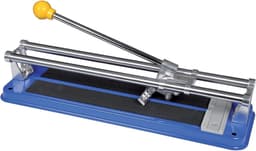
You have a glazed wall tile on the bed, a pencil line that looks straight, and a second tile already in the bucket because the snap ran off. How to use a manual tile cutter is a sequence, not a ranking. On smooth glaze you score once, snap once, and file the edge. The models sit on the [tile cutter comparison](/hub/cutting-tools/tile-cutter). Prices and stars are the captured amazon.co.uk figures as of October 2026. Products Compared has not cut a tile in a lab. A purchase through our links can earn a commission at no extra cost to you.

You have a glazed wall tile on the bed, a pencil line that looks straight, and a second tile already in the bucket because the snap ran off. How to use a manual tile cutter is a sequence, not a ranking.

Our top picks

On this page

Set the tile square

Mark the cut on the glazed face. B&Q and Wickes both work face up on a rail cutter. The line you see is the line the wheel will follow. Allow for the grout joint when you mark; Topps Tiles says to leave that gap, and it does not publish a millimetre that belongs on every wall. Seat the tile against the fence so the mark sits under the rail. If the fence has moved, the snap will wander even when the score looked clean. If the bed is simply too short, go back to the tile cutter buying guide. Practise on two offcuts from the same box before you touch a tile that will be seen. The TILER listing says the same thing in its usage tip: one smooth, continuous score after practice on offcuts. That is a listing tip, not a British Standard. Wear eye protection. A tile that shatters throws glaze. The wheel should touch the glaze on the score, not on the snap. Vitrex’s leaflet tells you to seat the breaker with the wheel clear of the tile. If you skip that check, you press a small carbide disc into an already scored face and the break follows the bruise. Oil on the rails is not part of the basic method on these consumer listings. If a rail is dry and the carriage judders, that is a maintenance problem, not a second score.

Score once

On smooth glaze, one continuous pass is the method Topps Tiles, Wickes and Vitrex all repeat. You set moderate, even pressure and push or pull the carriage in one movement from edge to edge. A faint-looking line is often enough. Scoring a second time on that same glaze is how Topps says you will most likely break the tile. BuildWiz and Vitrex say the same for a normal ceramic score. The instinct to go back and deepen the scratch is the expensive instinct. Pressure should be steady, not heroic. If the wheel skips, stop and inspect it. A blunt wheel skates and the snap wanders. The Vitrex 330 mm listing names a 13 mm tungsten carbide wheel; the ROJOO R2823T120 listing names a 22 mm wheel. Those diameters are listing figures, not a reason to lean harder. If the skip continues on a second offcut, change the wheel or change the tool before you open the good box. Textured porcelain is the exception that must not become the default. Montolit, writing about deep texture, describes a second pass or a face-down score as a last manual method and still prefers a wet saw. That caveat lives on cutting porcelain with a manual tile cutter. Do not score a metro tile twice because the first line looked pale.

Snap, then file

Seat the breaker foot beside the score with the wheel lifted clear, as Vitrex describes. Press once, firmly enough that the tile parts along the line. A timid press is a common way to start a crack that then runs anywhere. Topps says porcelain needs more breaking pressure than ceramic. That is still one snap, not a series of taps. A narrow strip is the other shatter risk. The R2823T120 listing prints a 35 mm minimum width. A UK review on R1200DXXK reported a 40 mm strip on 9.5 mm tile. That is one review, not a universal minimum. If the leftover is a sliver, the rail cutter is already the wrong tool. The fresh edge is sharp. Ultimate Handyman’s tile-file note is the unglamorous end of the job: file the cut before you handle the piece repeatedly, and keep offcuts off the floor. You are taking the knife-edge off so the grout joint does not cut your hand. Eye protection stays on until the pieces are in a bucket. If the snap ran off the line, do not recut the same tile on a second score. The usual causes are an incomplete first pass, a fence that moved, or a blunt wheel. Take a new offcut, check the fence, and inspect the wheel. Two failed offcuts is the stop rule.

When the cutter is the wrong tool

A rail cutter scores a straight line. It cannot start in the middle of a tile. Screwfix says that plainly. Sockets, L-shapes around a shower valve, and curves around a pipe need nippers, a wet saw, or a grinder with proper dust control. Repeating the score-and-snap on a layout full of notches only produces scrap. The other stop is material. If two offcuts from the same porcelain box have already shattered on a bed that covers the length, the cutter is not going to learn the tile. Thick, riven or wood-effect porcelain is the usual reason. A hired saw for a weekend is cheaper than a second box of 600 mm porcelain. Dry-cutting the leftovers with a diamond disc in a small bathroom is the dusty shortcut HSE is thinking about when it talks about respirable crystalline silica. A score-and-snap does not create that cloud. A disc does. If you have followed the sequence and the tile still will not part, change class. Do not turn the leftover into a silica job because the snap felt awkward.

Common questions

Do I score the glazed face?
Yes. Mark and score the face you will see. B&Q and Wickes both describe the tile face up on a manual cutter. The wheel needs a clean run along that glaze. Scoring the biscuit side on a smooth ceramic tile is how you lose the line you marked.
Should I score twice if the line looks faint?
Not on smooth glaze. Topps Tiles says a second score will most likely break the tile. Vitrex and Wickes also describe one pass. A pale line can still snap cleanly. If the wheel skipped, inspect it rather than going over the same scratch.
Where does the breaker foot sit?
Beside the score, with the wheel lifted clear of the tile. Vitrex’s leaflet is explicit that the wheel must not touch when you snap. Pressing the disc into the face after the score bruises the glaze and the break follows the bruise.
How do I take the sharp edge off?
Use a tile file on the cut edge before you handle the piece. Snapped glaze is sharp enough to cut skin and to flake in the joint. You are easing the knife-edge, not polishing the factory face. Keep offcuts off the floor.
Why did a narrow strip shatter?
Narrow leftovers are the weak case for a breaker foot. R2823T120 lists a 35 mm minimum width. A 40 mm strip on 9.5 mm tile appears in one UK review, not as a spec. If you need a sliver or a socket cut-out, switch to nippers or a saw.
Do I need goggles for a manual cutter?
Yes. A tile that shatters throws glaze. Eye protection belongs on the snap, not only on a wet saw. Spectacles are not a substitute if chips can reach the eye.
When should I stop and use a saw?
After two failed offcuts on a bed that already covers the length, or as soon as the layout needs a notch, a curve or a cut that starts in the middle of the tile. That is a class change. A longer rail will not cut a socket opening.

Related pages

Sources

Public UK sources used for this comparison. Listing prices, stars and review counts are the amazon.co.uk figures saved for this set on 19 October 2026.

  1. HSE EH40/2005 — workplace exposure limits (retrieved 19 October 2026)
  2. HSE — silicosis (retrieved 19 October 2026)
  3. HSE — cutting roofing tiles (retrieved 19 October 2026)
  4. PUWER 1998 (retrieved 19 October 2026)
  5. Topps Tiles — a basic guide to cutting tiles (retrieved 19 October 2026)
  6. Screwfix — tiling tool buying guide (retrieved 19 October 2026)
  7. Wickes — how to cut tiles (retrieved 19 October 2026)
  8. Vitrex compact tile saw manual (retrieved 19 October 2026)