Independent comparisons. We may earn from shop links. More info

How to drain an air compressor tank

Updated: 21 October 2026

You have switched off an oil-free 50 litre compressor. Oil-free sounds like nothing to maintain. The tank still collects water, and pulling the plug to stop the motor is the habit a UK manual for this class tells you to avoid. This page is how to drain an air compressor tank. It follows a Sealey booklet for oil-free machines of this size, not a button map for the Stanley, SIP, or ABAC in our [Silent air compressor 50L comparison](/hub/compressors/silent-air-compressor-50l). Use the manual in your box when it disagrees. A purchase through our links can earn a commission at no extra cost to you.

You have switched off an oil-free 50 litre compressor. Oil-free sounds like nothing to maintain.

Our top picks

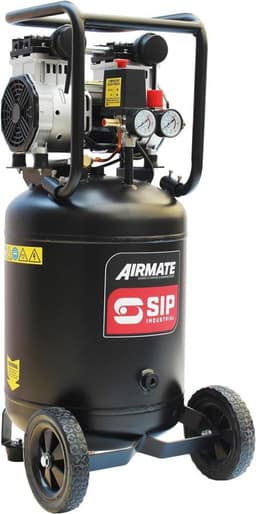
SIP SIP Airmate 05483 vertical 50L

Best overall

SIP SIP Airmate 05483 vertical 50L
7.1/10about £263.98
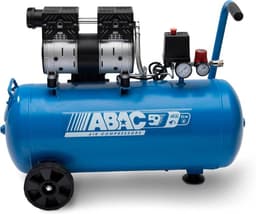
ABAC ABAC Ease-AIR 50 EU

Alternative

ABAC ABAC Ease-AIR 50 EU
4.9/10about £229.99
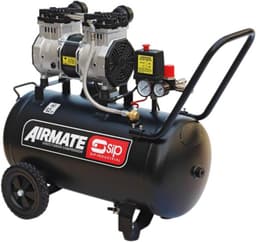
SIP SIP Airmate 05479 horizontal 50L

Alternative

SIP SIP Airmate 05479 horizontal 50L
3.7/10about £197.91
On this page

Why an oil-free tank still fills with water

Oil-free means the pump is not sitting in a sump you have to top up. It does not mean the air is dry. The garage air you draw in holds water vapour. Compression warms it, the air cools in the receiver and the hose, and liquid water drops out. A 50 litre tank at 8 bar is large enough for that puddle to matter after twenty minutes of nailing. FNA's UK FAQ adds that a dryer, not the oil-free badge, is what spraying needs. The oil-free or oil page is the buying version of that distinction.

How to stop the compressor

Stop the machine on its switch so the pump head can vent. The Sealey class manual is plain: do not stop it by pulling the plug while it is running. The short hiss just after a proper switch-off is the head venting. That noise is part of stopping, not by itself a failed seal. Do not adjust the pressure switch, and do not adjust the safety valve. If the cut-out pressure is wrong, or the safety valve is weeping, stop and get a competent person. This article will not invent a test pressure for a named model. If the motor stops because it is hot, leave it to cool. Do not keep restarting a motor that smoked.
SIP SIP Airmate 05483 vertical 50L

Testsieger

SIP SIP Airmate 05483 vertical 50L
7.1/10about £263.98

How to drain the receiver

Drain condensate after use, with the tank pressure released, not by cracking a full receiver open. Wear eye protection. Find the drain on the bottom of the receiver. Open it slowly, let the moisture run until the air that follows is clear of liquid, and then close it. An open drain is not a storage setting. None of the Stanley, SIP, or ABAC saved listings names the fitting, so yours may be a petcock, a threaded plug, or a short pipe. The manual in the box names it. The order is: switch off, let the head vent, eye protection on, pressure off, slow drain, valve closed. Do not lie under a charged receiver to reach the valve.

When to stop and get help

Stop and get a competent person if the tank is dented, deeply rusted, or has been welded, if a motor smoked, if the lead is damaged, or if you need a European plug changed to BS 1363. Changing a plug is electrical work, not a drain step. Draining is maintenance. It is not a written scheme of examination under the Pressure Systems Safety Regulations 2000. Fifty litres at 8 bar is 400 bar-litres. A householder with no employees is not the dutyholder HSE describes. If you are still choosing the machine, the buying guide separates the decibel line, the free-air line, and the plug.

Common questions

How often do I drain the tank?
Drain it after use. The Sealey class manual for oil-free receivers of this size says daily when the compressor is in service. A weekend of nailing still needs the valve opened that day, not at the end of the season. Winter garages drop more water out as the tank cools. Brown water means you waited too long. Close the valve when the liquid has gone.
Do I open the drain while it is still at full pressure?
No. Stop on the switch, let the pump head vent, and release the tank pressure before you treat the drain as maintenance. Wear eye protection and open the valve slowly, because a forgotten tank can still throw water and scale. The four product files do not give a residual-pressure figure. Follow the manual in your box rather than a number from a different brand.
Why does it hiss when I switch it off?
A short hiss as you switch off is the pump head venting, which is why the class manual wants the switch rather than the plug. That sound should finish. A hiss that continues from a coupling or the tank seam is a leak. Switch off, release the pressure, and look. Do not chase it with a hand over a live fitting. A damaged receiver is a stop, not a DIY weld.
Can I stop it by pulling the plug?
Do not stop it by pulling the plug while it is running. Use the switch so the head can vent. Pulling the plug is also a bad way to deal with a motor that has cut out hot. Let a thermal cut-out cool down. If the motor smoked, or the lead is damaged, leave it unplugged and get it checked. Changing a European plug to BS 1363 is the same kind of handover.
Does oil-free mean I never open the drain?
No. Oil-free means you are not topping up a pump sump. Water still condenses because the air you compress carries vapour. The vertical SIP, the horizontal SIP, and the ABAC are sold as oil-free, and Stanley's spec table does not state lubrication at all. None of that cancels the drain. A dryer, which none of these boxes lists, is a further step for spraying, not a substitute for the puddle.

Related pages

Sources

Public UK sources from the research digest. amazon.co.uk listings checked on 19 October 2026. Prices move.

  1. HSE: Pressure Systems Safety Regulations (retrieved 19 October 2026)
  2. HSE INDG178: Written schemes of examination (retrieved 19 October 2026)
  3. legislation.gov.uk: Control of Noise at Work Regulations 2005 (retrieved 19 October 2026)
  4. HSE: Noise advice for manufacturers (retrieved 19 October 2026)
  5. GOV.UK: Noise nuisances and how councils deal with complaints (retrieved 19 October 2026)
  6. FNA Compressors: air compressor FAQ (retrieved 19 October 2026)
  7. BCAS: an understanding of ISO 8573 (retrieved 19 October 2026)
  8. Sealey: SAC5001S oil-free compressor instructions (retrieved 19 October 2026)