Correct tyre pressure in the UK
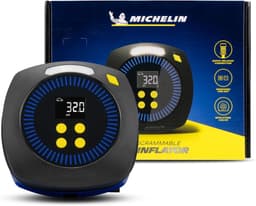
You have a Michelin inflator in the boot and a number on its screen, and that number is not the pressure the car is asking for. The correct tyre pressure in the UK is the maker's cold figure for the load, printed on the placard, not the sidewall maximum and not the pump's ceiling. The models on the [Michelin air compressor comparison](/hub/compressors/michelin-air-compressor) are examples. Choosing between them is the [buying guide](/hub/compressors/michelin-air-compressor/sub/michelin-air-compressor-buying-guide). The button sequence is [how to use a Michelin tyre inflator](/hub/compressors/michelin-air-compressor/sub/michelin-air-compressor-how-to-use). This is not a lab, and a qualifying purchase can earn us a commission at no extra cost to you.
You have a Michelin inflator in the boot and a number on its screen, and that number is not the pressure the car is asking for.
You have a Michelin inflator in the boot and a number on its screen, and that number is not the pressure the car is asking for. The correct tyre pressure in the UK is the maker's cold figure for the load, printed on the placard, not the sidewall maximum and not the pump's ceiling. The models on the Michelin air compressor comparison are examples. Choosing between them is the buying guide. The button sequence is how to use a Michelin tyre inflator. This is not a lab, and a qualifying purchase can earn us a commission at no extra cost to you.
Our top picks
| Badge | Product | Max pressure | Auto shut-off | Hose length | Note | Price | Offer |
|---|---|---|---|---|---|---|---|
| Best overall |  Michelin Michelin 009519 12V programmable compressor | 6.9 bar in the table; bullets say up to 7 bar | Preset | 60 cm | 8.6 | about £48.26 | View offer |
| Alternative |  Michelin Michelin 27012 rapid 12V inflator | 150 psi | Presets | n/a | 7.2 | about £46.47 | View offer |
| Best value |  Michelin Michelin 27010 digital micro inflator | 100 psi | Presets; mode listed as automatic | 400 mm | 6.6 | about £30.69 | View offer |


On this page
The number is on the car, not on the Michelin box
Cold, warm, and the monthly habit
A warning lamp is not a pressure
When not to use the inflator
Common questions
Can I let air out after a drive?
Does TPMS mean I can skip a gauge?
Will the wrong pressure fail an MOT by itself?
What if my Michelin only shows psi?
When do I stop and call for help?
Related pages
Sources
Public UK sources and the manufacturer pages below. amazon.co.uk listings checked on 19 October 2026.
- amazon.co.uk: Michelin 009519 and the other four listings in this set (retrieved 19 October 2026)
- Impex: Michelin 009519 (retrieved 19 October 2026)
- Ideas International: Michelin 27012 (retrieved 19 October 2026)
- Michelin UK: inflate your tyres (retrieved 19 October 2026)
- Highway Code annex 6: vehicle maintenance, safety and security (retrieved 19 October 2026)
- Construction and Use regulation 27 (retrieved 19 October 2026)
- MOT inspection manual: axles, wheels, tyres and suspension (retrieved 19 October 2026)
- HSE INDG178: compressed air safety (retrieved 19 October 2026)
- Consumer Rights Act 2015, section 22 (retrieved 19 October 2026)