Independent comparisons. We may earn from shop links. More info

Dandelion weeder for lawns

Updated: October 2026

You are looking at a yellow lawn and you want the dandelions out without spraying the whole sward. A claw will take a plug and leave a hole. The taproot is often longer than the claw, and a snapped piece can grow again. This page stays on that one weed in turf: how deep the root usually is, what the tool actually lifts, what you put back in the hole, and when a stand-up weeder is the wrong shape. Which upright listing to start from is the [weed puller comparison](/hub/weed-control/weed-puller). The Products Compared editorial team used RHS guidance and amazon.co.uk listings dated 16 October 2026, and did not run a lawn trial. A qualifying purchase can earn us a commission at no extra cost to you.

You are looking at a yellow lawn and you want the dandelions out without spraying the whole sward. A claw will take a plug and leave a hole. The taproot is often longer than the claw, and a snapped piece can grow again.

Our top picks

BAMDA Bamda 110.5 cm

Best overall

BAMDA Bamda 110.5 cm
9.2/10about £22.99
Ergohortus Ergohortus TPT08

Best value

Ergohortus Ergohortus TPT08
9.2/10about £19.99
Digtokore Digtokore SP00301

Alternative

Digtokore Digtokore SP00301
9.0/10about £20.99
On this page

What you are pulling

A garden dandelion is a taproot. The Royal Horticultural Society says those roots are typically under 30 cm in gardens, that they regrow from fragments, and that a specialist weeder limits how much soil you disturb. No weedkiller is required for this plant. Deadheading the flowers limits seed if you are not going to pull every crown. The RHS also says a lawn can keep some weeds. You are not under an order to clear every rosette, and dandelions are not on the Weeds Act list of injurious species. Centre the tool on the rosette, not on a leaf. A young plant in moist soil gives the claws a crown they can close around. An old plant in a dry spell gives them a thick root that tears. Leaving a fragment is normal, which is why you walk the same patch again later in the season. Ideal Home's UK piece echoes the same choice, a hand fork or a weed extractor, as advice, not as a test score. Prices on that article are not the figures used here. The useful expectation is a smaller population, not a lawn that stays bare of dandelions after one Saturday. Seed blows in from the verge and from any flower you left. Pulling is the mechanical half. Filling the hole is the other half.

What the tool lifts

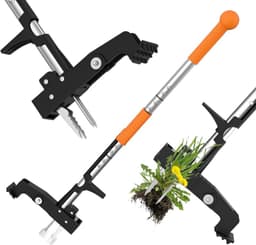
The claw lifts a short plug of crown, upper root, and soil. Listing claims in this set are much shorter than the RHS typically under 30 cm. Bamda states 6 cm claws. Ergohortus, Digtokore, Faueti, and the Magna Retail bullet state 8 cm. A Fiskars Solid listing, outside the table, states 10 cm. Walensee states three teeth at 2.75 inches, about 7 cm, and UK reviews say those prongs feel short. An 8 cm claw against a root that may run toward 30 cm is a top section, not the whole root. Treat every centimetre on a bullet as the maker's claim. Reviews match that limit. Digtokore reviewers say small dandelions lift and larger ones snap in dry clay. Walensee reviewers say the root snaps unless the soil is damp. Work after rain, and tilt rather than yanking straight up, which is the sequence on how to use a weed puller. If you see a clean break, the fragment left below can regrow. Watering and a second visit beat a bigger hole on the same day. You still gain something the hoe does not give you. A hoe slices the leaves and leaves the crown ready to reshoot. A claw, used on a moist young plant, removes that crown and a piece of taproot with a small plug, which is why the RHS points specialist weeders at this job. The gain stops at the length of the claw. It does not become a guarantee because the handle is a metre long.
BAMDA Bamda 110.5 cm

Testsieger

BAMDA Bamda 110.5 cm
9.2/10about £22.99

The plug in the lawn

The hole is part of the job. Bamda, Orientools, and Ergohortus TPT08 reviews mention the plug or a large hole. Bamda reviewers in particular call the hole large, on a tool that states 6 cm claws and weighs 1.79 kg. A wide plug is easier to see and easier to trip on, and it is a ready seedbed if you leave it empty. Knock the soil off the root if you want to put the soil back, and bin the crown so it does not reroot on the compost heap while it is still moist. Fill the hole the same day so the edges do not dry and collapse. The RHS says to reseed or turf bare patches in spring or autumn, when the weather is cool and damp. Its May lawn notes say sow bare patches in early May or wait until September. Midsummer heat is the window to avoid. A rule of thumb is to match the seed to the lawn you have: a shade mix if the bare spot is under a tree, a wear mix if the patch is a path across the grass. That is RHS repair advice, not a brand of seed from these listings. Turf is the alternative if you want the surface closed immediately and you can cut a patch that fits the plug. Seed is the cheaper route if you can keep the spot moist and off the mower line for a few weeks. Either way, one pull is not permanent. New seed from a flower you missed will use any gap you leave. If you will not pull every plant, deadhead the rest so you are not feeding next year's lawn from this year's clocks.

Stand-up claw or a short fork on a lawn

On open turf, a stand-up claw is the tool that keeps you off your knees. The RHS lawn guidance allows a hand fork or a stand-up tool for individual lawn weeds. Choose the stand-up tool when the crown has clear grass around it and you cannot, or would rather not, kneel for a whole garden. The best stand up weed puller page sorts the upright listings: lighter carry against a stated foot plate, without calling one model a national winner. Choose a short fork or a hand weeder when the dandelion is tight against a path, a patio edge, or the first plants of a border. DIY Gardening's upright-tool notes list edges, stones, and clusters as the places a long claw fails. A 1 m shaft cannot turn between those obstacles, and the claws take a wide bite of lawn you may not want to lose at the edge. A hand fork still makes you kneel or stoop, which is the trade for a smaller, more precise bite. Skip the claw entirely for a dandelion growing in a crack narrower than the claw spread. You will chip the slab and leave the root. A knife or a narrow weeder fits that joint. And skip any plan that treats one pass as finished. Walk the lawn again after the next wet spell, pull the regrowth while it is small, and reseed the new plugs in the same spring or autumn window.

Common questions

How deep do garden dandelion roots go?
The RHS says a garden dandelion taproot is typically under 30 cm, and that it can regrow from a fragment. That is a garden figure, not a promise that every root stops at 30 cm, and not a measurement of the claws on a particular listing. Plan on a deep root and a tool that only takes the top section.
Will an 8 cm claw get the whole root?
Usually no. Ergohortus, Digtokore, and Faueti state 8 cm claws. Bamda states 6 cm. Fiskars Solid's listing states 10 cm. The RHS depth is typically under 30 cm. An 8 cm claw can take the crown and the upper root on a young plant in moist soil. It does not reach the tip of a long taproot.
Do dandelions come back from a snapped root?
Yes. The RHS says fragments regrow. Dry clay makes the snap more likely, which is what Digtokore reviews describe for larger plants. Pull young crowns after rain, tilt rather than yank, and expect a second pass. Deadhead any flowers you leave so you are not adding seed while you wait.
What do you put in the hole?
Put the soil back, minus the crown, and fill the plug level with the lawn. Reseed or patch with turf in spring or autumn, when the RHS says the weather is cool and damp. Early May or September is the seed window on the RHS May lawn page. An empty hole is a place for the next seed to land.
When do you reseed in the UK?
Spring or autumn. The RHS repairing-lawns guidance is cool, damp weather, with seed or a piece of turf. The May page says sow bare patches in early May or wait until September. Midsummer heat is a poor time for new seed to establish, even if that is when the dandelions look worst.
Should you deadhead if you will not pull every plant?
Yes, if you want fewer seedlings next year. The RHS notes that deadheading limits seed, and that you do not have to spray this plant. Pull the crowns you care about, on moist soil, and take the flowers off the rest before they turn to clocks. A lawn is allowed to keep some weeds.
Is a stand-up tool better than a hand fork on a lawn?
On open turf, yes, if you want to stay upright. The RHS lists both for individual lawn weeds. A stand-up claw needs space around one crown. A hand fork is the better fit against a patio edge or between the first border plants, at the cost of kneeling. Neither tool removes a 30 cm root in one plug.

Related pages

Sources

Public UK sources from the research digest, last checked on 16 October 2026. Shelf prices and star lines are the amazon.co.uk figures in the display file. Claw length and shaft weight are listing figures, not a measurement made for this page.

  1. RHS: Dandelion (retrieved 16 October 2026)
  2. RHS: Lawn weeds (retrieved 16 October 2026)
  3. RHS: Non-chemical weed control (retrieved 16 October 2026)
  4. RHS: Weeds on hard surfaces (retrieved 16 October 2026)
  5. RHS: Giant hogweed (retrieved 16 October 2026)
  6. Weeds Act 1959 (retrieved 16 October 2026)
  7. GOV.UK: Stop ragwort and other harmful weeds from spreading (retrieved 16 October 2026)
  8. GOV.UK: Prevent Japanese knotweed from spreading (retrieved 16 October 2026)