Flowering cherry tree for a small garden
A flowering cherry tree for a small garden is easy to overbuy. The photograph shows a street in full blossom, and the plant that will still fit beside a UK patio in ten years is often a large shrub, not that tree. You need a mature height and spread you can live with, the cultivar name that produces it, and a clear idea of the pot you are actually sent. Prices, star ratings and which listing to order stay on the [ornamental cherry comparison](/hub/trees-and-palms/ornamental-cherry). Once you know the size band, the [best ornamental cherry](/hub/trees-and-palms/ornamental-cherry/sub/ornamental-cherry-best) page applies it to the four young plants in that set.
A flowering cherry tree for a small garden is easy to overbuy. The photograph shows a street in full blossom, and the plant that will still fit beside a UK patio in ten years is often a large shrub, not that tree.
A flowering cherry tree for a small garden is easy to overbuy. The photograph shows a street in full blossom, and the plant that will still fit beside a UK patio in ten years is often a large shrub, not that tree. You need a mature height and spread you can live with, the cultivar name that produces it, and a clear idea of the pot you are actually sent. Prices, star ratings and which listing to order stay on the ornamental cherry comparison. Once you know the size band, the best ornamental cherry page applies it to the four young plants in that set.
Our top picks
| Badge | Product | Cultivar | Size on the listing | Arrival size | Note | Price | Offer |
|---|---|---|---|---|---|---|---|
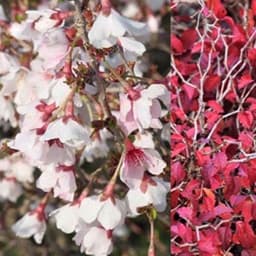
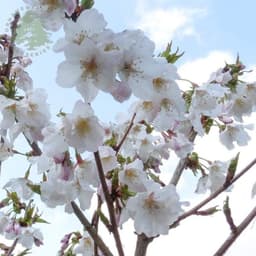
| Best overall |  Carbeth Plants Carbeth Plants three Kojo-no-mai in 9 cm pots | Kojo-no-mai | Naturally dwarf, no metres | Not stated | 8.6 | about £21.99 | View offer |
| Best value |  Carbeth Plants Carbeth Plants Prunus Brilliant, 20–30 cm | Brilliant | 2.5 m x 2.5 m in 20 years | 20–30 cm | 8.1 | about £9.79 | View offer |
| Alternative |  Carbeth Plants Carbeth Plants Kojo-no-mai in a 9 cm pot | Kojo-no-mai | Not stated | Not stated | 7.8 | about £10.99 | View offer |

On this page
What small means in metres
Kojo-no-mai and Brilliant are different plants
What a 9 cm pot is selling
Fruiting cherries are a different purchase
Common questions
How big is Kojo-no-mai?
Is Brilliant the same as a Fuji cherry?
Is Amanogawa a dwarf?
Do I need two trees for blossom?
Is a 9 cm pot a finished tree?
Are ornamental cherries the ones you eat?
Related pages
Sources
Public UK sources used for this comparison. Listing prices, stars and review counts are the amazon.co.uk figures saved for this set. The nursery prices cited beside them are a separate snapshot on 19 October 2026, not amazon.co.uk.
- RHS: Prunus incisa Kojo-no-mai (retrieved 19 October 2026)
- RHS: Prunus nipponica var. kurilensis Brillant (retrieved 19 October 2026)
- RHS: Cherry trees for small gardens (retrieved 19 October 2026)
- RHS: Bacterial canker (retrieved 19 October 2026)
- RHS: Silver leaf (retrieved 19 October 2026)
- GOV.UK: Tree preservation orders and trees in conservation areas (retrieved 19 October 2026)
- GOV.UK: Plants that need a plant passport for movement within Great Britain (retrieved 19 October 2026)
- Consumer Contracts (Information, Cancellation and Additional Charges) Regulations 2013, Part 3 (retrieved 19 October 2026)