Independent comparisons. We may earn from shop links. More info

How to organise a tool box

Updated: October 2026

Knowing how to organise a tool box is less about a photograph and more about stopping screws from spilling, keeping the lid flat and making the loaded box safe to lift. The lidded models in the [tool box comparison](/hub/tool-accessories/tool-box) use three possible spaces: small lid compartments, a removable tray or tote, and a deeper base. Moulded tool kits work differently because every item has a fixed recess. Start by emptying the box, remove anything that does not belong to your current jobs, and check the stated length and load limits before you decide where each tool goes. A qualifying purchase can earn a commission at no extra cost to you.

Knowing how to organise a tool box is less about a photograph and more about stopping screws from spilling, keeping the lid flat and making the loaded box safe to lift.

Our top picks

On this page

Treat the lid, tray and base as separate zones

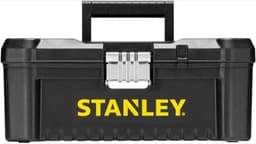
Use lid organisers for light consumables: screws, wall plugs, spare bits and small connectors. Keep each compartment to one size, and do not fill it above the rim. The cover must sit flat. The removable tray is for tools you reach for often and can lift comfortably: a tape, pencils, compact screwdrivers, a small adjustable spanner and pliers. If a handle projects above the tray edge, move that tool to the base rather than forcing the lid. The base takes long, bulky or heavy items, low and close to the centre. This zoning suits the Stanley 12.5 inch, 26 inch and rolling-chest layouts. It does not create extra capacity. If the lid bows or the tray will not seat, the box is overfilled or the wrong shape. The tool box buying guide explains when size and load mean you need another type.

Close the lid cups before lifting the main lid

A UK review of the Stanley 26 inch box warns that the top compartments should be closed before the main lid is opened. If a cup stays open, lifting the lid can release screws into the box or onto the floor. Shut every organiser cover first, then open the main latches. Before you carry the box, close the lid cups, seat the tray, close the main lid and engage both latches. If a latch will not close, put the box down and find the obstruction. A handle caught between tray and lid can damage both. Review signals say the rolling chest’s small tray can fall into the base when the chest is stood upright. Confirm it sits on both supports before you tilt it onto its wheels. If it drops, reduce the contents rather than adding an insert the listing does not include. Layouts are compared on best tool box.
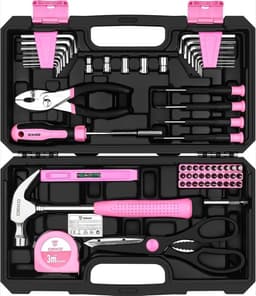
DEKO DEKO 62-piece pink tool kit

Testsieger

DEKO DEKO 62-piece pink tool kit
9.4/10about £17.99

Keep heavy and long tools underneath

The Stanley 12.5 inch has a stated 4 kg limit and excludes tools longer than 30 cm. Weigh the loaded box. Sockets and spanners take little space and add mass quickly. If one tool exceeds 30 cm, no arrangement changes the restriction. Put dense items in the base, spread across the floor, so the centre of gravity stays low. The Stanley 26 inch provides 38.5 litres, and its listing prints both 12 kg and 25 kg. Plan around 12 kg unless the manufacturer clarifies the conflict. A large box can have spare volume and already be heavy. UK reviews describe full examples used as static storage. Close the box and walk a few steps without twisting. If the handle flexes or you cannot set it down under control, split the tools. Wheels help on level ground and do not remove a threshold or a car boot. Those trade-offs are in rolling or carry tool box.

Return moulded-kit tools to their exact recesses

A DEKO or DOMINOX kit is not an open box. Each tool belongs in a shaped position, and the case closes only when handles, sockets and bits sit fully in their outlines. Return the hammer, pliers and drivers first, then sockets, hex keys and bits. Do not force a tool into a similar-looking recess. Run a hand over both halves before you close the case. One UK review of the DEKO 100-piece set reports a missing connector between the ratchet and the bits. Check the inventory on delivery and keep related adaptors beside the tool they serve. Foam is not included with these kits, and foam over a raised tool can make closure worse. If the fixed case no longer takes new tools, keep the kit intact and add a separate empty box.

Common questions

What belongs in the lid organiser?
Use it for light, small items such as screws, wall plugs, bits and connectors. Keep contents below the compartment rim and close every individual cover before opening the main lid. Heavy sockets belong lower because their weight can strain small lids and raise the centre of gravity.
Why do screws spill when I open the tool box?
An individual organiser cup may still be open when the main lid is lifted. This problem appears in UK review signals for the Stanley 26 inch box. Close and check every cup first, then release the main latches while the box remains level.
Where should a hammer go?
Put a full-size hammer in the base, positioned so its head cannot strike the wall as the box moves. A compact hammer may fit a moulded kit recess. Do not place one in a removable tray if its height prevents the lid closing naturally.
Can I fit a tool longer than 30 cm diagonally?
Not in a box whose listing says tools longer than 30 cm are unsuitable. Diagonal placement may also interfere with the tray or press on the walls. Choose a longer box rather than forcing the lid or treating the published restriction as an arrangement challenge.
How do I know the box is overfilled?
Warning signs include a bowed lid, latches that need force, a tray that will not seat, tools projecting above their zone or a load you cannot lift and set down safely. Remove items or split the collection before the handle or case is damaged.

Related pages

Sources

Public UK sources for water ratings, work equipment, and consumer rights. Listings checked in October 2026. Prices on amazon.co.uk move.

  1. HSE, PUWER overview (retrieved 17 October 2026)
  2. HSE, maintenance of work equipment (retrieved 17 October 2026)
  3. Consumer Rights Act 2015, section 22 (retrieved 17 October 2026)
  4. nidirect, buying goods and services (retrieved 17 October 2026)
  5. Hammond, IEC 60529 IP code tables (retrieved 17 October 2026)
  6. DeWalt UK, TSTAK IP54 tower (retrieved 17 October 2026)
  7. ITS, TSTAK versus ToughSystem (retrieved 17 October 2026)
  8. Halfords, toolbox buying guide (retrieved 17 October 2026)