Independent comparisons. We may earn from shop links. More info

Wool or felt sauna hat: what the material words mean

Updated: October 2026

You open several amazon.co.uk tabs and find “felt”, “wool felt”, “70% natural wool”, “organic wool” and “100% merino” used as though they were interchangeable. They are not. When choosing a wool or felt sauna hat, separate the way the material is made from the fibres used to make it. A percentage is a fibre claim; “felt” alone is not. Our [sauna hat comparison](/hub/steam-baths/sauna-hat) preserves the listing wording so you can compare what each seller actually states rather than filling gaps with assumptions.

You open several amazon.co.uk tabs and find “felt”, “wool felt”, “70% natural wool”, “organic wool” and “100% merino” used as though they were interchangeable. They are not.

Our top picks

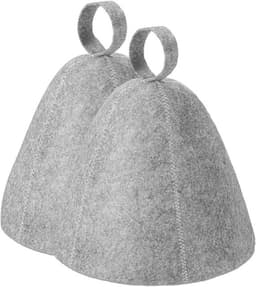
XZSKD XZSKD 2-pack wool felt caps

Alternative

XZSKD XZSKD 2-pack wool felt caps
0.0/10about £10.99
On this page

Felt is not a fibre

Felt is a non-woven material made by matting fibres together. Those fibres can be wool, a wool blend or something else, which means a title that says only “felt sauna hat” has not confirmed pure wool. A £6.99 hat may contain wool; a dearer felt hat may contain a blend. Without a percentage, both remain unresolved. UK textile-labelling guidance requires fibre content to be shown, and the Textile Products (Labelling and Fibre Composition) Regulations provide the legal framework. FOMIYES says felt in the title, while wool appears only in an unanswered question and one review. JORcadis uses wool in the title and felt in bullets but gives no percentage. Aguwgax says natural fibres and felt; M METERXITY says wool and fibre blend. None of those phrases tells you the complete composition. The broader purchase checks are in our wool sauna hat buying guide.

100% wool and merino

Three titles in this set make the clearest claims. Giftellino says 100% wool, the unnamed £25.99 cap says 100% wool felt, and Sauni says 100% merino wool felt. On the face of those titles, the fibre content is complete rather than a partial blend. Check the physical label when the product arrives and verify the live listing identity, particularly because the Sauni and unnamed-cap files contain URL–ASIN mismatches. “Merino” identifies a type of wool; it does not prove that the finished sauna hat insulates more than ordinary wool felt. These extracts contain no controlled material test. Sauni reviewers often call its beanie soft, but they disagree over fit and one reports itch. Do not assume “merino” means organic.

70%, wool and fibre, and organic

XZSKD makes a more informative blend claim: 70% natural wool. That tells you wool forms the majority, but the remaining 30% is unnamed in the listing extract. The product also has a title-versus-table conflict over whether the pack contains two hats or one, so material clarity does not remove the need to verify quantity. M METERXITY says “wool and fibre blend” without percentages. The phrase confirms neither wool’s share nor the identity of the other fibre. Aguwgax’s “natural fibres and felt” is weaker again because natural can cover several fibres and felt remains a construction term. The couduan organic-wool title sounds more specific, but no certification or percentage appears in the listing extract. “Organic” and “100%” answer different questions: one concerns a production claim, while the other states composition. Without evidence for either a certified organic standard or a complete fibre breakdown, do not combine the attractive words into “certified 100% organic wool”. If wool content is the reason you are paying more, 70% is stronger evidence than “wool and fibre”, and a verified 100% label is clearer than both. Named products and use cases appear in our best sauna hat shortlist.

What to do with a title that only says felt

First, look beyond the title for a fibre-composition field, packaging photograph or care label. Reviews are useful for texture and experience, but reviewers may use “wool” casually. Do not convert their wording into a product percentage. If the listing remains silent, ask the seller or treat composition as unknown. Second, avoid home burn tests or other destructive identification advice. The appropriate evidence is the trader’s description and the sewn-in label. Third, match certainty to the job. For an occasional first visit, a low-cost unspecified felt hat may be enough if it fits and has usable care instructions. For weekly sessions, demand the percentage and product-specific wash guidance. For session care after you choose, follow how to wear a sauna hat.

Common questions

Is felt always wool?
No. Felt describes a matted, non-woven structure and can be made from wool, blended fibres or other fibres. Look for a composition such as “100% wool felt” or “70% wool”. If the listing says only felt, the fibre remains unknown until the seller or physical label supplies it.
What does 70% wool leave unsaid?
It leaves 30% of the fibre composition unidentified unless the label names it elsewhere. You should not assume that remainder is polyester, even if that is plausible for some blends. Ask for the complete label, then follow care instructions for the whole blend rather than treating it as pure wool.
Is merino better than ordinary wool in a sauna?
These extracts do not prove that merino insulates better. Merino is a specific wool claim, and reviewers often describe the Sauni felt as soft, but felt thickness, density and fit also matter. Both merino and ordinary wool products receive occasional itch or sizing complaints, so judge the finished hat.
Does organic mean anything without a certificate?
It is a claim that should be supported, but it does not state fibre percentage and should not be expanded into “certified organic” without evidence. Check for the named certification, trader details and the physical fibre label. In the organic-wool listing, no certificate or complete percentage is supplied.
Are cheap sauna hats synthetic?
You cannot conclude that from price. Some cheap listings omit percentages, and their reviews describe thin felt, but neither fact identifies the fibre. Treat composition as unknown. A low price is a reason to check the label carefully, not evidence that the product is necessarily synthetic.
Why can a 100% wool hat still itch?
Content is only one part of comfort. Fibre coarseness, surface finish, seams, moisture, fit and individual sensitivity can all affect how the hat feels. The reviews include itch-related comments even around wool and merino titles. A clear percentage improves material certainty but does not guarantee softness.
Which wording is worth paying more for?
Pay more for a claim you can verify and features you will use. A complete “100% wool” label is clearer than “wool and fibre”, while 70% wool is clearer than “felt”. Still compare size, care and reviews, because the strongest fibre wording cannot rescue an unsuitable fit or poor construction.

Related pages

Sources

Community Sauna Baths, Banya No.1, Heartwood Saunas, Amurr, GOV.UK, the 2012 textile regulations, NHS and Which?. Prices and stars are the amazon.co.uk listing extracts used for this comparison. Prices move.

  1. Community Sauna Baths, guide to sauna hats (retrieved 17 October 2026)
  2. Banya No.1 Hoxton, banya hat (retrieved 17 October 2026)
  3. Heartwood Saunas, sauna hat (retrieved 17 October 2026)
  4. Amurr, how to care for a wool sauna hat (retrieved 17 October 2026)
  5. GOV.UK, textile labelling (retrieved 17 October 2026)
  6. Textile Products (Labelling and Fibre Composition) Regulations 2012 (retrieved 17 October 2026)
  7. NHS, heat exhaustion and heatstroke (retrieved 17 October 2026)
  8. Which?, faulty product and the Consumer Rights Act 2015 (retrieved 17 October 2026)