Independent comparisons. We may earn from shop links. More info

How to use a cordless staple gun

Updated: October 2026

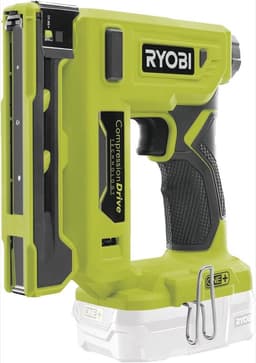
Your new tacker is charged and loaded, but the first pull produces only a click. Learning how to use a cordless staple gun starts with the safety contact, not with squeezing the trigger harder. The nose must usually sit flat, the strip must match the magazine and the tool must be disconnected from charging. Check your model in the [cordless staple gun comparison](/hub/staplers-and-nail-guns/cordless-stapler), then follow its manual whenever the loading or safety sequence differs from the general method below.

Your new tacker is charged and loaded, but the first pull produces only a click. Learning how to use a cordless staple gun starts with the safety contact, not with squeezing the trigger harder.

Our top picks

On this page

Charge it, then make the tool safe to load

Give an integrated-battery tool its full first charge according to the supplied instructions. PHALANX, POPULO and SHALL all say not to operate their tools while charging, so remove the USB lead before loading or firing. With an integrated tool, switch it off and keep your fingers away from the nose and trigger. Never treat an empty magazine as proof that the tool is safe. Open the magazine in the way shown for your exact model. Place the strip in the orientation illustrated in the manual, close the magazine until it locks and do not force a strip that sits high or binds. Type 53 and type 140 are different families: matching the leg length is not enough if the crown and wire specification are wrong. If the nose sticks, stop rather than bypassing the mechanism. The cordless staple gun buying guide explains how to identify the correct family before you buy another strip.

Plant the nose before pulling the trigger

Put on safety glasses before the first test. The Health and Safety Executive warns that nail-gun incidents commonly involve the nose and eyes, and it says safety devices should not be defeated. Keep your free hand out of the line of fire and never point the nose towards yourself while checking it. Use an offcut of the same timber and the same number of fabric layers as the real job. Hold the tool square at roughly 90 degrees, press the contact nose firmly and only then pull the trigger. AMPFORCE, POPULO, SHALL and PHALANX describe versions of a three-stage sequence: power switch, contact and trigger. Bosch calls its arrangement Push + Release, but the same practical lesson applies: the nose has to be properly seated before the shot. Do not lift or twist the tool during the firing stroke.

Diagnose a click, proud staple or jam

A click without a fastener often means the safety is doing its job. Switch the tool off, unplug it and check whether the nose moves freely, the magazine is empty or the strip is loaded in the wrong orientation. Confirm the exact family as well: type 53 will not become type 140 because both packages show the same leg length. If the tool cannot fire while charging, leaving the cable connected can be another simple cause. A proud staple can indicate dense grain, a knot, too many fabric layers, an unsuitable leg length or a nose that was not square. Most compact 4 V tools here do not state a depth dial, so repeated proud staples can be a material limit rather than a setting error. The cordless upholstery stapler guide applies that method to chair seats. For a jam, make the tool incapable of firing first. Remove a detachable battery; for an integrated model, switch off and unplug it, then follow its manual to release the magazine or nose plate.

Protect your eyes and know when to stop

Wear eye protection for every shot, including the offcut test. Check behind the workpiece for cables, pipes and hands, and support loose material so it cannot move as the nose is pressed. Never defeat a contact tip, tape a safety switch or test the gun against your palm. Store the tool switched off, unloaded where the manual requires it, and away from children.

Common questions

Why does my cordless staple gun click but not fire?
The contact nose may not be fully depressed, the strip may be empty or backwards, or the fastener family may be wrong. Some integrated tools also refuse to operate while charging. Switch off and unplug the gun before checking it. If the nose sticks instead of springing back, stop using the tool.
Which way should the staple strip go?
Follow the diagram in your model's manual or inside its magazine because loading mechanisms differ. The strip should sit flat without force and the follower should close securely. Do not infer orientation from another brand's video, and do not substitute type 140 for type 53 simply because the leg lengths look similar.
Can I use the gun while its USB lead is connected?
Not unless the manufacturer explicitly permits it. The PHALANX, POPULO and SHALL listings in this comparison say the tool should not operate while charging. Charge first, disconnect the cable, switch on and then test on an offcut. A connected lead is not a safe corded mode.
How hard should I press the staple gun?
Use enough steady pressure to keep the contact nose flat and square, without putting your free hand behind the fixing point. Several listings advise added hand pressure on harder material. If staples still sit proud after an offcut test, the timber or fastener may be outside the tool's capability.
How do I clear a jam safely?
Remove a detachable battery, or switch off and unplug an integrated tool, before opening anything. Keep fingers out of the muzzle and follow the model's jam-release instructions. Do not pull at a bent staple while the trigger can operate. If the nose remains stuck or parts are damaged, use a repair service.
Do I need safety glasses for a small 4 V tacker?
Yes. A short staple or brad can deflect from a knot, hard grain or metal hidden in the work. HSE guidance highlights eye and nose hazards around powered fastening tools. Wear suitable eye protection, keep others clear of the firing line and never disable the contact safety.
When should I call a professional?
Stop when the work involves structural timber, hidden services, valuable furniture, webbing or springs, or repeated jams and proud fasteners despite correct setup. An upholsterer or trained trade user may need a long-nose, 71-series or pneumatic tool. Workplace fastening should follow the employer's training and risk controls.

Related pages

Sources

Public UK sources on nail-gun safety, work equipment, satisfactory quality, electrical equipment and batteries, plus the Bosch and Ryobi UK pages and a Toolstation staple listing. amazon.co.uk listings for the twelve ASINs checked 16 October 2026. Prices move.

  1. HSE, nail guns (retrieved 16 October 2026)
  2. PUWER 1998 (retrieved 16 October 2026)
  3. Consumer Rights Act 2015, section 9 (retrieved 16 October 2026)
  4. GOV.UK, Electrical Equipment (Safety) Regulations 2016 (retrieved 16 October 2026)
  5. GOV.UK, batteries (retrieved 16 October 2026)
  6. Bosch PTK 3,6 LI (retrieved 16 October 2026)
  7. Ryobi R18ST50-0 (retrieved 16 October 2026)
  8. Toolstation, Tacwise 53 series staples (retrieved 16 October 2026)