Independent comparisons. We may earn from shop links. More info

How to use a hot air soldering station

Updated: 21 October 2026

The station is on the bench, the nozzle is fitted, and the temptation is to dial maximum heat and blast the chip off a phone board. Most damaged pads and lifted traces come from that first session, not from buying the wrong brand. This guide walks through setup, desoldering an SMD IC, and basic reflow habits for 858D-class UK stations, with fume safety tied to HSE guidance for solderers. Product rankings stay on the [hot air soldering station comparison](/hub/soldering-and-welding/hot-air-soldering-station). Whether you need hot air at all, beside the iron you already own, is a separate choice. Practise on scrap before you touch a board you care about.

The station is on the bench, the nozzle is fitted, and the temptation is to dial maximum heat and blast the chip off a phone board.

Our top picks

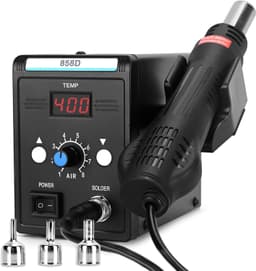
YIHUA YIHUA 858D hot air station

Best overall

YIHUA YIHUA 858D hot air station
8.4/10about £39.99
COVVY COVVY 858D hot air station

Alternative

COVVY COVVY 858D hot air station
7.6/10about £33.99
On this page

Bench setup before you switch on

Place the station on a stable surface, cradle facing the board, with cables clear of the hot nozzle. Use an ESD mat and a grounded wrist strap on sensitive logic. Any clean static-safe surface is better than carpet. Open a window, or use a fan that pushes fumes away from your face, beyond a single joint. Rosin flux smoke is a known irritant in frequent solder work. Seat the mains lead and check the IEC inlet. COVVY buyers in this capture report loose rear sockets. Fit a wider nozzle for a connector and a narrower one for QFP leads. Set airflow low. Start below the solder melting point if you are unsure. YIHUA reviewers nudge up from there rather than starting at a 500 °C listing maximum. If you are still choosing the tool, read hot air vs a soldering iron.

Desolder an SMD IC step by step

Apply flux along the leads so heat enters the alloy instead of scorching the mask. Hold the nozzle a few millimetres above the board and move in small circles. Watch for shiny solder on the outer pins, then raise airflow only if the joint stays dull. On a wide package, work both sides. One hot row can twist the body while the far pads stay solid. Lift with light tweezers pressure, then let the board cool before you wick. If the chip will not move, lower the airflow, add flux, and step the temperature up. Holding maximum heat is how pads lift on a thin hobby board. A through-hole barrel may still need wick or a pump. Hot air alone rarely clears a plated hole.
YIHUA YIHUA 858D hot air station

Testsieger

YIHUA YIHUA 858D hot air station
8.4/10about £39.99

Flow and temperature tuning

Lead-free profiles depend on the paste, the copper mass, and the flux. No single Celsius figure fits every UK kit. Use the ranges in the hot air soldering station buying guide as headroom, then calibrate on scrap stripped from dead boards. If 0402 parts blow away, airflow is too high for that nozzle. If the package discolours while the solder stays grainy, you are likely too hot, too fast, without enough flux. Preset channels on a station such as the YIHUA 959D help once you record a shrink-tubing profile separately from a QFP removal profile. A manual 858D needs a note on the bench instead. Cradle sleep cuts power when the handpiece rests, so the element idles cooler during a pause. Treat the nozzle as hot until it has cooled for several minutes.

After rework: inspect, clean, cool down

Inspect the pads under a light for lifts or bridges before you commit a replacement part. Clean flux residue with a remover that matches the flux. Rosin no-clean behaves differently from a water-wash flux. Store the handpiece in the cradle, switch off at the station, and leave the board until connectors and plastics are cool to the touch. Change nozzles only when the tool is cold and unplugged. Grip the metal with the wrench supplied, not with pliers on the ceramic.

Typical mistakes on a first board

Bare hot air, with no fresh flux, scorches the mask while the solder stays grainy. A nozzle held too close heats the package instead of the leads. Back off a few millimetres. Maximum airflow blows 0402 parts off the board. Reduce the flow until the parts stay put. Stop if you smell sweet electrolyte or see a bulging cell near the area you are heating, and look up that assembly before you continue. When a corner will not release, do not pry. Step the temperature and the flow, or wick that pin.

Common questions

What temperature should I start at?
Begin below your alloy’s melting point on scrap, then step up until the solder flows. Capture reviews mention starting low on console port rework, rather than at a 500 °C listing maximum.
How do I stop blowing components off the board?
Reduce the airflow, use a smaller nozzle, and add flux so the solder melts before the parts move. 0402 capacitors are the usual casualties of a wide-open fan.
When is the solder ready for a lift?
When the pads look shiny and the part moves under light tweezers pressure. If you have to pull, the joint is not ready.
Do I need flux every time?
Yes for desoldering and reflow on oxidised pads. Flux improves heat transfer into the alloy and reduces mask damage.
How long can I heat one pad area?
Seconds, up to the low tens of seconds. If nothing flows, change the airflow, the flux, or the temperature. Do not hold a steady blast while you wait.
What does sleep mode do during a break?
It reduces handpiece temperature in the cradle. That lowers the chance of a scorch on the desk and lets the element idle cooler. The nozzle can still burn you for several minutes.
Can I rest the board in the handpiece cradle?
Keep the board flat and secured. A board propped in the cradle can fall into the path of the hot nozzle.
How do I change nozzles safely?
Unplug the station, let the handpiece cool completely, then swap the nozzle with the wrench supplied. Do not change a nozzle on a live hot gun.

Related pages

Sources

Sources taken from the research digest. Listings were checked in October 2026.

  1. HSE — Solderers and asthma (retrieved 21.10.2026)
  2. HSE — SR20 soldering fume (retrieved 21.10.2026)
  3. HSE — OCE4 rosin fume (retrieved 21.10.2026)
  4. GOV.UK — RoHS compliance and guidance (retrieved 21.10.2026)
  5. amazon.co.uk — YIHUA 858D (retrieved 21.10.2026)
  6. amazon.co.uk — YIHUA 959D (retrieved 21.10.2026)
  7. amazon.co.uk — WEP 8786D-I SE (retrieved 21.10.2026)