Carbon monoxide camping stove: stay safely outdoors

Carbon monoxide from a camping stove can build up in a tent or awning. Learn why an open door is not enough, what an alarm can do and when to leave now.
On this page

Rain starts just as you unpack dinner, and the awning looks like the obvious place to move a camping stove. That shortcut can put carbon monoxide into the same enclosed space where people sit or sleep. The practical answer is simple: use a stove or barbecue fully outdoors, never in a tent or awning, even when the door or flaps are open.
In short
A camping stove or barbecue can produce carbon monoxide when fuel burns incompletely. The gas is colourless and odourless, so smoke, smell and an apparently clean gas flame cannot tell you that an enclosed space is safe. Official UK safety pages agree on the useful rule: keep fuel-burning cooking equipment out of tents and awnings, and leave cooling barbecues outside too.
What official safety pages agree
The Health and Safety Executive describes carbon monoxide as a colourless, odourless gas produced by incomplete combustion. That matters on a campsite because your senses are a poor warning system: you cannot make a tent safe by checking whether it smells smoky.
The Camping and Caravanning Club gives an unambiguous instruction: barbecues produce carbon monoxide even when they are working, and they should never be used in a tent or awning. The rule is about the space, not whether the appliance is gas or charcoal. An awning is still part of the shelter, even if it feels more open than the sleeping compartment.
Cheshire Fire and Rescue Service closes two common loopholes. Open flaps do not provide a safety guarantee, and fumes can continue after cooking has finished. Leave the appliance outside while it cools instead of bringing it under canvas once the flame, glow or meal has gone.
These sources do not require you to calculate airflow or judge a flame by eye. Their shared answer is easier to apply in bad weather: if the place is a tent or awning, do not cook there and do not use it as the cooling area. Check the individual campsite rules as well, because a site can place further restrictions on where and what you may light.
Why gas does not make an awning safe
Gas often feels like the cleaner choice beside charcoal. It usually lacks the cloud of smoke and bed of glowing fuel that make a charcoal barbecue look dangerous indoors. That visual difference does not turn a gas stove in an awning into a safe arrangement, because the relevant hazard is a gas you cannot see or smell.
Incomplete combustion is the key point. You do not need to identify the exact fault before acting. If a flame goes out, behaves unexpectedly or the appliance appears not to be burning correctly, stop using it rather than trying to troubleshoot it inside the shelter. One UK review of the Campingaz Party Grill 400 CV describes a flame going out under the griddle and a later A&E visit. That is an individual reviewer report, not a verified medical case.
Charcoal is not the safer fallback. The same Club guidance says barbecues produce carbon monoxide even when they appear to be working, while Cheshire Fire warns that danger continues as they cool. A disposable barbecue or charcoal tray therefore stays outside before, during and after cooking. No visible flame does not mean no fumes.
A porch is not a clever compromise. Search questions such as "can I cook in a tent porch?" usually treat the open side as proof of ventilation. Official advice does not offer that exception. Move the appliance completely outside.
If weather makes outdoor cooking impractical, delay the meal or use food that does not require the stove. Rain changes your convenience, not the combustion risk. Our guide to using a camping gas barbecue on a campsite can help you plan the permitted outdoor setup before you travel.
Where to put a camping stove
Put the stove fully outdoors, beyond the tent and awning, in a stable position suitable for that appliance. Fully outdoors means not in the doorway, not under an awning roof and not inside with a flap rolled back. Follow the campsite's own rules, which may limit where cooking equipment can be used even in open air.
Set up before you are hungry and before rain changes your judgement. Identify an outdoor cooking position when you pitch, then keep the stove there for lighting, cooking, turning off and cooling. That avoids the sequence in which a safe outdoor start becomes an unsafe move into the awning halfway through dinner.
Watch the appliance while it runs. Product reviews mention ignition that does not always catch. Follow the product instructions, stop if the flame does not behave as expected and keep lighting, cooking and cooling outside.
After cooking, leave the appliance outdoors. Cheshire Fire warns that carbon monoxide fumes can continue after you finish, so a barbecue that is only cooling still stays out of the tent. Scouts guidance says never to store a stove or cartridge in the tent either. Packing the burner away does not make the fuel suitable for the sleeping space.
Fuel choice and fitting still matter for normal outdoor use. A CV cartridge, an EN 417 canister and a cylinder with a UK hose are not interchangeable descriptions. Check the exact connection before travelling, and see the camping gas barbecue comparison when choosing an outdoor cooker. If you need a broader format, the portable grill comparison covers alternatives without changing the rule that combustion stays outside.
Alarms, fresh air and getting help
A carbon monoxide alarm can add a warning, but it cannot make cooking in a tent or awning acceptable. The first control is to keep the stove or barbecue fully outdoors. Treating an alarm as permission to ignore that rule reverses its purpose and leaves you dependent on one device in a setting the official safety advice already tells you to avoid.
Use an alarm only according to its instructions. The sources behind this article do not support a universal position or distance for every alarm, tent and appliance, so follow the maker's directions rather than improvising a location. Do not wait for an alarm before reacting if you feel ill near a burning appliance.
HSE and the UK Health Security Agency support the immediate priorities: get into fresh air and get help. Do not remain in the tent to investigate, relight or prove that the stove was responsible. This guide does not diagnose symptoms or replace medical advice, and it does not name one contact for every circumstance.
Fresh air is an immediate action, and a website cannot assess an exposure. If you or someone with you feels ill around a stove, barbecue or other fuel-burning appliance, leave the space and seek help rather than returning to test the flame. An alarm that stays silent does not overrule how the person feels. Outdoor cooking is prevention. An alarm is only a warning layer between that and getting help.
What product pages can and cannot tell you
A product listing can tell you the named fuel connection, stated output, packed weight and whether a bag is included. It cannot make an indoor or awning setup safe. The Campingaz Party Grill 400 CV listing in our comparison names a CV 470 Plus cartridge, a stated 2,000 W output and a carry bag. Those buying details do not change the outdoor-only safety boundary.
Reviews can expose practical warning signs, with limits. In this set, reviewers report piezo ignition that does not always catch. The flame-out account above is one reviewer's report, not a poisoning statistic. Look at the flame, stop if operation is abnormal and do not troubleshoot in a tent.
Our comparisons use amazon.co.uk listing information and UK review patterns. They are not laboratory tests. Prices can change, and a qualifying purchase can earn us a commission at no extra cost to you. Safety claims in this article come from the named UK public and camping-safety sources, not from a product rank or an affiliate relationship. This page is from Peter F. at productscompared.co.uk.
The practical shopping question is not which stove is safe in an awning. There is no recommendation here for that use. Choose a fitting and cooking surface that suit your permitted outdoor pitch, then keep the appliance outdoors throughout lighting, cooking and cooling.
Common questions
Can I cook in an awning if the door is open?
Is a gas stove safer than charcoal inside a tent?
Can a cooling barbecue produce carbon monoxide?
Will a carbon monoxide alarm make tent cooking safe?
What should I do if I feel ill near a camping stove?
Where should a camping stove stand?
Can I store a stove or gas cartridge in my tent?
Can I bring a barbecue into the tent once the flame is out?

Peter F. is the editor for DIY & tools at productscompared.co.uk. Comparisons in this category are checked against amazon.co.uk listings, review evidence and public UK sources.
Related articles
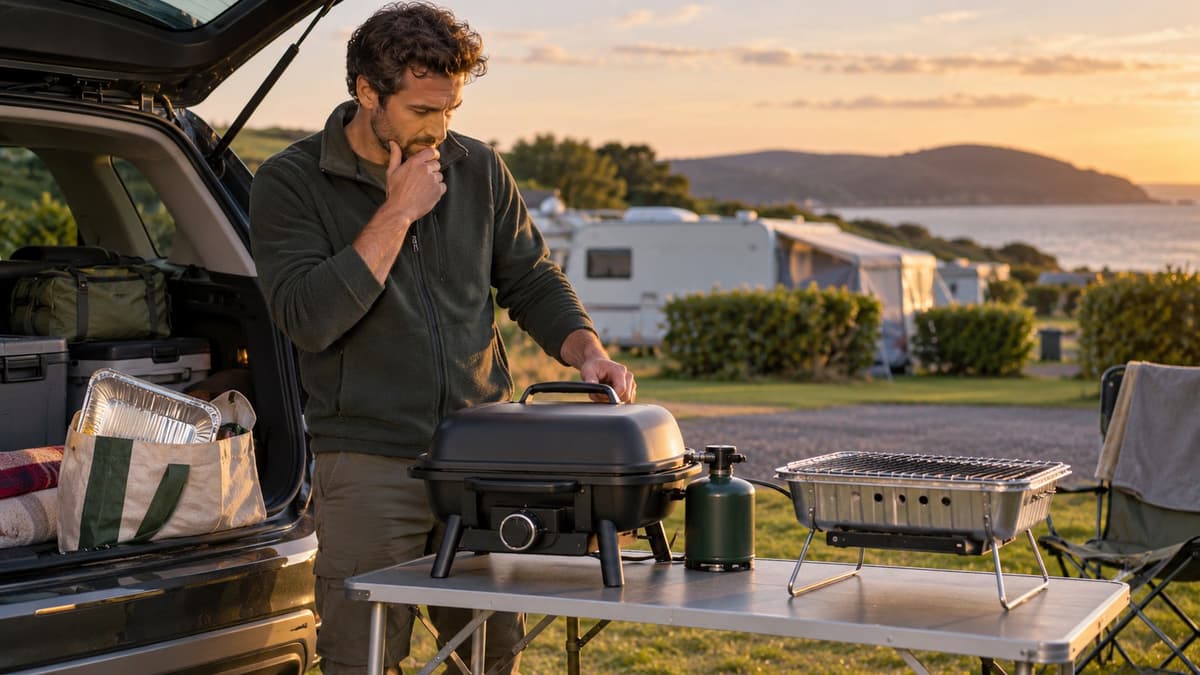
Gas or charcoal on a UK pitch
Choose fuel around your campsite rules as well as cooking style.
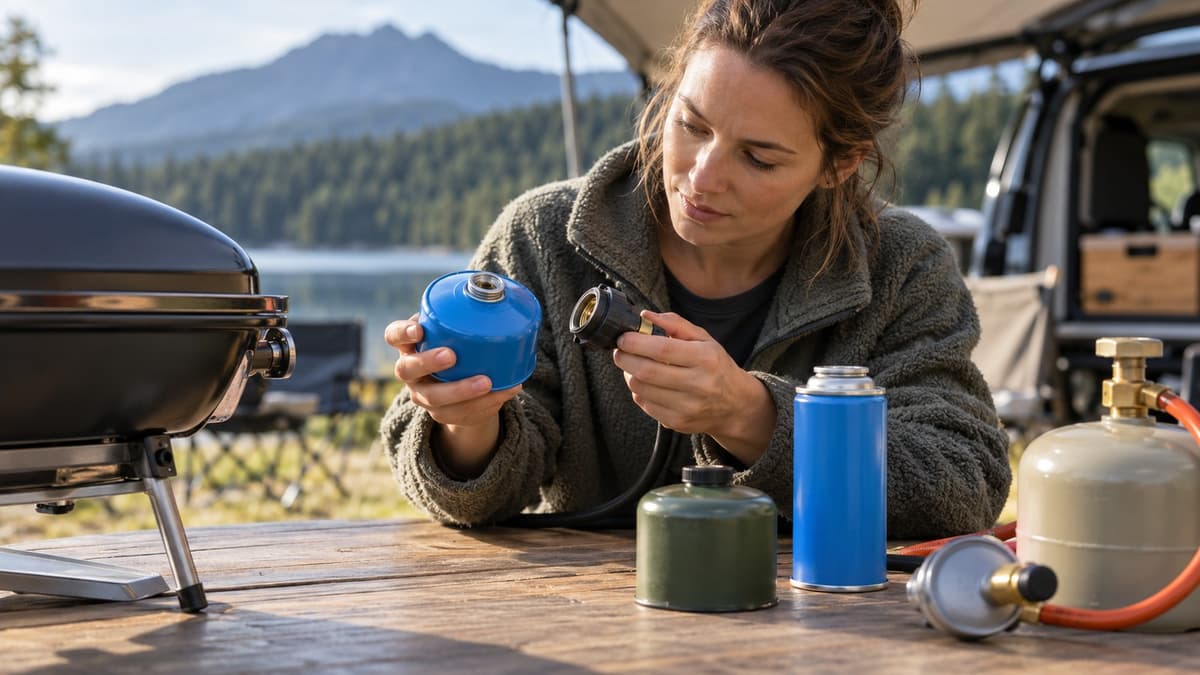
Which gas fitting a camping barbecue needs
Understand why cartridges, cylinders and UK hoses are not interchangeable.
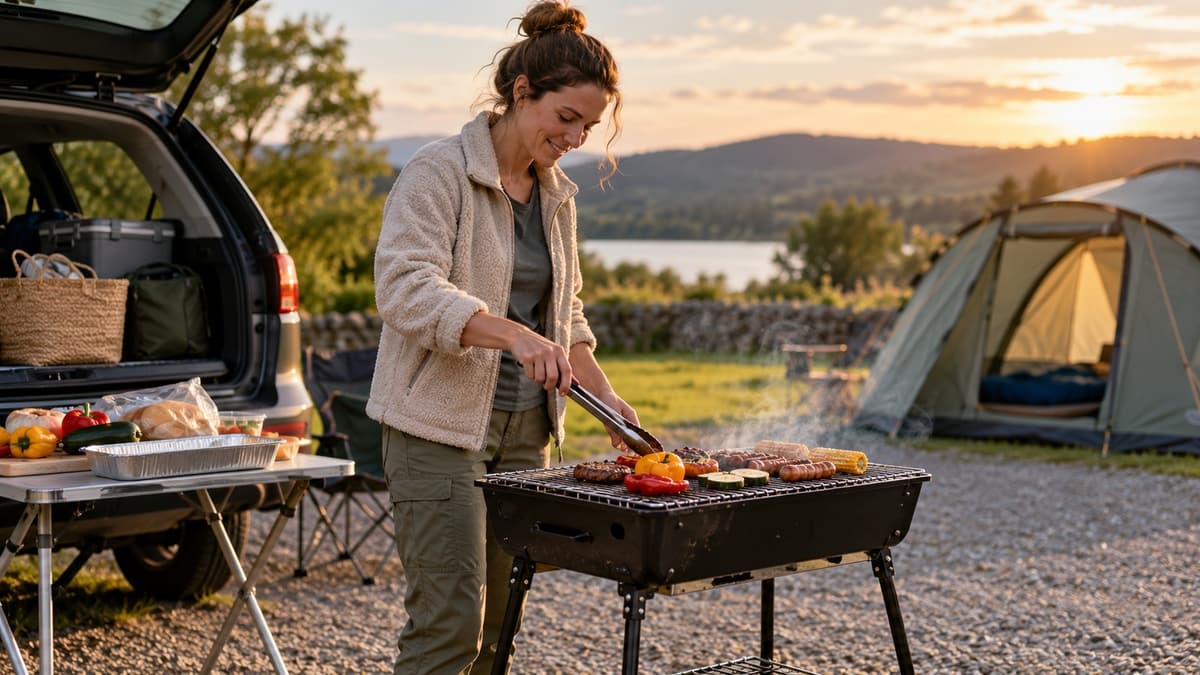
Disposable barbecues on Club sites
Separate individual campsite rules from the risks that apply everywhere.