Independent comparisons. We may earn from shop links. More info

How to use a potting bench

Updated: October 2026

Compost finds every crack in the decking if you repot on the ground or over an unprotected patio table. A potting bench, or a deep tray on a stable surface, turns that into a contained job: lips catch the mix, shelves hold bags within reach, and a galvanised top rinses faster than bare wood. This page is the workflow, not a ranking. Model names and prices are in the [planting table comparison](/hub/plant-accessories/planting-table). Which surface survives wet compost is in [wood or metal potting top](/hub/plant-accessories/planting-table/sub/planting-table-wood-vs-metal-top).

Compost finds every crack in the decking if you repot on the ground or over an unprotected patio table.

Our top picks

On this page

Set up before you open the compost

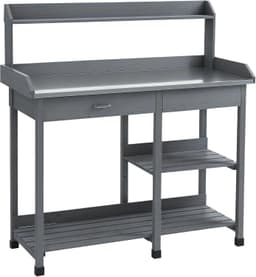
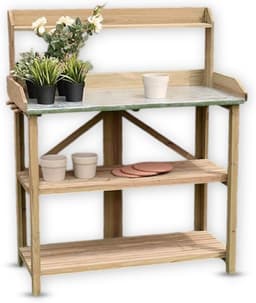
Treat the bench as a dirty workstation. Clear the worktop, hang forks and trowels on the hooks, and put empty pots and a waste bucket on the lower shelf if the load bullets allow. Listings here quote lighter limits higher up and something like 10 to 30 kg lower down. A full bag belongs low, not on the lip. Open the bag beside you. Peat-free mix is fluffy and spills, so the raised back lip earns its place. For seed sowing, use a clean dibber and a separate tray so grit stays out of fine compost. On a balcony or indoors, lay a mat under the feet. Re-tighten screws after the first heavy weekend if the fir is soft. With a tray only, centre it, back lip towards you, on a table that does not wobble.

Repotting steps at standing height

Work one plant at a time unless you are potting identical plugs in a row. Tap the rim and slide the root ball out. If it sticks, run a knife around the inside rather than yanking the stem. Tease circling roots on woody plants. On a houseplant that is not root-bound, remove only the bottom third of the old mix. Put waste soil in a trug on the floor. Grit on a thin galvanised sheet scratches it. Add fresh compost in layers, firm lightly, and leave a watering gap below the rim. Water after repotting and let it drain before the saucer. Keep puddles off timber feet. For heavy terracotta, get a second pair of hands. A dent stays cosmetic until the edge turns sharp.

Using a potting tray only

A tray suits seated work, and renters who cannot store a bench. Near 43 cm outside, a large shrub pot overhangs the lip. Repot houseplants and seedlings inside the tub, and keep empty pots on the table beside it. Fill it only partway. Compost above the lip defeats the job. Brush solids into the compost bin, then rinse. Sticker residue comes off with warm water. Do not scrape it with metal. You get no hooks or shelves, so keep a crate for bags within reach.

Cleanup and maintenance

Brush a galvanised top dry, then wipe with a damp cloth. Do not leave wet mix overnight against the joints, and skip harsh abrasives on thin sheet. Wipe splashes off fir, check paint at the feet, and move the bench under cover in winter. Re-tighten in spring. Soft fir strips threads if you crank too hard. Brush grit off shelves. Empty a drawer. Compost crumbs in a shed attract mice. Clear castors on a wheeled bench and lock it before a heavy bag. If it wobbles, check level paving before you add weight. Fix it to a greenhouse wall only with brackets rated for the load, and only if the structure is yours to alter.

When the tray is no longer enough

Stay with a tray when sessions are short, storage is scarce, and you already own a solid table. Move to a full bench when you stand for long repotting sessions, want hooks and shelves in one place, or split enough bags that bending to the floor hurts. Height, drawer and footprint before you spend roughly £75 to £130 are in the potting bench buying guide. If cleanup still floods the patio because the lip is too low or the top is bare wood, change the surface before you buy the same layout again.

Common questions

What do I put on the bench before compost?
Empty pots, labels, tools on the hooks, and a waste bucket on the floor. Keep the worktop clear until you are working a plant. A bag opened on the lip is the usual way compost ends up on the paving.
Where should compost bags sit?
On the lowest shelf the listing rates for a heavy load, or on the ground beside the bench. Not on the top lip alone. Bullets and load rows sometimes disagree, so use the lower figure and keep the bag where a tip cannot hit your feet.
Can I repot indoors on a bench?
Yes, with a floor mat and some ventilation. Expect dust, especially from peat-free mix. Fir frames are garden furniture, so protect floors from drips and plan to rinse tools outside if the sink is the only other option.
Do I need a trug as well as a drawer?
A drawer holds small tools, labels and twine. A trug or bucket still takes waste soil and root balls you will not store in the drawer. Putting that waste on the metal top is what scratches a thin sheet.
How do I use a tray on a garden table?
Centre the tray, with the back lip towards you, and fill it only partway. Rinse it after the session. Large pots may need the table top outside the tray. The tray in this comparison is about 43 cm outside, with a smaller working area inside.
How do I avoid overloading the shelves?
Follow the kilogram bullets, put bags on the lowest tier, and do not stand on a shelf to reach greenhouse glass. Seller figures are guidance, not a stress test. A loaded wheeled bench also needs level paving so it does not creep mid-session.

Related pages

Sources

Public UK sources used for this comparison. Shelf prices, stars and review counts are the amazon.co.uk figures captured for these five listings. Last checked 22 October 2026.

  1. BBC Gardeners' World, best potting benches (retrieved 22 October 2026)
  2. Let's Grow Cook, potting bench buyers guide (retrieved 22 October 2026)
  3. Two Wests & Elliott, greenhouse staging height (retrieved 22 October 2026)
  4. RHS Plants, essential greenhouse staging (retrieved 22 October 2026)
  5. Copagrey, 4ft potting bench (retrieved 22 October 2026)
  6. GOV.UK, General Product Safety Regulations 2005 (retrieved 22 October 2026)