Seedling heat mat or greenhouse heater
You are about to buy bottom heat for a tray of tomatoes when the greenhouse itself must stay above freezing, or the other way round. A seedling heat mat or greenhouse heater is not one product with two names. Heat the compost if you are germinating. Heat the air if the house must stay above freezing. A mat does not do the second job. The Products Compared editorial team set the listings in our [plant heater comparison](/hub/plant-accessories/plant-heater) against Royal Horticultural Society notes on sowing and on heating a greenhouse, on 16 October 2026. We did not measure a glasshouse overnight. A qualifying purchase can earn us a commission at no extra cost to you.
You are about to buy bottom heat for a tray of tomatoes when the greenhouse itself must stay above freezing, or the other way round. A seedling heat mat or greenhouse heater is not one product with two names.
You are about to buy bottom heat for a tray of tomatoes when the greenhouse itself must stay above freezing, or the other way round. A seedling heat mat or greenhouse heater is not one product with two names. Heat the compost if you are germinating. Heat the air if the house must stay above freezing. A mat does not do the second job. The Products Compared editorial team set the listings in our plant heater comparison against Royal Horticultural Society notes on sowing and on heating a greenhouse, on 16 October 2026. We did not measure a glasshouse overnight. A qualifying purchase can earn us a commission at no extra cost to you.
Our top picks
| Badge | Product | Job | Power | Control | Note | Price | Offer |
|---|---|---|---|---|---|---|---|
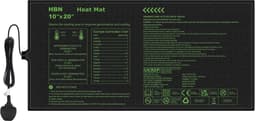
| Best overall |  HBN HBN 17.5 W seedling mat | Seedling heat mat | 17.5 W | None; about 24–30°C | 9.2 | about £14.99 | View offer |
 EarlyGrow EarlyGrow 3-bay heated propagator | Windowsill propagator | 12 W | Fixed 16–19°C | 9.0 | about £42.95 | View offer | |
 Airmaster Airmaster 520 W frost convector | Frost convector | 520 W | Thermostat 5–30°C | 8.6 | about £25.94 | View offer |


On this page
What a mat heats
What an air heater does
Mat or lidded propagator
Why a tube is not a bigger mat
Common questions
Will a heat mat keep a greenhouse above freezing?
When is a lidded propagator enough, and when do you want a mat?
What wattage here is bottom heat, and what wattage is air heat?
Can you put a greenhouse tube under a seed tray?
Where does a 120 V tent heater sit in this choice?
If you only have a windowsill, which side do you buy?
Related pages
Sources
Public UK sources for greenhouse heat, sowing temperature and electrical safety, plus the amazon.co.uk listing facts in the display file. Shelf prices and star lines are those captured figures, not a live re-check.
- RHS: heating greenhouses efficiently (retrieved 16 October 2026)
- RHS: electricity in the garden (retrieved 16 October 2026)
- RHS: sow seeds indoors (retrieved 16 October 2026)
- RHS: April greenhouse jobs (retrieved 16 October 2026)
- Electrical Equipment (Safety) Regulations 2016, regulation 35 (retrieved 16 October 2026)
- NICEIC: gardens and electrics (retrieved 16 October 2026)
- Gardeners' World: heated propagators (retrieved 16 October 2026)
- Thompson & Morgan: heating a greenhouse (retrieved 16 October 2026)