Independent comparisons. We may earn from shop links. More info

How to plant in a fabric grow bag

Updated: October 2026

The parcel arrived as a flat fabric circle with handles, and it will not stand until you fill it. That is normal for empty grow bags in our [plant bag comparison](/hub/plant-accessories/plant-bag), not a defect. This page is for anyone who already owns a porous fabric pot and needs fill level, a watering rhythm, and feeding, without treating the bag like rigid terracotta or a ready-filled compost sack from the supermarket. Potato earthing and green tubers are a different job. If you are still choosing type and size, do that before you follow these steps.

The parcel arrived as a flat fabric circle with handles, and it will not stand until you fill it. That is normal for empty grow bags in our plant bag comparison, not a defect.

Our top picks

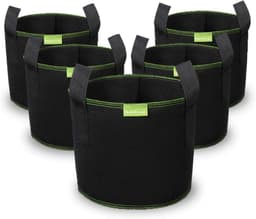
Mactoou Mactoou (5 × 3 gallon)

Best overall

Mactoou Mactoou (5 × 3 gallon)
9.4/10about £11.86
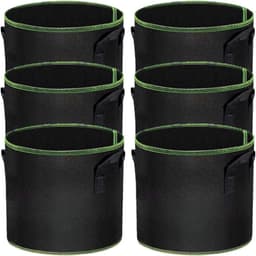
LATERN LATERN (6 × 5 gallon)

Best value

LATERN LATERN (6 × 5 gallon)
9.4/10about £11.99
On this page

Fill it so the rim can stand

Set the bag where it will stay for the season. Reviewers of filled 5 gallon fabric bags describe them as too heavy to lift, and handles are not a crane rating. Pull the sides up before you add compost, so the rim forms a lip you can water against. Fill with peat-free compost for containers, a few centimetres below the rim, so water and later feed do not spill straight over. A ready-filled growing bag arrives full and behaves differently in a heatwave. Your empty bag needs you to choose the volume. If the wall still slumps, firm the lower third without packing it into a block. Roots need air as well as water.

Drainage you do not punch

Fabric pots do not need holes cut in the base. Water leaves through the wall when the compost is saturated. Reviews of a small fabric pack describe water pouring from the sides in a hot week. That is the wall working. A long rainy spell can still leave the compost too wet, so judge moisture in the bag, not only the damp paving. A polyethylene potato sack with Has Drainage marked No is a different object. The split is on the fabric or plastic plant bag page. Rigid pots hold a reserve. Fabric dries faster at the edges, which suits a daily check and punishes a long weekend away. Stand the bag on paving you can hose, not on carpet.
Mactoou Mactoou (5 × 3 gallon)

Testsieger

Mactoou Mactoou (5 × 3 gallon)
9.4/10about £11.86

How often to water

Use the RHS finger test. Check about a third of the way down, water morning or evening, and expect every day or every other day in a dry UK summer for smaller volumes. A 5 gallon fill may forgive a missed evening better than a 3 gallon pack, if the centimetres were honest. In heat, fruiting crops may need water twice a day before the compost dries hard. Rewetting a crust is slow. Water until a little runs from the sides, then stop. Repeat when the finger test says dry, not on a calendar. If you cannot keep that rhythm, a smaller crop or a rigid pot with a reserve may beat a fabric bag you neglect. Earthing for potatoes is on potatoes in a plant bag.

Feeding a hungry crop

Tomatoes want liquid feed once fruit starts to form, at the bottle dilution for containers. The RHS links blossom end rot to compost that dries out, so extra feed on a dry bag wastes money. Fabric does not feed through the wall. Air pruning on seller pages means roots meeting air at the cloth, not a nutrient supply. Start when you see small fruits, unless the compost label says otherwise for the first weeks. A heavier feed will not rescue missed waterings. Empty spent compost if your council allows, then dry the fabric. Some buyers reuse bags. Others see UV fatigue after a harsh summer.

If the bag is already in place

If the wall is porous fabric and you can check it most days, fill below the rim, water by the finger test, and feed fruiting crops once fruit shows. If the bag is a waterproof potato sack, this fill-and-drain method is the wrong one. If you cannot water through a dry spell, choose a smaller crop or a pot that holds a reserve. Leave a planted bag where it stands. The handles are for the empty pack.

Common questions

How full should the bag be?
Fill to a few centimetres below the rim so water and feed do not overflow at once. The depth still has to cover the root run. An underfilled rim can collapse, because the bag is floppy until the compost holds the side up.
Do I cut drainage holes in fabric?
No. The wall drains when the compost is saturated. Cut holes only if you deliberately repurpose a waterproof sack that is not fabric, and that sack is not the default bag on this page. A drainage field of Yes on a fabric listing matches that porous wall.
How often do I water in a hot week?
Check about a third of the way down every day. Many container tomatoes need water once or twice a day in a dry spell. Fabric dries faster at the edges than a deep rigid pot. Water morning or evening until a little runs from the sides, then stop.
What compost do I use?
Peat-free compost labelled for containers. The RHS still specifies peat-free mixes. Defra announced amateur peat restrictions in 2022, and a full retail ban had not been enacted by late 2025. Read the bag you buy. These plant bags do not include compost.
When do I start feeding tomatoes?
When fruits begin to form, use a liquid feed diluted for containers, unless the compost instructions say otherwise for the early weeks. Feeding does not replace watering. The RHS links blossom end rot to compost that dries out, so a dry bag plus extra feed is not a fix.
Can I carry the bag indoors by the handles once it is planted?
Reviews warn against it. A filled 5 gallon bag with a mature plant is too heavy for fabric handles, and some buyers drag the bag instead of lifting it. Move it empty, or leave it in place for the season. These listings give no safe load figure for a balcony or a roof.

Related pages

Sources

Public UK sources used for this comparison. Shelf prices, stars and review counts are the amazon.co.uk figures captured for these eight listings. Last checked 22 October 2026.

  1. RHS: grow your own potatoes (retrieved 22 October 2026)
  2. RHS: grow your own tomatoes (retrieved 22 October 2026)
  3. RHS: how to water containers (retrieved 22 October 2026)
  4. RHS: blossom end rot (retrieved 22 October 2026)
  5. RHS: potatoes in containers (schools) (retrieved 22 October 2026)
  6. Consumer Rights Act 2015, section 9 (retrieved 22 October 2026)
  7. Defra: horticultural peat sales announcement, 27 August 2022 (retrieved 22 October 2026)
  8. Peat-free Partnership: legislation timeline (retrieved 22 October 2026)