Independent comparisons. We may earn from shop links. More info

How to use an electric fly swatter

Updated: 23 October 2026

The racket is on the worktop, the fly is on the window, and the box gave you a slogan rather than a warning. This is how to use an electric fly swatter in a UK kitchen: charge it or fit the cells, swing only at the insect, wait before you touch the mesh, and brush the remains off dry. The steps were written on 21 October 2026 from eight amazon.co.uk listings and their saved reviews. We did not lab-test a kill rate. If you buy through our links, a qualifying purchase can earn a commission at no extra cost to you. Which row to buy sits on the [electric fly swatter comparison](/hub/pest-control/electric-fly-swatter).

The racket is on the worktop, the fly is on the window, and the box gave you a slogan rather than a warning.

Our top picks

On this page

Charge before you judge it

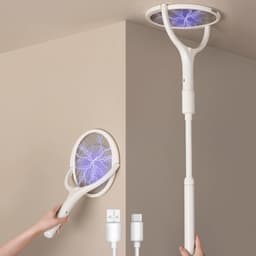
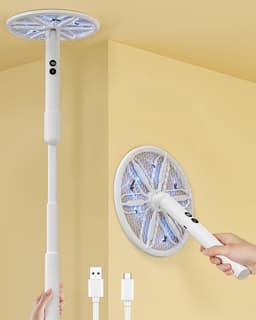
A rechargeable racket that does nothing on day one is often asleep, not dead. WowCatch says the pack may be in transit sleep, asks for a 3–4 hour charge before first use, and says not to hold the zap button while it is plugged in. None of these eight show a BS 1363 plug. KK'S GLAMS does not charge. You fit two AA cells, which are not in the box, hold the button, and let go to switch off. Do not bridge a broken spring with foil. If a second 5 V lead still fails, the seller is the next step, which the rechargeable or AA electric fly swatter page covers, including the 30-day right to reject. A hot or swollen pack is where you stop and do not open the handle.

Swing with the button, then wait

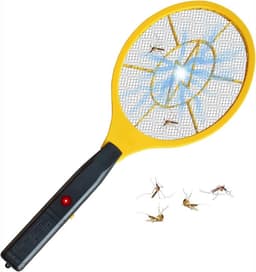
Hold the button so the grid is armed, move the head onto the insect, and keep the contact for the crack. A wave that never touches the fly does nothing. Release the button, then wait a few seconds before skin meets the mesh, because the grid can still be live. Do not use your hand to prove the wires are working. Finger tests in the reviews ended in a shock. Bigger flies often need the grid held on them. A nest, or a wasp you might miss, belongs on the electric fly swatter for wasps page. KK'S GLAMS says the mesh is safe for kids and, in the same bullets, says keep it away from children. Believe the second line.

Smell, stuck insects, and a dry brush

A burnt smell and a little smoke are what reviewers describe when an insect scorches on the wires. Switch off and clear the head, because a body left on the wires keeps cooking. Brush it dry. Do not rinse the head, and do not wipe the inner grid with a wet cloth. Comparable USB manuals say a dry brush only. If the smell is of hot plastic, or the handle is too warm to hold, stop. That pattern shows up as overheating on a WOCVRYY review and as heat while charging on WowCatch. Those are returns, not a harder swing.

Where you stop

Use the racket on a single fly, mosquito, or fruit fly you can reach. Stop when the setting is wet. No listing here prints an IP rating. Stop when alcohol, white spirit, or petrol is on the surface or on skin. A published case describes an arc from this kind of grid igniting alcohol on skin. Stop for a wasp or hornet nest in a loft, a soffit, or a shed. A professional is the person for the nest. Stop when the pack is hot, swollen, or will not charge after one normal lead. Do not open the handle. A sealed pack goes with the appliance as electrical waste. If you are still choosing, the checks are on the electric fly swatter buying guide.

Common questions

Do I charge it before the first fly?
On a USB racket, yes. WowCatch asks for 3–4 hours and warns that the pack may be in transit sleep. Hold the zap button off while it charges. KK'S GLAMS takes two AA cells instead, and they are not in the box. Judge a rechargeable unit after that first long charge, not in the minute you unpack it.
Do I hold the button the whole swing?
Hold it until you hear the crack on the insect, then release. KK'S GLAMS is built that way: press to run, release to switch off. A wave that never meets the fly will not zap it. After you release, wait a few seconds before skin or a wet cloth meets the mesh. Example manuals, not every box in this set, print that pause because the grid can still be live.
Can I wipe the mesh with a wet cloth?
No. Brush debris off dry, with the racket switched off. Comparable USB manuals forbid a wet cloth and a rinse, and none of these eight print an IP rating. Water on a charged grid is a shock risk. A scorched insect comes off with a dry brush into the bin.
Why does it smell of burning?
Because the insect has scorched on the wires. Reviewers on GeckoMan, WOCVRYY, and AOKKR describe crackle, smoke, and a burnt-fly smell, especially when a body sticks and keeps frying. Switch off and brush it clear. A smell of hot plastic, or a handle that is heating up, is a different fault. Stop and return that unit.
Why is there still a crackle after I let go?
Either an insect is still lodged in the mesh, or the grid has not gone quiet yet. AOKKR reviewers describe bodies that keep frying until they are brushed out. Wait, switch fully off, and use a dry brush. Do not put a finger in to stop the noise. Finger tests in the GeckoMan and KK'S GLAMS reviews ended in a shock.
When do I stop and call someone?
Call a pest controller for a wasp or hornet nest, and for a single wasp if you are allergic. Call 999 if a sting brings breathing trouble or a swollen face. A swollen battery is a stop, not a call to a nest line. Reject a racket that will not charge within 30 days under the Consumer Rights Act 2015.

Related pages

Sources

Public UK sources used for this comparison. Shelf prices, stars and review counts are the amazon.co.uk figures captured for these eight listings. Last checked 21 October 2026.

  1. HSE biocides scope (retrieved 21 October 2026)
  2. GOV.UK GPSR 2005 (Great Britain) (retrieved 21 October 2026)
  3. GOV.UK EESR 2016 (Great Britain) (retrieved 21 October 2026)
  4. GOV.UK batteries (retrieved 21 October 2026)
  5. GOV.UK electrical waste (retrieved 21 October 2026)
  6. Consumer Rights Act 2015, section 22 (retrieved 21 October 2026)
  7. BS EN 60335-2-59 insect killers (retrieved 21 October 2026)
  8. Arc and alcohol on skin, published case (retrieved 21 October 2026)