Independent comparisons. We may earn from shop links. More info

Citronella candle or insect repellent

Updated: 22 October 2026

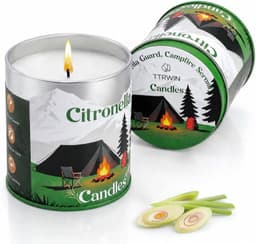
You are packing for a warm garden evening or a trip where mosquitoes bite, and you hope one tin does both jobs. A citronella candle or insect repellent is not a fair swap. The candle is light and scent on a still patio. UK travel guidance names a product you put on skin, with 50% DEET first if malaria is a risk. The eight files are in the [anti-mosquito candle comparison](/hub/pest-control/anti-mosquito-candle). Peter F., editor for DIY & tools at productscompared.co.uk, used GOV.UK, Fit for Travel, the NHS and published trials. There was no lab burn. A qualifying purchase can earn a commission at no extra cost to you.

You are packing for a warm garden evening or a trip where mosquitoes bite, and you hope one tin does both jobs. A citronella candle or insect repellent is not a fair swap. The candle is light and scent on a still patio.

Our top picks

On this page

What a candle can change

A lemon-scented flame is often asked to keep mosquitoes off the table. The trials measured something narrower. Lindsay and colleagues, in a 1996 field count, found that 3% citronella candles were linked to about 42% fewer Aedes bites than no candle, and people were still bitten. Plain candles reduced bites a little as well. Müller and colleagues, in 2008, reported 29% indoor repellency from a 5% citronella candle, well behind geraniol in that test. Those figures belong to those candles. None of the eight amazon.co.uk listings prints an oil percentage, so you cannot paste 42% or 29% onto a £3.01 tea light. What you get, at most, is a local plume in still air. It leaves when a breeze crosses the table.

What UK guidance tells you to put on skin

When bites matter, UK sources name a product on the skin. The 2026 GOV.UK malaria guidelines, reflecting UKMEAG, put 50% DEET first, then icaridin, a PMD-type oil from lemon eucalyptus, and IR3535. Fit for Travel lists the same four. Citronella products, in the GOV.UK text, give short-lived protection and are not what UKMEAG recommends. The rule is sharpest on a malaria-risk trip. Malaria does not occur in the United Kingdom. NHS advice is to cover up, use 50% DEET, and sleep under a treated net. A candle is not on that list. Fit for Travel allows repellent candles only where there is no electricity, and not indoors. Fever after a bite abroad needs medical help. Oil on skin is still not a candle.

When you might still light one

You might still light one after bites are already handled. On a still UK patio, once people who are being bitten have a named repellent on their skin and the food is covered, a candle is atmosphere: lemon scent and a small flame. It is a weak stand-in if you skipped the spray because you dislike the feel of it. Spray and covers come first. A candle comes after that, and only if someone will stay with the flame. In this comparison, none of the eight states an oil percentage. Around £3 to £5 buys a 25-pack of tea lights. Around £10 buys a jar or a tin. Neither price buys the 50% DEET the travel guidance puts first.

A British garden is not a malaria trip

A garden evening in Britain is not the same decision as a malaria holiday. Nuisance mosquitoes here are native species. GOV.UK notes 36 native mosquitoes, and nuisance reports often involve Culiseta annulata and Culex pipiens. They can spoil a meal. They do not make a citronella candle into the product UKMEAG names for travel. If the evening is windy, or you are being bitten despite the candle, stop treating the flame as the control.

Common questions

Should I use one instead of DEET in the garden?
Use a named skin repellent when you are being bitten, including in a British garden. DEET at 50% is what UK malaria guidance names first for a trip where malaria is a risk. On an ordinary patio, icaridin, a PMD-type eucalyptus oil or IR3535 are the other actives Fit for Travel lists. A candle does not replace them if ankles are already getting bitten. It is optional scent after that, and only while the air is still.
What if I am going somewhere with malaria?
Pack 50% DEET first, then the other actives UK guidance names, plus long clothing and a treated net. NHS malaria advice does not list candles. GOV.UK says citronella products are short-lived and are not recommended by UKMEAG. Fit for Travel keeps repellent candles for places with no electricity, and not for indoor use. Fever after you come home is a reason to get medical help, not to buy another candle.
Is citronella oil on the skin the same as a candle?
No. Oil on skin is a leave-on product. A candle is wax, a wick and a plume. Kongkaew’s 2011 review found citronella skin products protect for less time than DEET, and that result is not a burn time. If the listing prints no percentage, you do not know how much oil is in the wax.
Do I still want a candle if I use spray?
You might, if you want light and a lemon smell on a still patio after the spray is already on your skin. The candle does not add the protection the spray is there for, and it does not hold a windy table. If you hoped the candle would let you skip the spray, that is the swap this page argues against. Light it for the meal, stay with the flame, and put it out when you go in.
Does a fan do more than a candle?
Near the fan, in one US test, yes. Consumer Reports in 2015, using a 0.5% citronella bucket, reported a fan cut landings by about 45 to 65% close to the fan, and that the candle did not. That is not a UK lab, and a fan is not in this comparison. Quote the American figure only as an American figure.

Related pages

Sources

Public UK and study sources used for this comparison. Shelf prices, stars and review counts are the amazon.co.uk figures captured for these eight listings. Last checked 22 October 2026.

  1. Lindsay and others, 1996, citronella candles (retrieved 22 October 2026)
  2. Müller and others, 2008, indoor citronella candle (retrieved 22 October 2026)
  3. GOV.UK bite prevention for travellers (retrieved 22 October 2026)
  4. Fit for Travel mosquito bite avoidance (retrieved 22 October 2026)
  5. NHS malaria (retrieved 22 October 2026)
  6. GOV.UK native mosquitoes (retrieved 22 October 2026)
  7. HSE regulated biocides (retrieved 22 October 2026)
  8. London Fire Brigade candle safety (retrieved 22 October 2026)